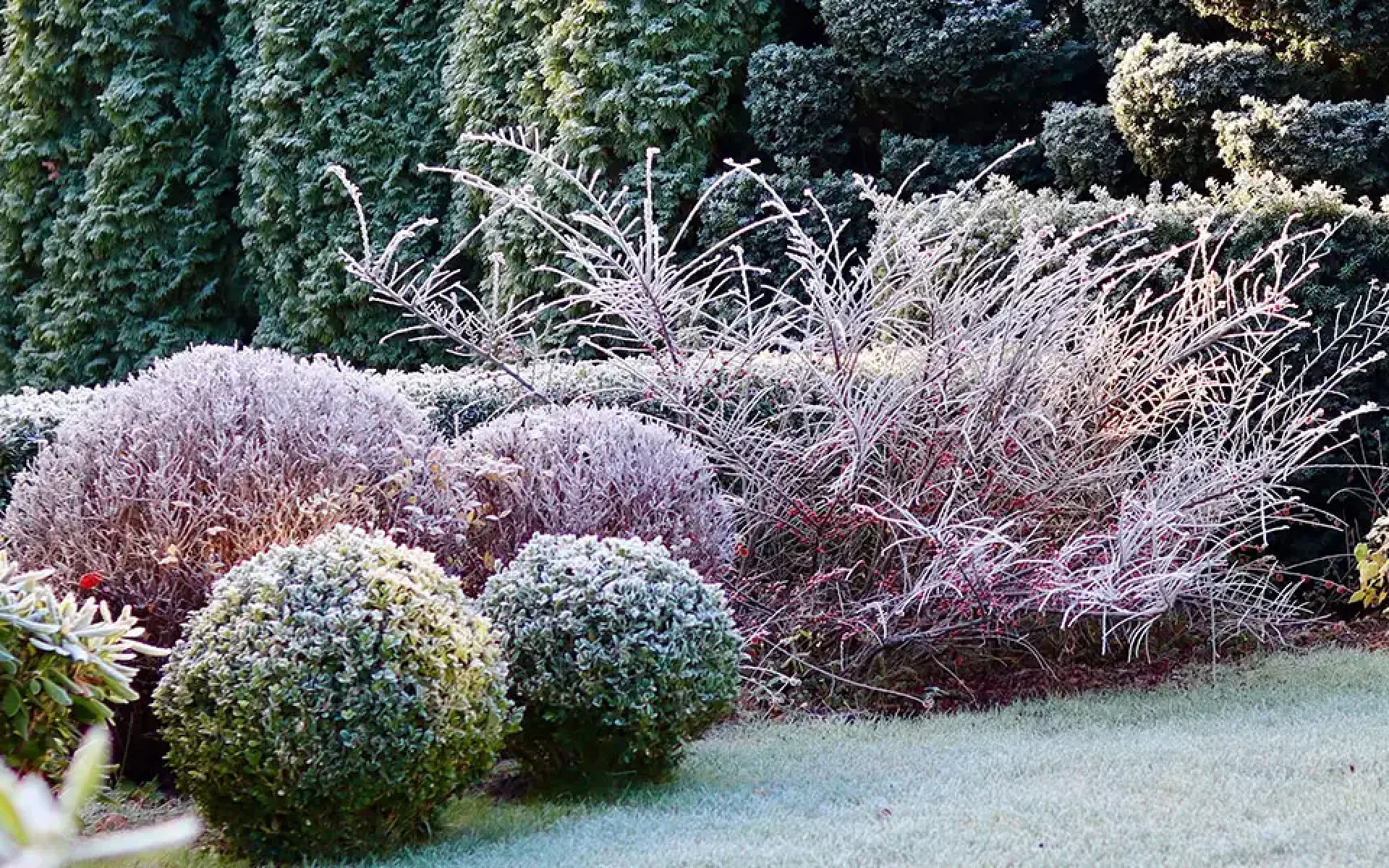
There is a particular moment that arrives every year in Bucks County. You glance out the window late in the afternoon and realize the day is nearly gone. The garden that was glowing in evening sunlight a few months ago is already slipping into shadow, and by the time dinner is on the table, the backyard has largely disappeared.
For gardeners, it can feel as though someone has turned off the scenery. But what if your landscape were designed for this time of day, too?
Most of us choose plants while imagining them under ideal conditions. We picture a flowering shrub on a sunny May morning, a patio surrounded by summer blooms, or a maple blazing red against an October sky. We spend far less time imagining what the same property will look like at 4:30 on a November or December afternoon.
That is a missed opportunity, because a thoughtfully designed landscape does not have to disappear when flowers fade, leaves fall, and daylight becomes scarce. In fact, some of the most interesting gardens reveal an entirely different personality during the darker months. The secret is to stop designing only for flowers and begin designing for form, texture, movement, contrast, bark, berries, evergreens, and light.
- First, Look at Your Garden in the Darker Months
- Think in Silhouettes
- Give Evergreens an Important Role, Not Every Role
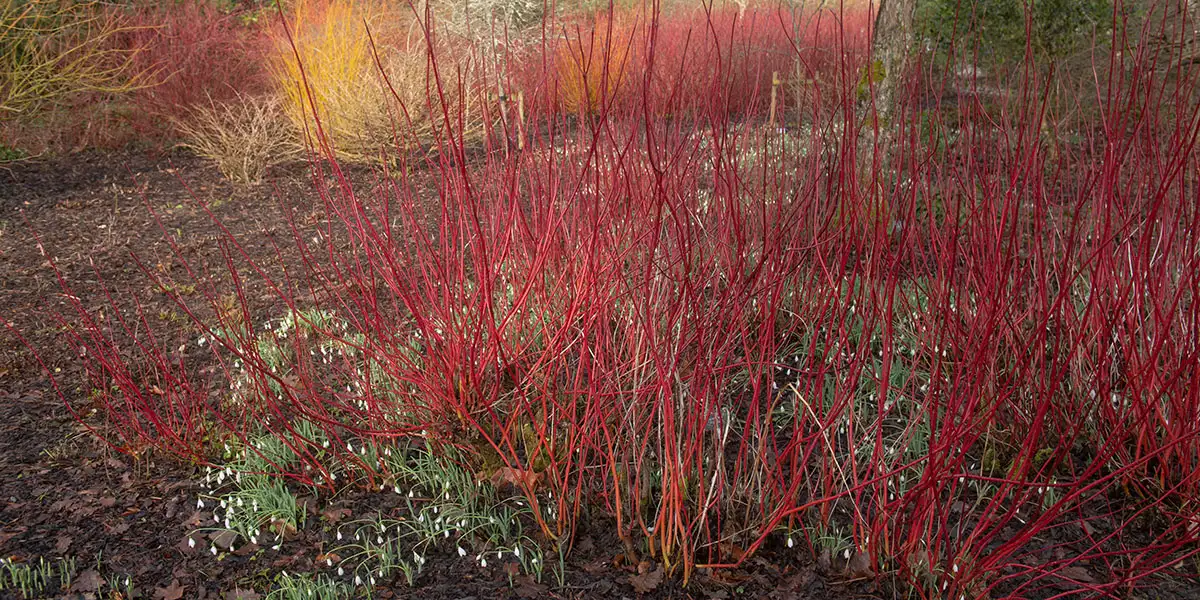
- Let Bark Become the Color
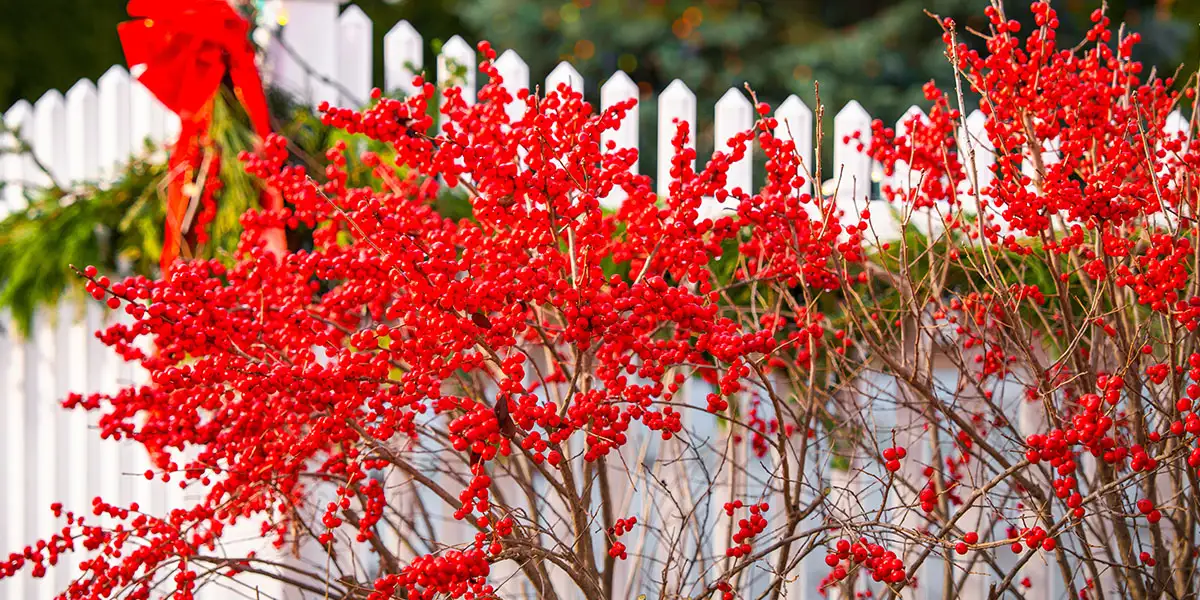
- Add Berries Where Winter Needs Color
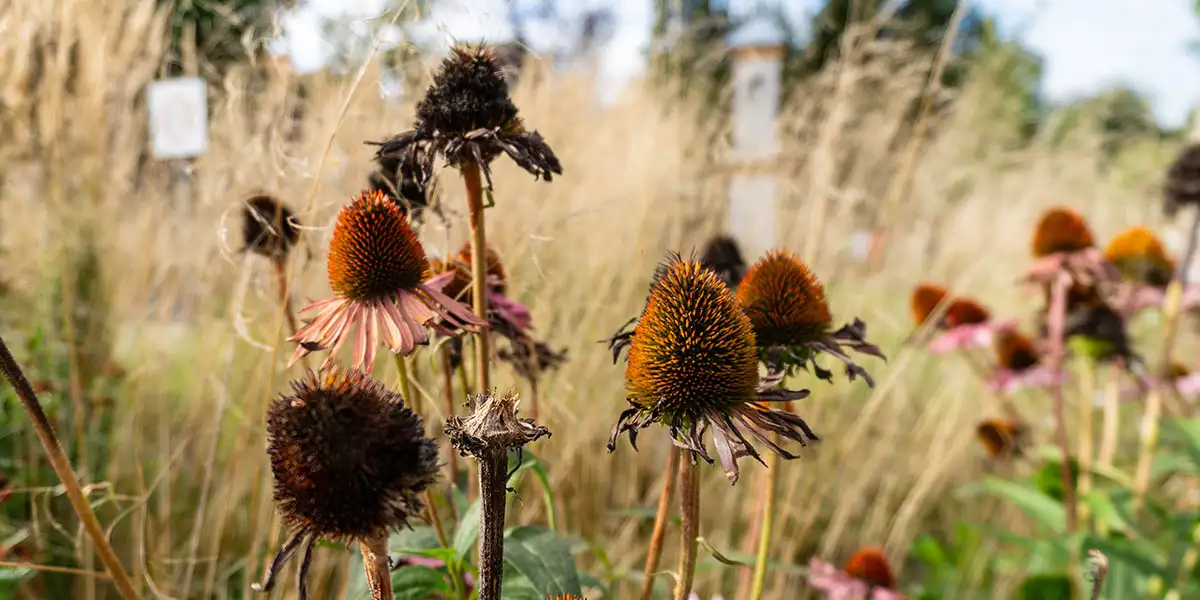
- Don’t Be Too Quick With the Pruners
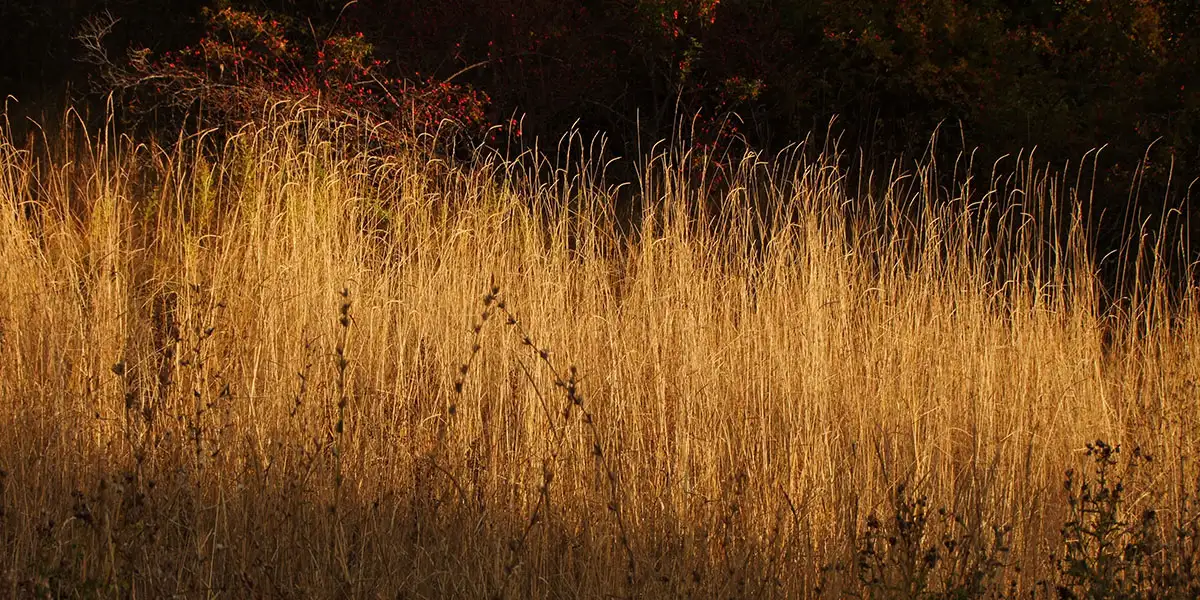
- Design for Movement
- Pay Attention to the Last Light
- Then Add Light Carefully
- Remember the View From Inside
- Try the 4:30 Test
- A Garden Shouldn’t Have an Off-Season
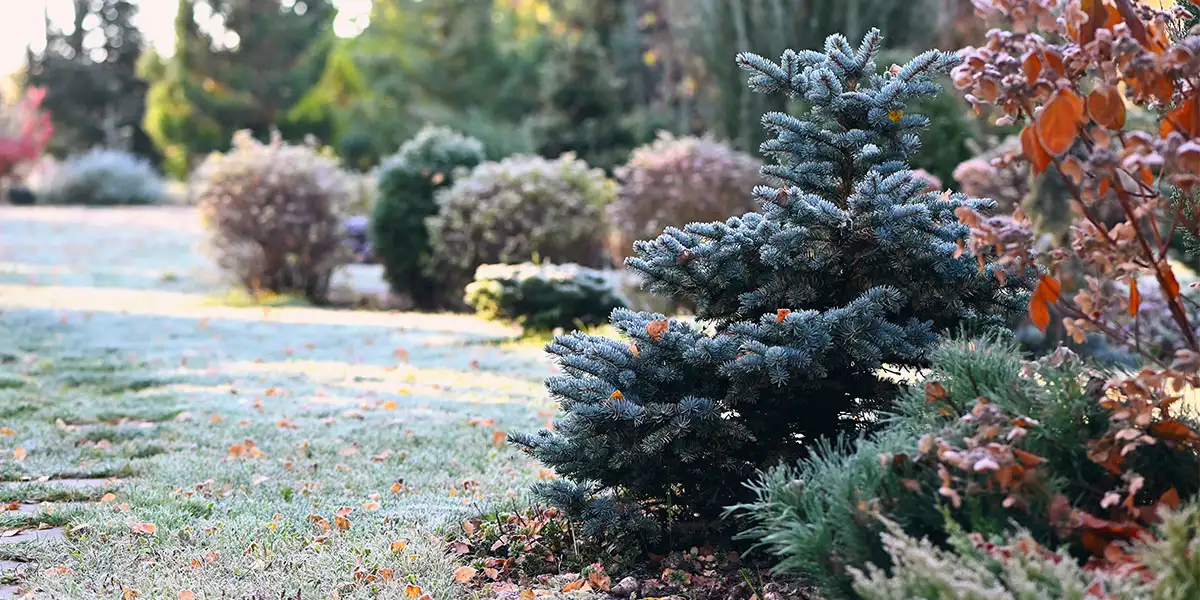
First, Look at Your Garden in the Darker Months
Here’s a simple experiment. One afternoon this fall, walk through your house at about 4:30 and look out the windows you use most often. Look through the window above the kitchen sink. Stand at the family room window. Look outside from the dining room, home office, or the chair where you like to read. Then step outside and approach your house from the driveway or walkway.
What do you notice?
You may discover that a landscape that seemed full and colorful in June suddenly looks surprisingly empty. Perhaps the perennial border has flattened into a mostly brown patch. Maybe there’s an enormous dark space beyond the patio. The front entrance that looked welcoming all summer may now feel a little lost.
This’s not necessarily a problem with the plants. It may simply mean the landscape was designed primarily for the growing season. The darker months reveal the underlying structure of a garden, which makes fall an excellent time to evaluate it.
Think in Silhouettes
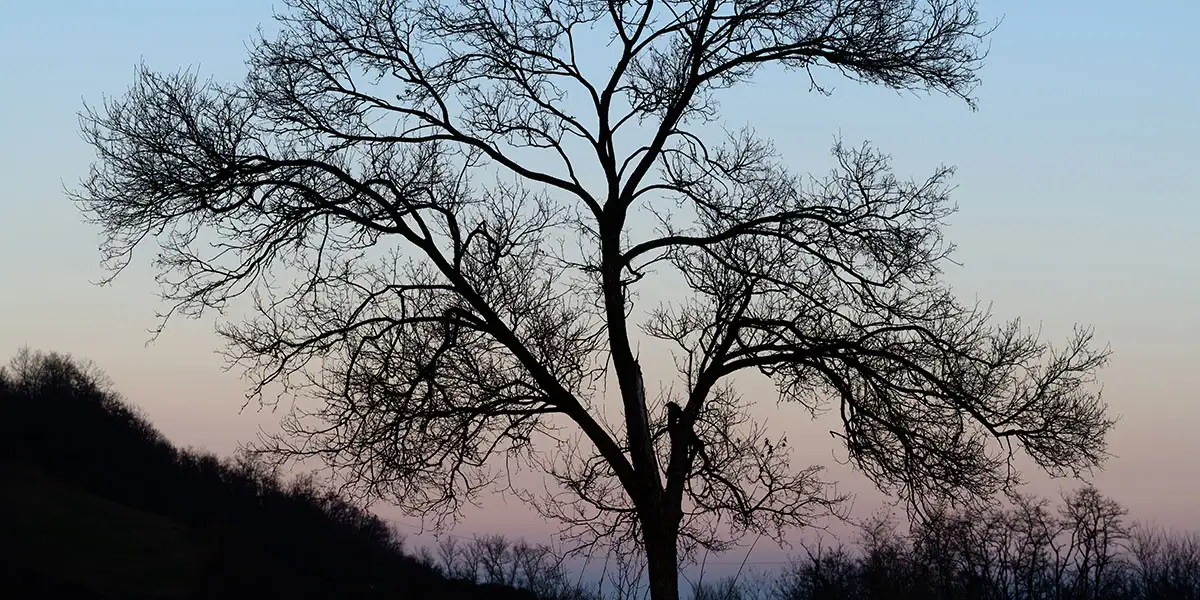
When daylight is limited, the outline of a plant becomes more important than the color of its flowers. A beautifully branched tree can become almost sculptural against a winter sky. A columnar evergreen can create a strong vertical accent beside an entrance, while an arching ornamental grass can catch the last low rays of afternoon sun.
This’s why plant form matters so much in a four-season landscape. Imagine removing every flower from your garden. Which plants would still be interesting?
Some might form rounded mounds. Others may be tall and narrow, spreading and horizontal, irregular and sculptural, or soft and arching. The strongest landscapes usually contain a mixture of these forms.
That’s why we recommend considering not only fall foliage, but also bark, fruit, form, and texture when planning landscapes for autumn and winter interest. Those qualities become especially noticeable when you view the landscape in fading light.
Give Evergreens an Important Role, Not Every Role
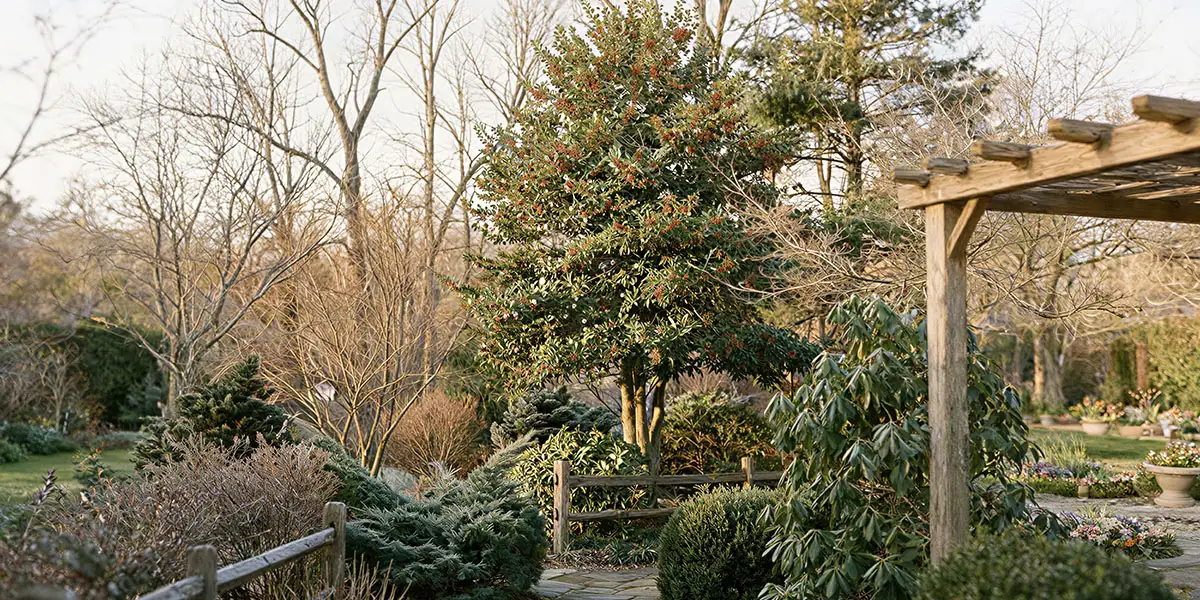
Evergreens are obvious candidates for winter landscapes, and for good reason. When deciduous plants have dropped their leaves, evergreen foliage provides color, mass, and structure. The trick is not to turn the entire property into a wall of green.
Landscapes composed exclusively of evergreens can become visually monotonous. Combining them with deciduous plants creates changing color, texture, branching patterns, and seasonal contrast.
Think of evergreens as the framework.
A well-placed eastern red cedar (Juniperus virginiana) can provide a strong vertical presence. American holly (Ilex opaca) offers glossy evergreen foliage and, on female plants with appropriate pollination, colorful fruit. Mountain laurel (Kalmia latifolia) provides broadleaf evergreen texture in sites that suit its cultural needs. Even lower-growing evergreen plants can make a difference. Christmas fern (Polystichum acrostichoides) can hold welcome greenery in a woodland-style garden after many neighboring perennials have gone dormant.
You don’t need dozens of evergreens. Often, a few placed where the eye naturally lands can make the entire winter landscape feel more intentional.
Let Bark Become the Color in the Darker Months
Once leaves fall, trunks and branches move to center stage. That’s when you suddenly notice plants you may barely have looked at in July.
Paperbark maple (Acer griseum) is a wonderful example. Its peeling cinnamon-colored bark provides texture and character long after the leaves are gone.
Redosier dogwood (Cornus sericea) can bring vivid stem color to a winter planting, particularly when younger stems are encouraged through appropriate pruning.
River birch (Betula nigra) offers exfoliating bark that can be especially striking when positioned where it catches late-day light.
Even mature trees with gray, white, tan, or deeply furrowed bark can become important visual elements. This is one reason the view from inside the house matters.
A beautiful bark plant placed at the back corner of the property may be technically attractive, but its winter impact is limited if nobody sees it. Put an interesting trunk or branching structure where it can be viewed from the kitchen, family room, patio doors, or front walk, and suddenly it becomes part of everyday winter life.
Add Berries Where Winter Needs Color
A garden doesn’t need flowers to have color. Fruit can do the job beautifully.
One standout is winterberry holly (Ilex verticillata). Unlike evergreen hollies, winterberry is deciduous. After its leaves fall, clusters of colorful fruit can stand out dramatically along bare stems. It is worth knowing that winterberry holly plants are dioecious, meaning male and female flowers occur on separate plants. A compatible male plant is needed nearby for female plants to develop fruit.
Other shrubs and small trees can contribute fruit as well, depending on the site and plant selection. The important design lesson is to think about where those berries will be seen.
A red-fruited shrub against a red brick wall may disappear visually. Put the same plant in front of an evergreen backdrop or where low afternoon light can reach it, and the effect changes completely. Contrast is what makes winter color work.
Don’t Be Too Quick With the Pruners
One of the easiest ways to improve a winter garden may be to do less. The traditional fall cleanup often involves cutting practically every perennial to the ground, which can remove some of the garden’s best winter architecture.
The dried flower heads of purple coneflower can add texture. The seedpods of blue false indigo become dark structural accents. Many ornamental grasses remain upright enough to create movement and catch frost or snow.
Leaving certain perennials and ornamental grasses standing can also provide overwintering habitat for beneficial insects and pollinators. That doesn’t mean every brown stem needs to remain until spring. Diseased plant material should be managed appropriately, and some plants simply collapse into an unattractive mess.
The goal is intentional editing. Keep the plants that still contribute something, and suddenly “brown” is no longer a single color. It becomes bronze grass plumes, black seedheads, pale tan stems, copper foliage, silvery bark, and dark branching silhouettes.
Design for Movement
A winter garden can be remarkably still, which makes plants that move especially noticeable. Ornamental grasses are valuable because even a slight breeze can animate their stems and seedheads. A grass planted where it catches late-afternoon backlighting can almost glow.
That movement keeps a dormant landscape from feeling lifeless. A cluster of grasses outside a family room window may provide more visual interest in January than a perennial that produces spectacular flowers for two weeks in June.
That doesn’t make the perennial a poor choice. It simply means the best landscapes contain plants working different shifts throughout the year.

Pay Attention to the Last Light
Winter sunlight behaves differently from summer sunlight. It sits lower in the sky, creating longer shadows and striking plants from different angles.
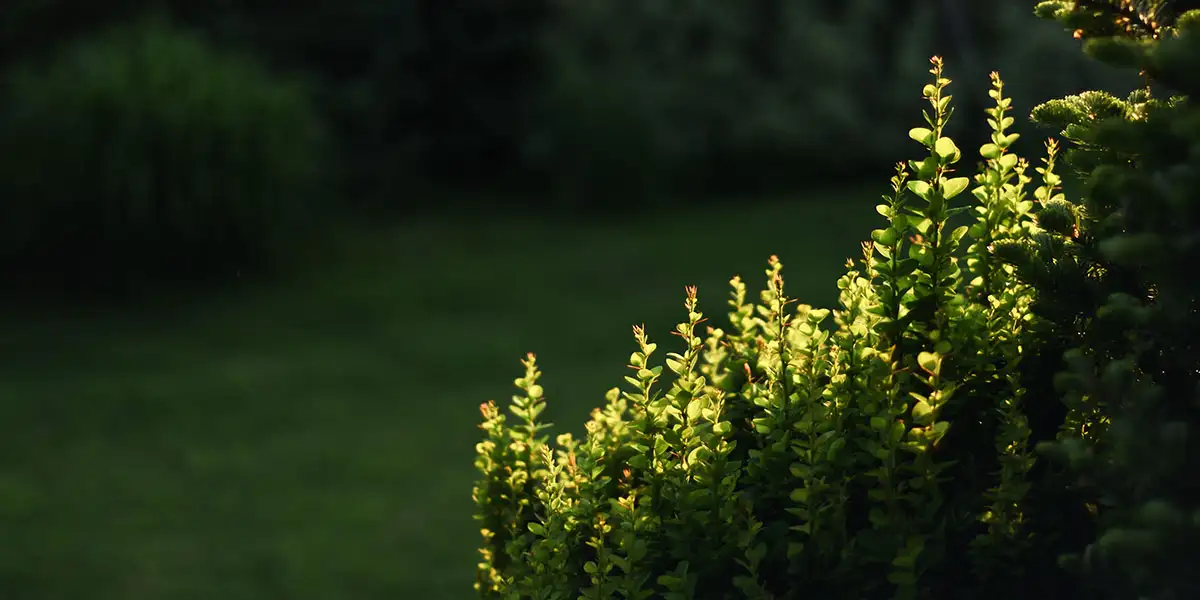
Take advantage of it by noticing where the late-afternoon sun enters your property in November. A patch that seemed unimportant in summer might suddenly become illuminated at precisely the time you are looking out the window. Plants with fine textures, peeling bark, pale stems, berries, or seedheads can become particularly beautiful when backlit.
You can even think about the garden almost like a photographer. Where is the light coming from? What will it strike? What will be silhouetted, and what will disappear?
This kind of observation can influence everything from the placement of a specimen tree to the location of an ornamental grass.
Then Add Light Carefully
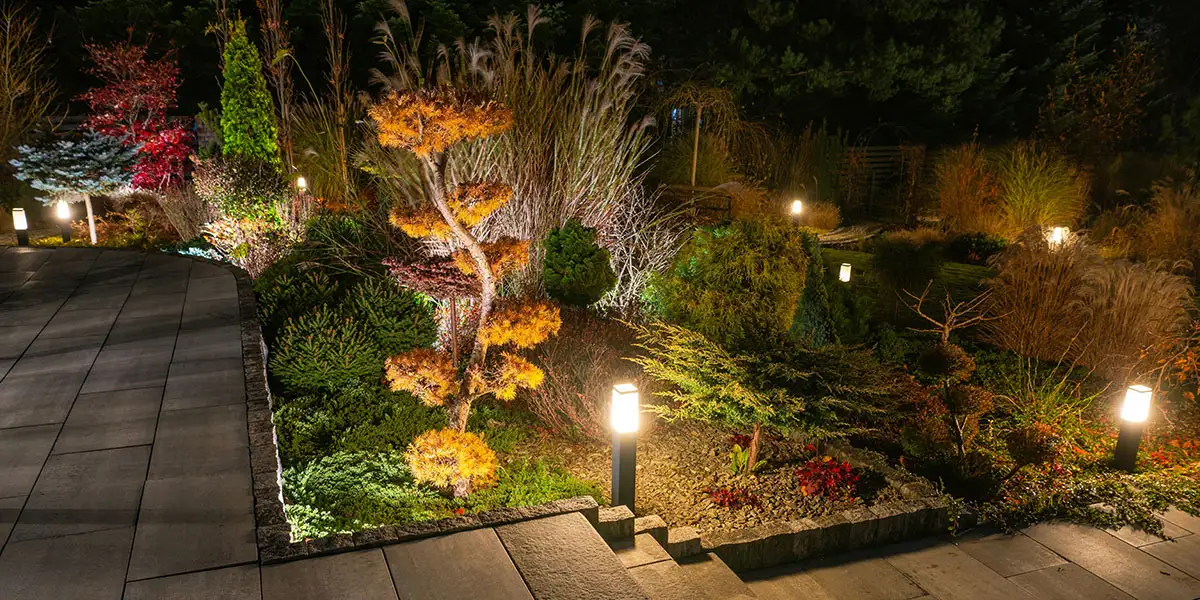
Of course, eventually even the last sunlight disappears, but that doesn’t mean the landscape has to. Thoughtfully placed landscape lighting can reveal the structure that is already there.
The key word is thoughtfully. More light is not necessarily better light.
Instead of flooding the entire property with brightness, consider highlighting a few important elements: the trunk of a beautiful tree, the texture of a stone wall, an evergreen near the entrance, a walkway, or the branching structure of a specimen plant.
Light can also create depth. If the only illuminated area is immediately beside the house, the yard beyond it can become a black void. A carefully chosen point of light farther into the landscape can visually extend the property and create a sense of dimension.
The same principle helps explain why professionally installed holiday lighting can have such a dramatic effect. Great holiday lighting does more than outline a roof. It can reveal the architecture of the house and the forms of trees and shrubs that may go unnoticed during the rest of winter. The plants and the lighting should complement each other.
Remember the View From Inside
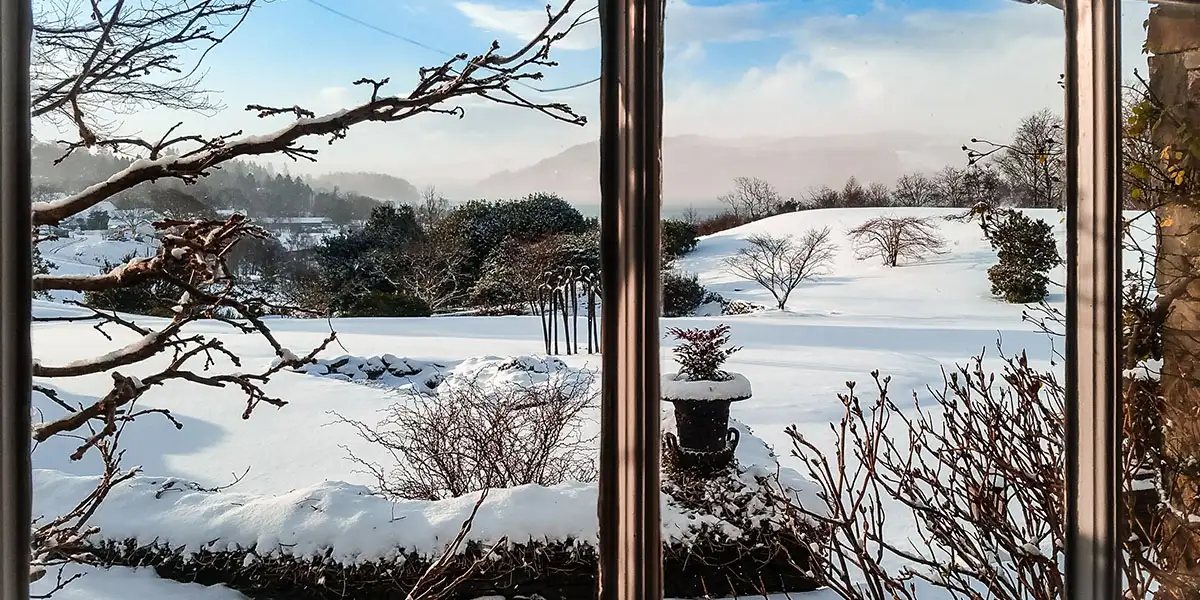
Perhaps the biggest shift in winter garden design is realizing that you don’t have to be standing in the garden to enjoy it. In July, the patio may be the center of outdoor life. In December, the kitchen window might be.
That means some of the best winter-interest plants should be positioned where you can see them from the rooms in which you spend the most time. A colorful winterberry outside the breakfast room, a graceful ornamental grass beyond the family room, an interesting tree trunk visible from the kitchen, or a softly illuminated evergreen beyond the patio doors can become part of the experience of the house itself.
These are living pictures that change with frost, snow, birds, wind, and light.
Try the 4:30 Test
This fall, try looking at your property differently. At about 4:30 one afternoon, walk from room to room and take note of what you see outside.
Ask yourself where your eye naturally goes and which parts of the landscape still look interesting. Notice where everything seems to disappear. Look for recognizable silhouettes, evergreen structure, interesting bark, fruit, or texture. Pay attention to what catches the last sunlight and what might look beautiful with subtle lighting after dark.
You may discover that your garden doesn’t need a complete redesign. It may simply need one well-placed tree, a group of grasses, an evergreen anchor, a fruiting shrub, or better lighting to transform the winter view.

A Garden Shouldn’t Have an Off-Season
We often judge landscapes by their most spectacular moments: the week the azaleas flower, the hydrangeas reach their peak, or autumn foliage turns brilliant orange and red. Those moments are memorable, but they are brief.
A well-designed garden has quieter seasons, too. Its winter beauty may come from the branching pattern of a tree instead of its flowers, the red fruit of a shrub against fresh snow, the movement of grasses in a cold breeze, or the glow of a beautifully illuminated evergreen outside the family room window.
Those details are easy to overlook when the garden is overflowing with summer color. At 4:30 on a November afternoon, they become the whole show.
Perhaps that’s one of the best tests of a truly thoughtful landscape: It should still give you something worth looking at after the sun starts going down.
At Bountiful Acres, we love helping Bucks County homeowners choose trees, shrubs, perennials, and landscape solutions that offer more than one season of interest. Our garden center team can help you find plants that bring structure, color, texture, and life to the colder months, while our landscape professionals can help you look at the entire property as a four-season composition. We also offer landscape and holiday lighting services that can make those winter views even more memorable.
Stop in this fall and look at the nursery with 4:30 p.m. in mind. You may be surprised by which plants suddenly steal the show.