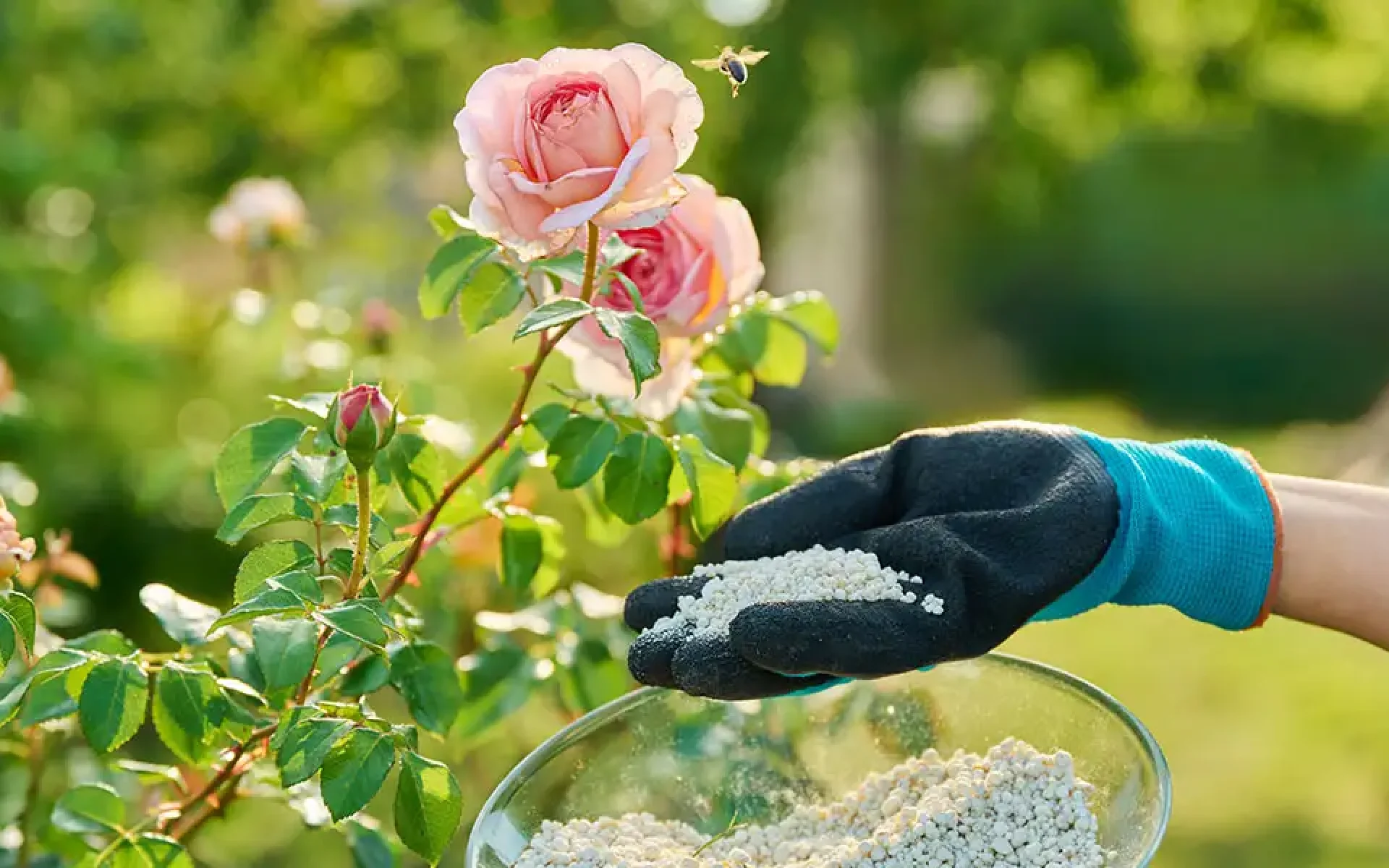
If plants could talk, they would probably say something like: “Water is great, sunlight is awesome… But do you have anything to eat?”
That’s basically what fertilizer is. Not magic, not a cure-all, and not something you need to fear. Fertilizer is simply plant nutrition, and when it’s matched to the right plant at the right time, it helps your landscape and containers look fuller, healthier, and more impressive with less struggle.
The NPK Code: What Those Numbers Really Mean
Every bag, box, or bottle of fertilizer has a set of three numbers on the front, like 10-30-20 or 29-0-3. Those numbers represent the percentage of three major nutrients plants use the most:
- N = Nitrogen (N)
- P = Phosphorus (P)
- K = Potassium (K)
The scientific symbols are N-P-K, and the numbers tell you how much of each is in the product.
Here’s the trick that helps people remember because it’s wonderfully visual:
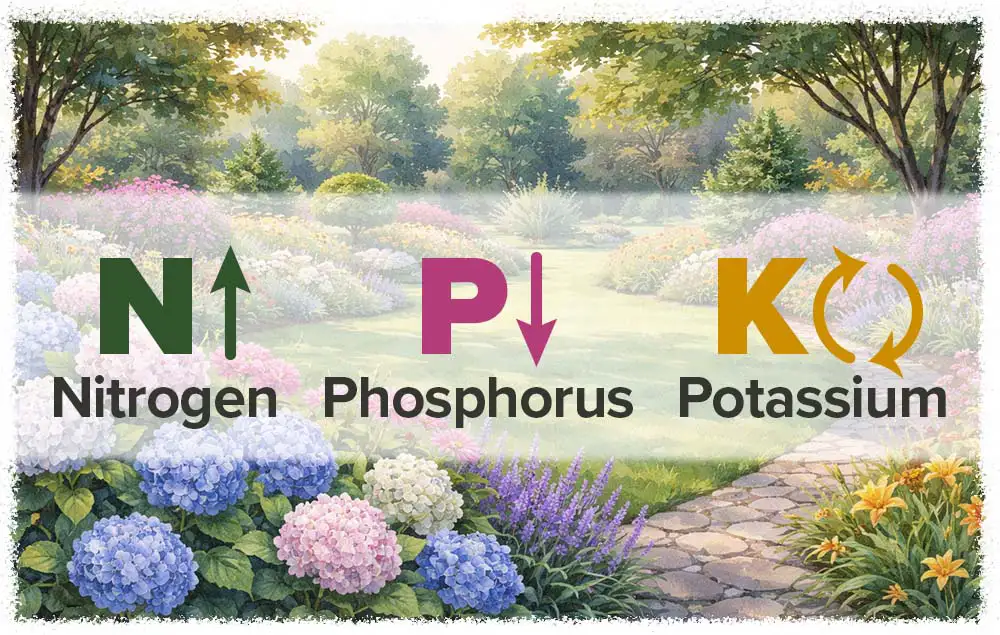
UP – DOWN – ALL AROUND
- UP = Nitrogen (N)
Think leafy growth and green color. Nitrogen fuels plant and leaf growth, helps plants look lush, and supports chlorophyll production, which is what makes leaves green and turns sunshine into plant energy. - DOWN = Phosphorus (P)
Think roots and blooms. Phosphorus supports root growth and improves bloom health (both how many flowers you get and how good they look). It also helps plants handle stress, like heat, transplanting, and general “ugh” weather. - ALL AROUND = Potassium (K)
Think strength and resilience. Potassium plays a role in protein production, helps with overall strength, and supports disease resistance, kind of like a plant’s immune system.
Once you remember UP-DOWN-ALL AROUND, walking the fertilizer aisle becomes way less intimidating.
What’s the Difference Between Organic and Synthetic Fertilizers?
This is one of the most common questions we hear, and the good news is: both can be great. The “best” choice depends on your goals, your timeline, and your personal gardening style.
Organic Fertilizers
Organic fertilizers (like many Espoma® products) typically:
- Have lower NPK numbers
- Release nutrients slowly
- Improve soil health over time
- Are often gentler and more forgiving
They’re a steady, slow-and-happy approach. Perfect if you like building long-term soil quality and supporting your plants in a more gradual way.
Synthetic Fertilizers
Synthetic options (like Miracle-Gro®, Osmocote®, Shultz®, and others) typically:
- Have higher NPK numbers or faster availability
- Provide quicker visible results
- Are very consistent and predictable
A lot of gardeners love synthetics because they’re what they grew up using, and when used correctly, they’re extremely effective. If you want faster “wow,” synthetics are often the shortest path.
At Bountiful Acres, we’re happily in the “let’s match the fertilizer to the plant and the person” camp. No judgment. Just healthy plants.
Fertilizer Isn’t One-Size-Fits-All
Different plants are hungry for different things at different times. Leafy lawns want a different menu than blooming containers. Hydrangeas have opinions. Vegetables want support for roots and fruit. Once you know the goal, you can choose the fertilizer that helps you get there.
Here are some of the most common situations we help with in the garden center…
Feeding Lawns: The Green Carpet Plan
If your lawn is the star of your outdoor show, it’s going to need nutrients to stay thick, green, and resilient.
How often should you fertilize a lawn?
A solid general plan is two to four times per year:
- Early spring, after the ground has “woken up”
- After the first mowing, maybe another light feed in spring (depending on the product and lawn needs)
- Fall (a big one for long-term lawn health)
Many lawns benefit from a fertilizer that’s more nitrogen-rich, because nitrogen supports that lush green top growth.
A Lawn Favorite We Carry
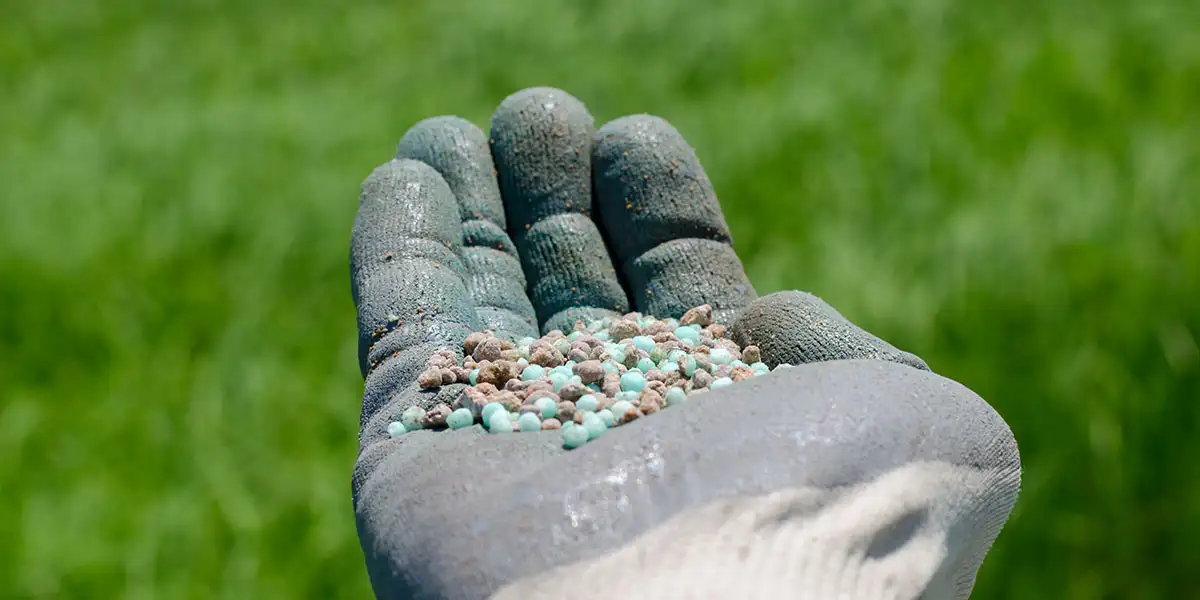
We sell Jonathan Green® lawn food, and a popular formula is 29-0-3. That tells you right away it’s designed to push green growth (UP!) without focusing on blooms or roots.
And if you’d rather not think about timing, rates, or spreading patterns, our landscaping team can also handle fertilizing services as part of overall lawn care.
Hydrangeas: Beautiful, Dramatic, and Slightly Bossy
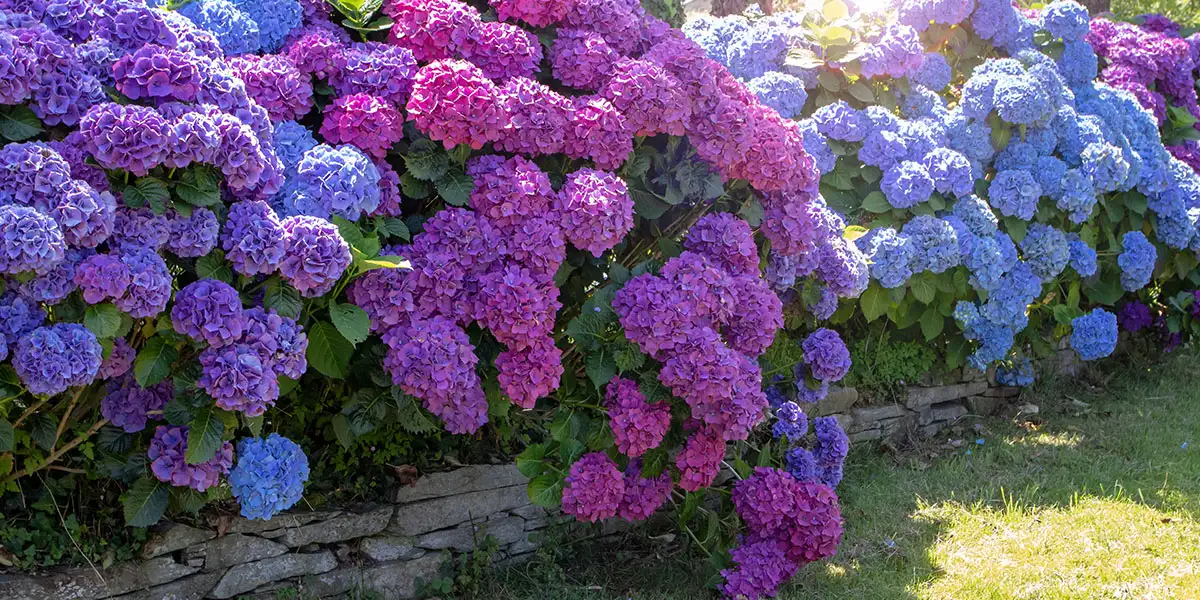
Hydrangeas are the kind of plant that makes you feel like a gardening genius… until they decide to do something unexpected. Fertilizer helps, but there’s a twist: soil pH matters a lot for bloom color.
What Hydrangeas Generally Like
Hydrangeas do well with:
- A balanced fertilizer, and/or
- Help adjusting the soil be more acidic or more alkaline, depending on your color goals
Color Changes: Blue vs. Pink
- More acidic soil tends to encourage blue blooms
- Higher pH (more alkaline) pushes blooms pink
Products We Often Recommend
We carry the very recognizable organic brand Espoma®, including their “tone” line. For hydrangeas, gardeners often reach for:
- Holly-tone® (4-3-4) as a balanced, gentle option
- Soil Acidifier (sulfur) to help lower pH and support bluer tones
- Garden Lime (dolomitic limestone) to raise pH and support pinker tones
Pro tip: pH changes take time. If you’re chasing the perfect hydrangea color, patience is part of the process, and it’s worth it.
Annuals, Containers, and Porch Pots: Feed for Flowers
Annuals and containers are like marathon runners in tiny shoes. They’re expected to perform constantly, often in full sun, wind, and heat, all while living in a limited amount of soil.
That means they benefit hugely from regular feeding.
What You Want Here
For big blooms and lots of flowers, you want a fertilizer with a higher phosphorus number (DOWN!), because it supports bloom quantity and quality.
A Popular Bloom Booster We Carry
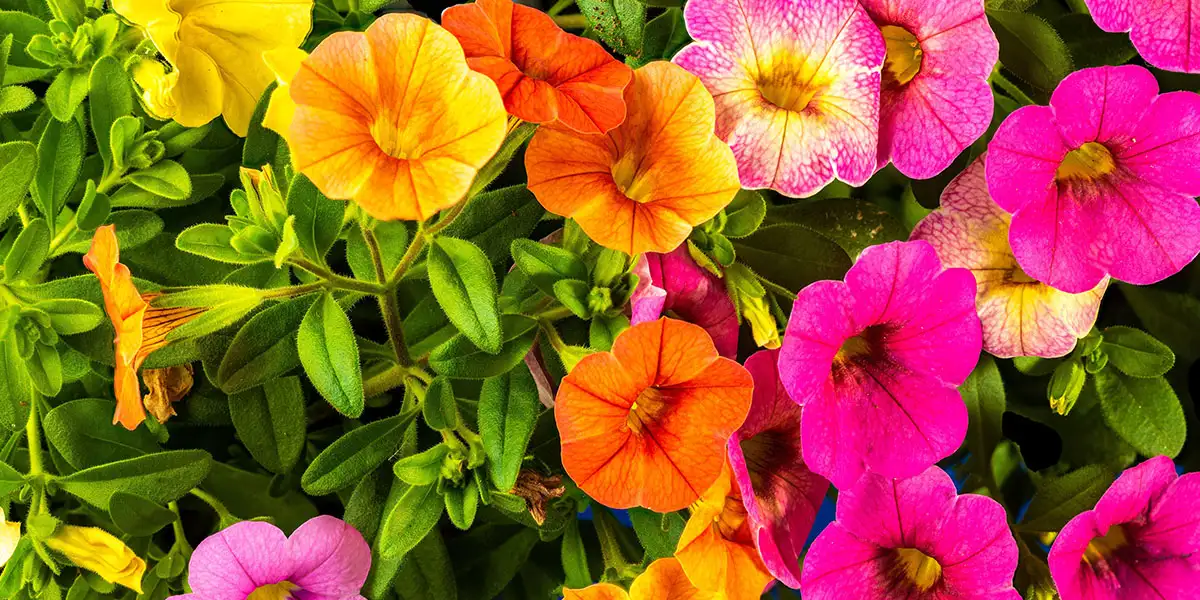
Master Nursery® Bud & Bloom is a go-to for heavy flowering, with a ratio of 10-52-8. (It’s also what we use for our ‘Supertunia Vista® Bubblegum®’ petunuia baskets that draw so much attention along our fence!)
That high middle number is the tell; it’s built for blossoms. If you’ve ever looked at your hanging baskets and thought, “You could be doing more,” a bloom or blossom booster is often the missing piece.
Vegetable Gardens: Grow Roots, Then Grow Dinner
For veggie gardens, the goal is usually:
- Healthy roots
- Steady growth
- Strong flowering and fruiting
- Soil health that improves year after year
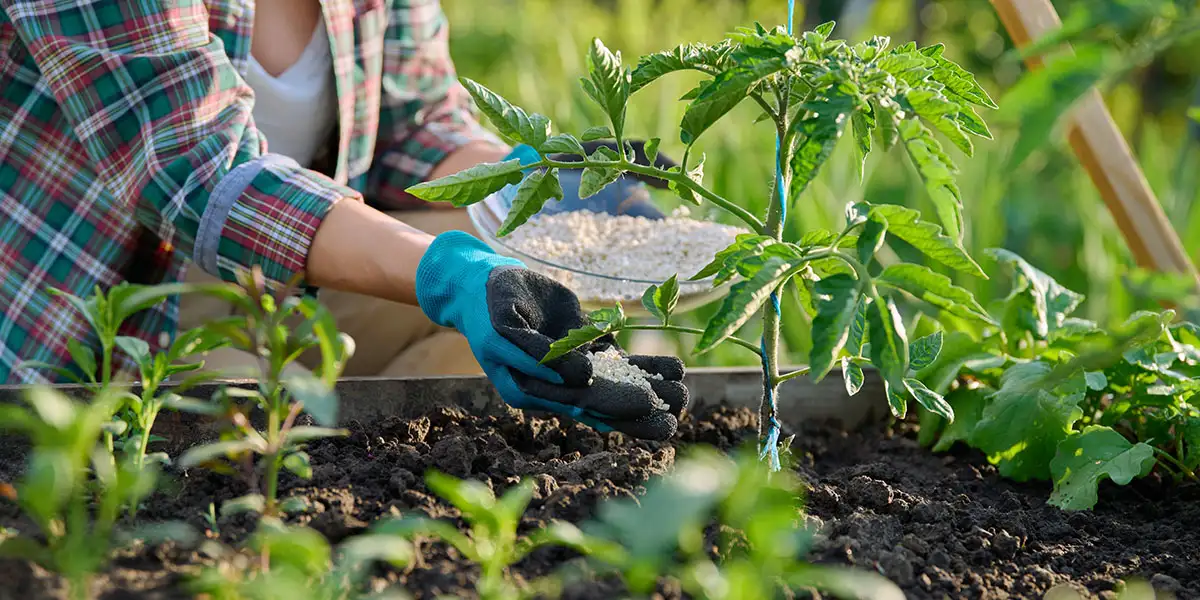
That’s why we often recommend organic fertilizers for edible gardens. They tend to feed the soil as well as the plant, which is a win-win if you garden in the same beds each season.
Organic “Tone” Favorites for Edibles
Espoma® options we often point gardeners toward include:
- Tomato-tone®
- Berry-tone®
- Garden-tone® (3-4-4)
These are nicely balanced to support root growth and fruit production without pushing only leafy growth.
If your tomatoes are gorgeous plants, but stingy with fruit, it’s often because they’re getting too much nitrogen and not enough support for flowering and fruiting. A balanced “tone” style fertilizer can help steer them back into “produce food” mode.
Fertilizer Brands We Carry
Because gardeners have favorites, and because different plants and situations call for different solutions, we carry a wide mix.
Organic Options
- Espoma®
- Jack’s®
- Jobe’s®
- Jonathan Green® (lawn food)
- Neptune’s Harvest (fish-based organic fertilizers)
Synthetic Options
- Miracle-Gro®
- Osmocote®
- Shultz®
- Master Nursery® Bud & Bloom
And yes, we get asked all the time what we feed the flowers we plant out by the road here at the garden center. The answer is: It’s a commercial version of a bud-and-bloom style fertilizer, which is one reason those displays look so cheerful and “fed” all season long.
Tips and Tricks: When the Exact NPK Isn’t Available
You may come in looking for something specific like a balanced 10-10-10, and the shelf is feeling a little too “close, but not quite.”
Here’s a handy hack:
You can adjust the dosage when the ratio is similar.
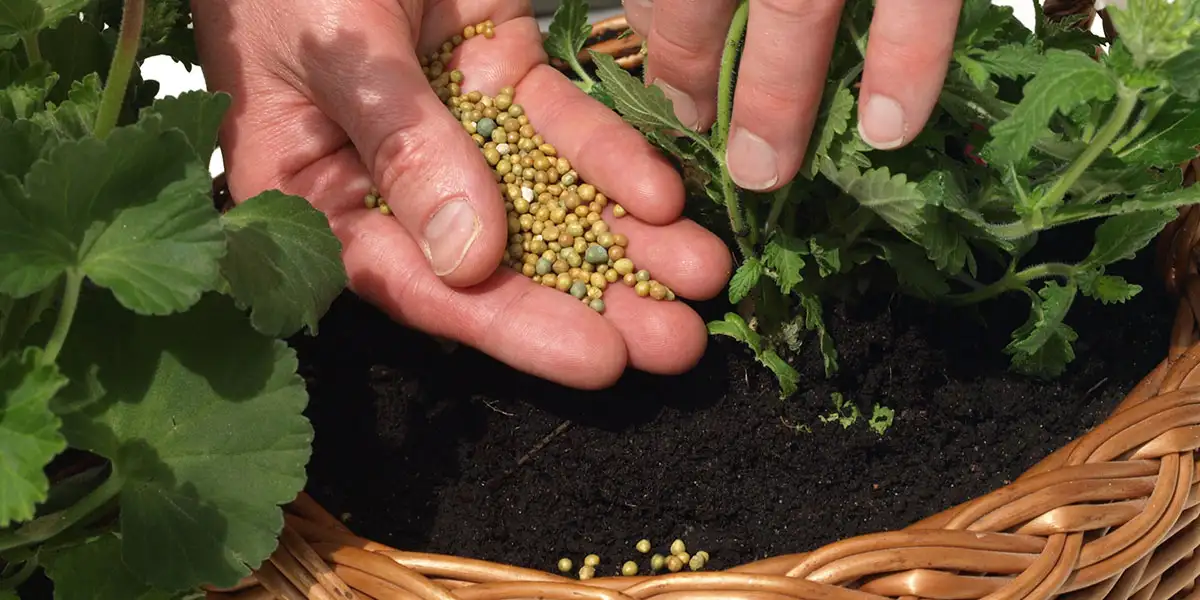
If you can’t find the exact ratio you want, you can often halve or double the dosage of a similar fertilizer.
For example:
- You want 10-10-10, but we have 5-5-5
- You can use double the amount of 5-5-5 to reach a similar overall feeding level
A couple of friendly reminders:
- Only do this when the ratios are truly comparable
- Follow label directions carefully, especially with synthetics
- When in doubt, a slightly lighter feeding is safer than going too heavy
Plants love food, but they do not love being force-fed!
Fertilizer “Do’s & Don’ts” That Save a Lot of Headaches
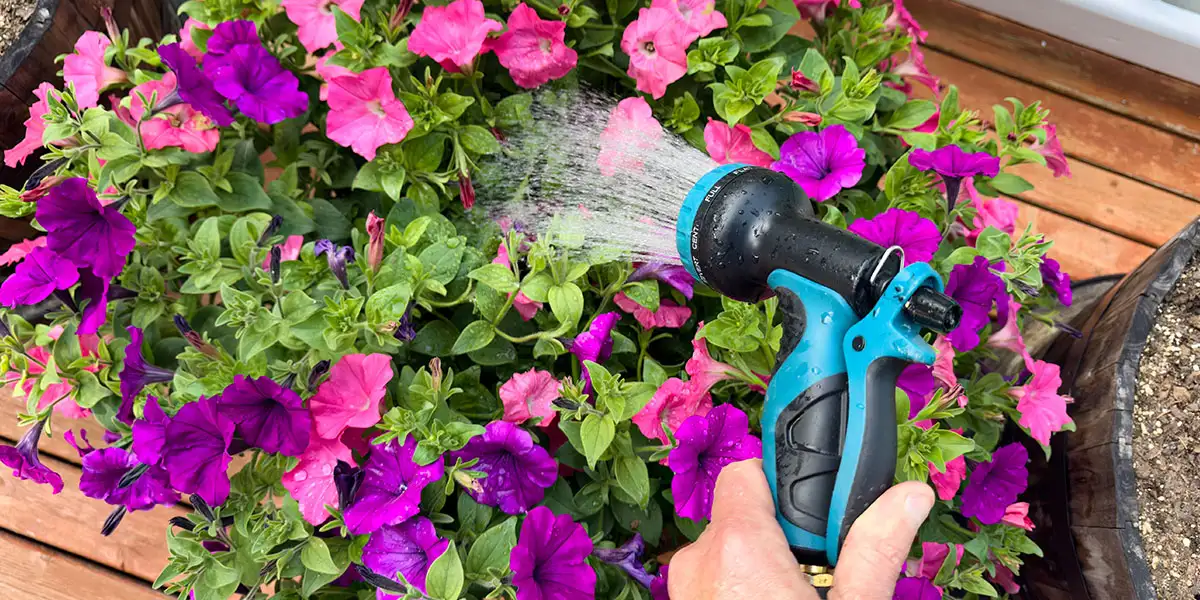
- Do water after applying (unless the label says otherwise). It helps move nutrients into the root zone.
- Do feed actively growing plants. Fertilizing a stressed plant at the wrong time can make things worse.
- Do read the label. The bag is basically a recipe card.
- Don’t fertilize more to fix a problem faster. Over-fertilizing can burn roots and cause weak, stretchy growth.
- Don’t forget that good soil matters. Fertilizer is nutrition, but soil structure, drainage, and organic matter are the whole kitchen.
The Takeaway? Fertilizer Helps Plants Do What They Already Want to Do
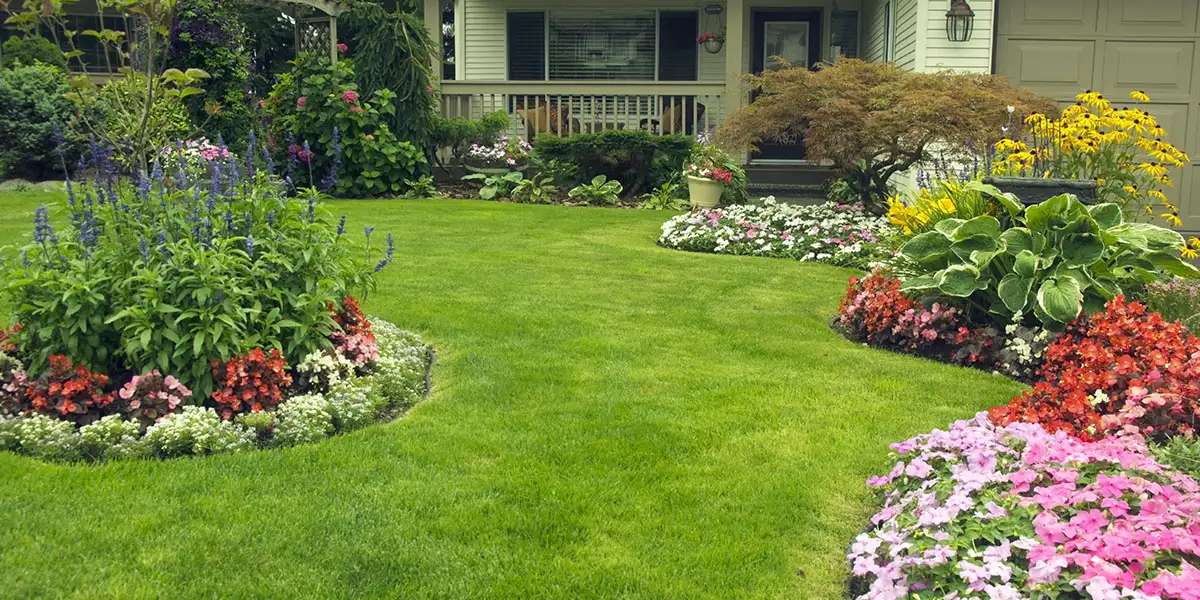
Fertilizer isn’t about forcing your plants to be something they’re not. It’s about giving them the nutrients they need to:
- Grow greener leaves
- Build stronger roots
- Bloom bigger and longer
- Resist stress and disease
- Stay vigorous through the season
If you remember UP – DOWN – ALL AROUND, you’re already ahead of the game.
And if you ever feel stuck standing in front of a wall of bags thinking, “I just want my hydrangeas bluer and my containers showier,” that’s exactly what we’re here for. Bring your questions, bring a photo, tell us what you’re growing, and we’ll help match the fertilizer to your goal.
Your plants are ready to thrive. They might just be hungry.