Flowering trees may get a lot of attention, but flowering shrubs are often the plants that make a landscape feel complete.
They do the everyday work. They soften the corners of a house. They frame a front walk. They give perennial beds some weight and structure. They make a patio feel tucked in rather than dropped in the middle of a yard. And because their flowers are usually closer to eye level, you experience them differently. You don’t just admire them from a distance. You catch their fragrance on the way to the mailbox. You notice the way their branches fill out a border. You appreciate how they keep a space looking intentional even after spring bloom is finished.
That’s a big reason we enjoy growing them so much here at Bountiful Acres. We grow all of our ball-and-burlap trees and shrubs on our 100-acre Bucks County farm, and that gives us the chance to focus on varieties that aren’t just pretty for a moment, but dependable over time. Our flowering shrubs are curated for beauty, performance, and lasting value in the landscape. They’re the kinds of plants that earn their space year after year.
And that really is the point. A good flowering shrub shouldn’t feel like a one-season decoration. It should bring something meaningful to your landscape, whether that’s fragrance, foliage, privacy, pollinator support, fall color, winter bark, or simply the sense that your garden has shape and presence.
Fragrance First
Mock Orange
Some shrubs earn a spot simply because they make people stop and smile.
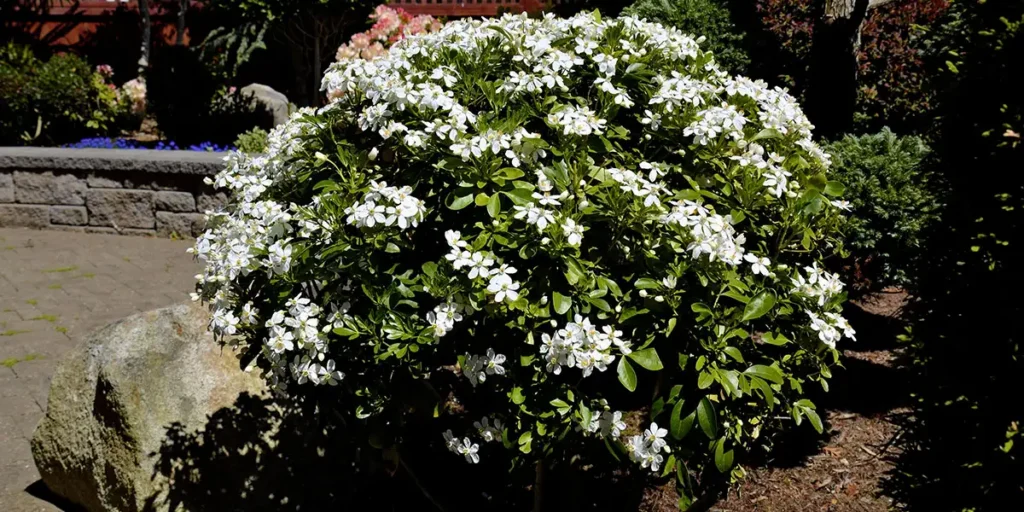
Mock orange, Philadelphus coronarius, is one of those plants. When it blooms, the fragrance is the whole conversation. The flowers are bright white, fresh-looking, and wonderfully scented, especially in the evening. It grows as a rounded shrub and does well in full sun to partial shade. It prefers moist, well-drained soil, but it also tolerates a range of soil conditions, along with drought and wind once established. We often recommend placing it near patios, walks, or sitting areas, which makes perfect sense because this is a shrub you want close by, not hidden in the far corner of the yard.
That is exactly why mock orange enhances a space so beautifully. It creates an experience. Plant it near a back door, beside a porch, or along a path you use often, and suddenly that area feels more inviting. It turns a pass-through space into a place you linger. It also has a relaxed, cottage-garden charm that pairs well with other shrubs and perennials, so it can soften newer landscapes and make them feel more settled. If your property needs a shrub with romance and personality, mock orange has a lot to offer.
Lilac
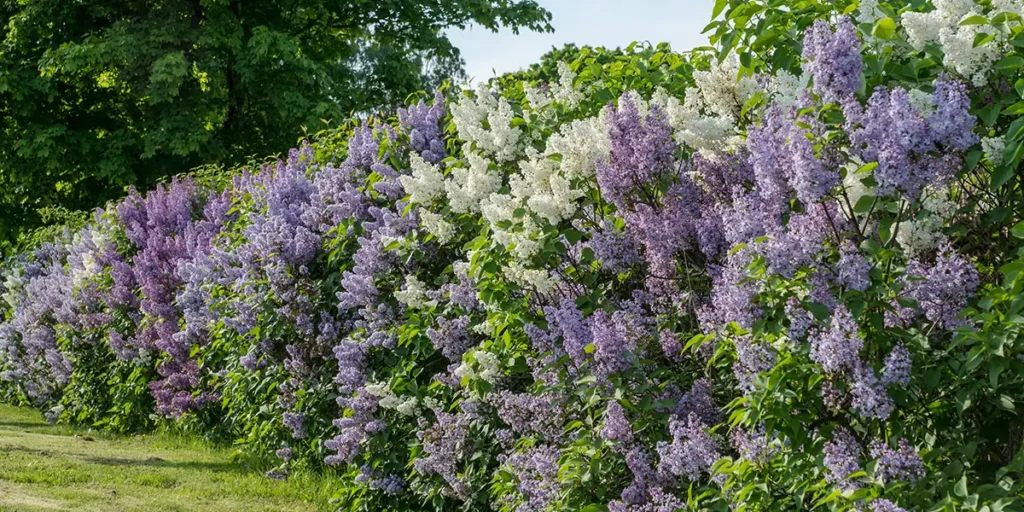
Lilac, Syringa vulgaris, has a different personality, but it creates the same kind of emotional response. People do not casually like lilacs. They remember them. Lilac is cherished for its fragrant, mid- to late-spring flower clusters, and there are many cultivars in shades of white, pink, lavender, and purple. It performs best where it gets that long winter chill it prefers, which makes our region a much friendlier setting for it than warmer climates. It tolerates different soil types, but it does not appreciate poorly drained or highly acidic soil.
In the landscape, lilac brings a sense of tradition in the best possible way. It feels generous and familiar, but it never feels tired when it’s placed well. Near a fence line, it can create a blooming backdrop. Along the edge of a lawn, it can break up open space and make it feel more welcoming. Near a window or outdoor seating area, it delivers that unmistakable spring fragrance right where you can enjoy it. A lilac also has a way of making a garden feel rooted, as though it has been loved for years, even if the planting is brand new.
If fragrance matters to you, these are the kinds of shrubs worth making room for. They do not just flower. They create mood.
Shrubs That Keep Pulling Their Weight
Ninebark
Some flowering shrubs are at their best when they do much more than bloom.
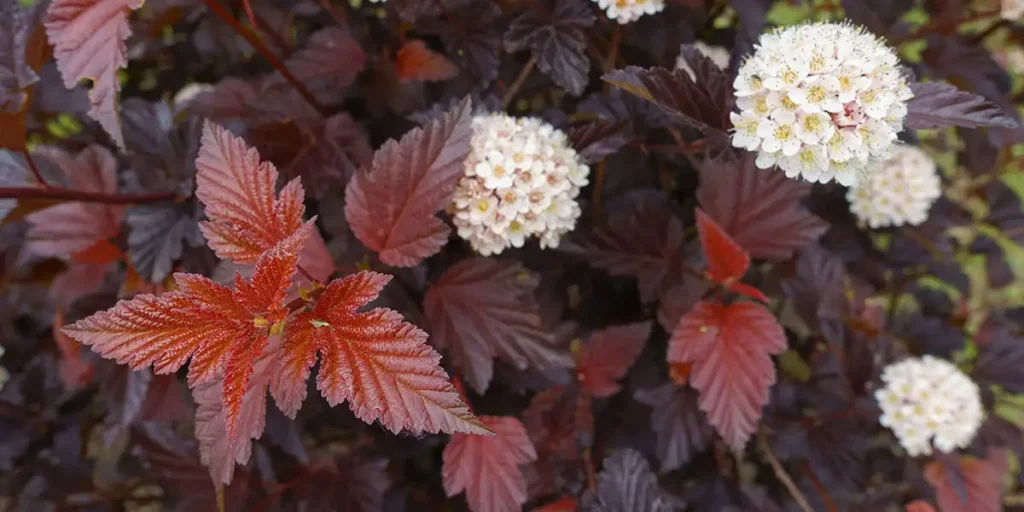
Ninebark, Physocarpus opulifolius, is one of the strongest examples. This deciduous shrub is native to central and eastern North America, and it’s valued for its adaptability as much as for its appearance. It flowers in late spring to early summer with clusters of white or pink blooms, and it tolerates a wide range of soil conditions in full sun to part shade. It’s also noted for its peeling, exfoliating bark, which adds winter interest after the leaves drop. Penn State highlights ninebark as a useful landscape shrub, and includes it among native plant options suited to our broader region.
What makes ninebark such a smart addition to a landscape is the way it combines toughness with style. It can anchor a shrub border, create a flowering hedge, or add contrast among softer-textured plants. Depending on the cultivar, you may get rich green, burgundy, or golden foliage, which means it contributes to the color story of a planting long after the flowers are gone. A shrub that looks good for one week is pleasant, but a shrub that helps carry the whole bed for months is a much better investment.
Oakleaf Hydrangea
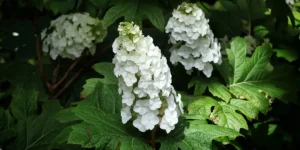
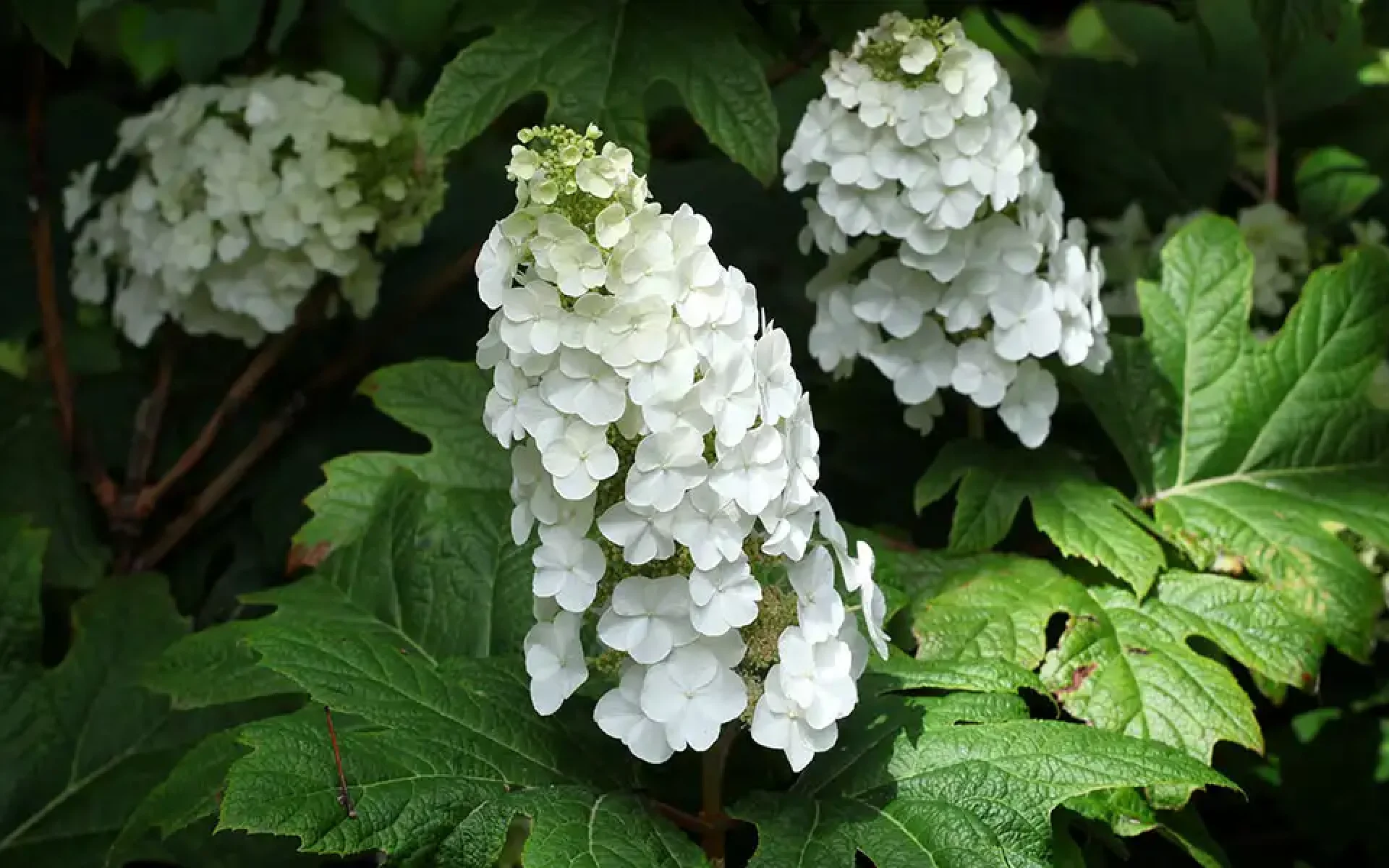
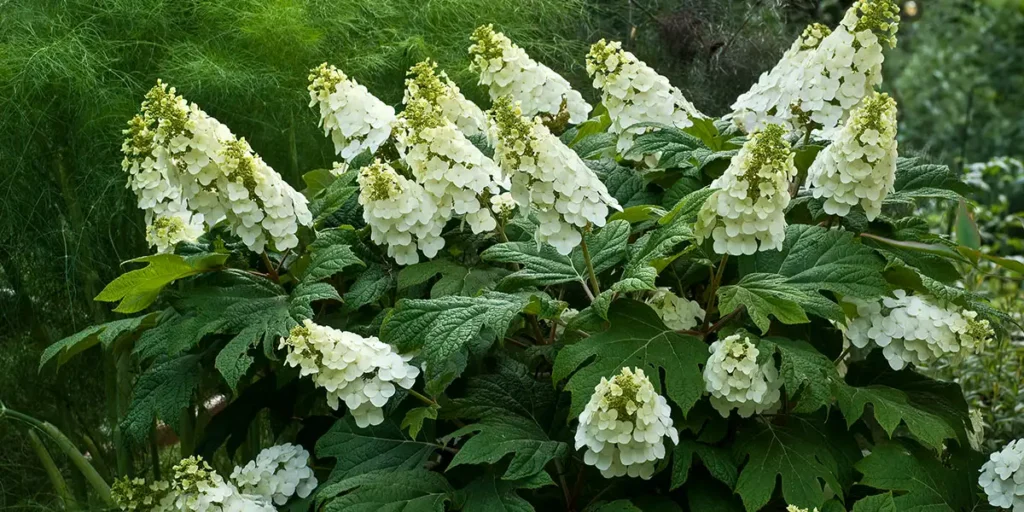
Oakleaf hydrangea, Hydrangea quercifolia, is another shrub that gives you far more than one seasonal moment. It is an upright, multi-stemmed shrub with large oak-like leaves, showy white flower panicles, and exfoliating bark on mature stems. NC State notes that it blooms from mid-spring to early summer, prefers organically rich, well-drained soil with medium moisture, and flowers on old wood, so any pruning is best done right after flowering. Penn State also points to oakleaf hydrangea as a native option with four seasons of interest.
The phrase, “four seasons of interest,” is not just nice marketing language. It’s the real appeal of oakleaf hydrangea. In spring and early summer, you get bold flower clusters. Through the growing season, the large leaves give the shrub a substantial, almost architectural look. In fall, the foliage can color beautifully. In winter, the bark and strong branching keep the plant visually relevant. That kind of year-round contribution can change the whole feel of a foundation bed, woodland edge, or mixed border. If your space needs a shrub with presence, this is one of the best choices around.
The Quiet Overachiever: Viburnum
If there is one group of flowering shrubs that consistently proves its value in the landscape, it’s viburnum.
The beauty of viburnum is that it’s not a one-and-done. Some viburnums are grown for fragrance, some for flower display, some for berries, some for fall color, and many offer a mix of all four. That versatility is what makes them so useful in real landscapes where one plant often has to do several jobs at once.
Korean spice viburnum, Viburnum carlesii, is a wonderful example of the fragrant side of the genus. NC State describes it as a dense, rounded shrub for sun to partial shade with moist, well-drained soil, and notes its very fragrant flowers in mid- to late spring. It is suitable for hedge plantings, shrub borders, and foundation use, and like many spring bloomers, it flowers on old wood, so pruning is best done right after bloom.
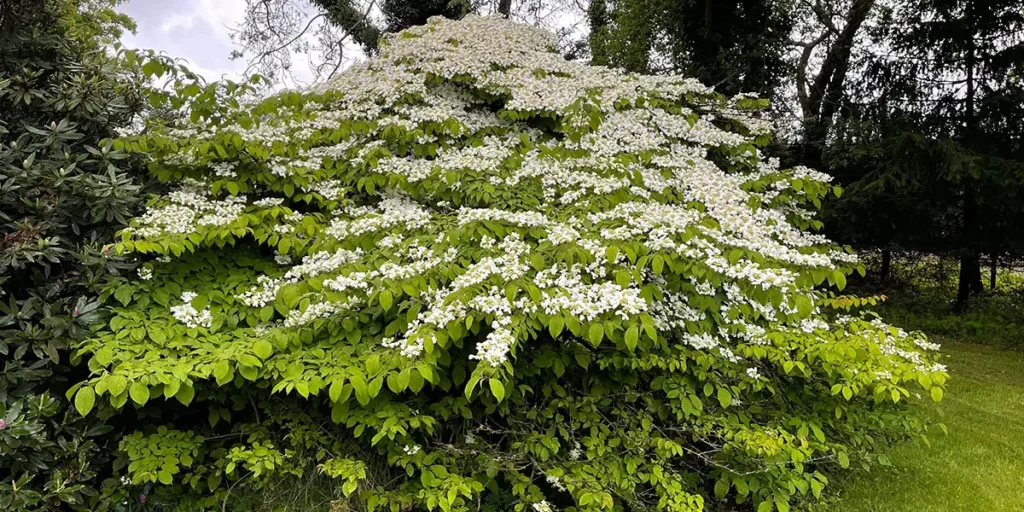
Then there’s doublefile viburnum, Viburnum plicatum f. tomentosum, which has a completely different effect. Instead of relying on fragrance, it wins people over with form. Its horizontal, layered branching gives it a graceful, tiered look, and the spring flowers seem to sit right along those branches. NC State notes that doublefile viburnum grows well in sun to part shade, is adaptable to soil types, can be used as a hedge, foundation shrub, or specimen, and offers red to black fruit for birds along with red to purple fall color.
That’s the sort of shrub that can completely elevate a planting design. It’s refined enough for a front-yard focal point, but natural enough to blend into a more relaxed garden. It can soften a long foundation, anchor the bend in a walkway, or create a beautiful layered screen without looking stiff or over-pruned. If a landscape feels a little flat, viburnum is often part of the fix.
And that’s really the charm of this shrub group as a whole. Viburnums are practical, but they never feel purely functional. They bring flowers, form, and often wildlife value to the landscape, which makes them easy to love and easy to recommend.
Flowering Shrubs Bring a Landscape Together
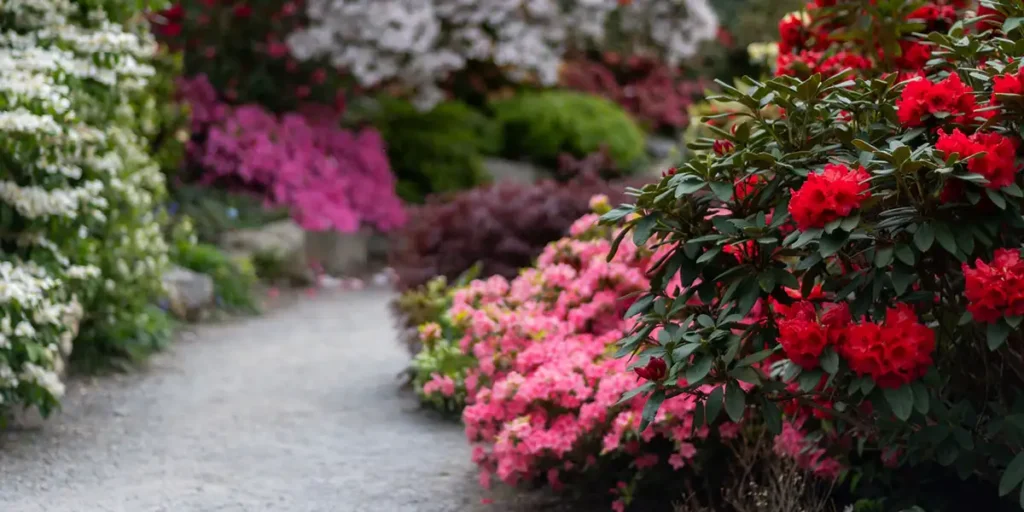
Imagine walking through a landscape where lilac perfumes late spring, mock orange takes over with bright white bloom and evening fragrance, ninebark adds foliage contrast and strong structure, oakleaf hydrangea carries the garden through summer and into fall, and viburnum ties everything together with shape, flowers, and seasonal color. That’s how a property starts to feel rich rather than sparse. That’s how a yard begins to feel like a garden.
And there’s another benefit people sometimes overlook: Shrubs make a landscape feel better at human scale. Trees are essential, of course, but shrubs are what shape the spaces where we actually spend time. They create little rooms, soften edges, frame views, and provide the middle layer that keeps a landscape from feeling empty. When the right shrubs are chosen, they make everything around them look better, including the trees, the lawn, the house, and the perennials below them.
At Bountiful Acres, we are proud to grow ball-and-burlap trees and shrubs on our 100-acre Bucks County farm for you. We’re also proud to offer you container trees and shrubs from trusted vendors.
Our curated flowering shrub selection is chosen with care, and it shows in the beauty, performance, and long-term value these plants bring to the landscape. Whether you have room for one standout shrub or want to build a layered planting with several, adding flowering shrubs is one of the best ways to make your outdoor space more welcoming, more memorable, and more fully alive.