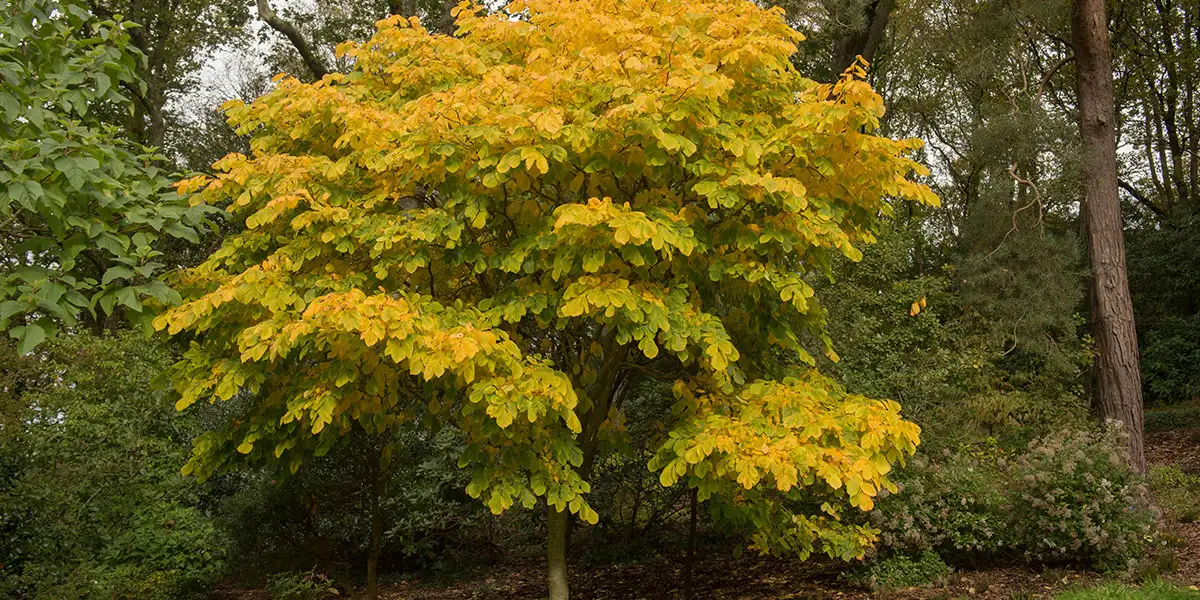
 American Yellowwood, Cladrastis kentukea
If American yellowwood had a larger fan club, it would deserve every bit of the attention.
This is one of those trees that surprises people. From a distance, it has a graceful, refined silhouette with a broad rounded crown. Then, in late spring, mature trees can be covered in drooping clusters of fragrant white flowers that look almost wisteria-like. The foliage is attractive through the growing season, and it turns yellow in fall. The smooth gray bark also adds winter character, which is one more reason yellowwood feels like a tree with real staying power in the landscape.
Why plant one? Because American yellowwood brings elegance without fussiness. It has a calm, almost luminous presence that works beautifully near patios, in front lawns, or anywhere you want a flowering tree that feels a little more distinctive than the usual choices. It’s also one of those trees that makes a garden feel established and thoughtfully composed. If your landscape needs a specimen with softness, seasonal beauty, and a quietly upscale look, American yellowwood is a wonderful answer. It’s the kind of tree people ask about.
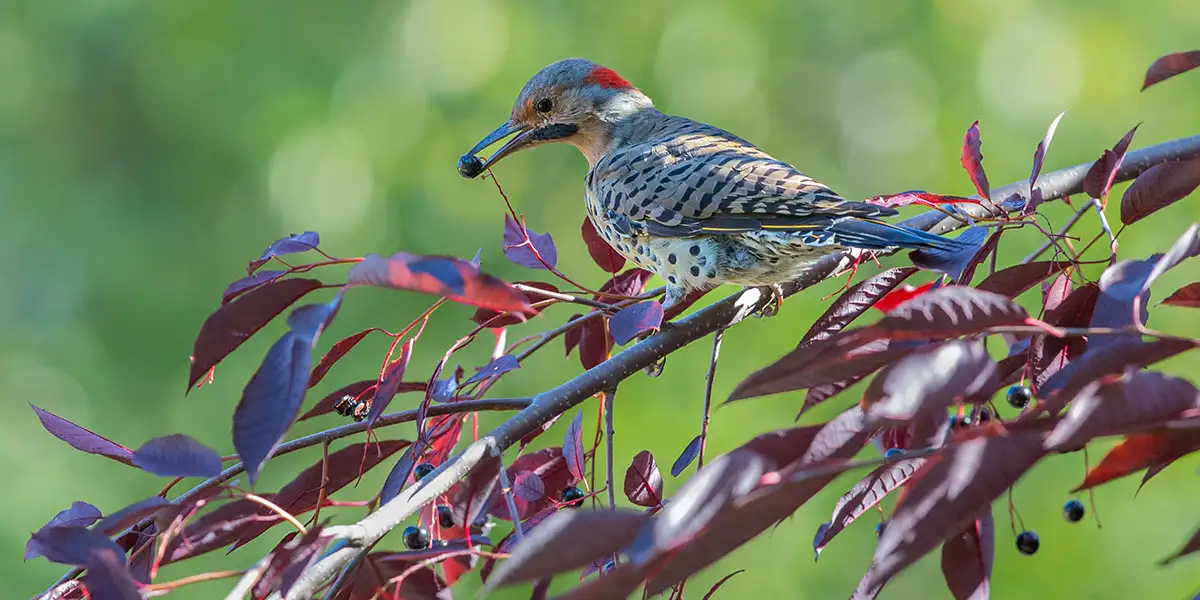 Chokecherry, Prunus virginiana
Chokecherry has a more natural, habitat-friendly personality, and that’s part of its charm.
This native large shrub or small tree produces clusters of white flowers, followed by dark fruit that is highly valued by birds and other wildlife. (That includes being the larval host plant to Eastern Tiger Swallowtail.) In the landscape, chokecherry can read as either informal and naturalistic or surprisingly polished, depending on the variety and how it is used. It is especially effective where a property needs seasonal bloom, some screening, and a looser, more layered look.
Chokecherry enhances a space because it makes a landscape feel alive. It softens the edges of a property, helps bridge the gap between garden spaces and natural areas, and contributes real ecological value along with ornamental appeal. If you love the idea of a flowering tree that feels at home in a more relaxed, bird-friendly setting, chokecherry is a smart choice. It can be especially attractive along property lines, near woodland edges, or in areas where you want the planting to feel generous and natural rather than overly formal.
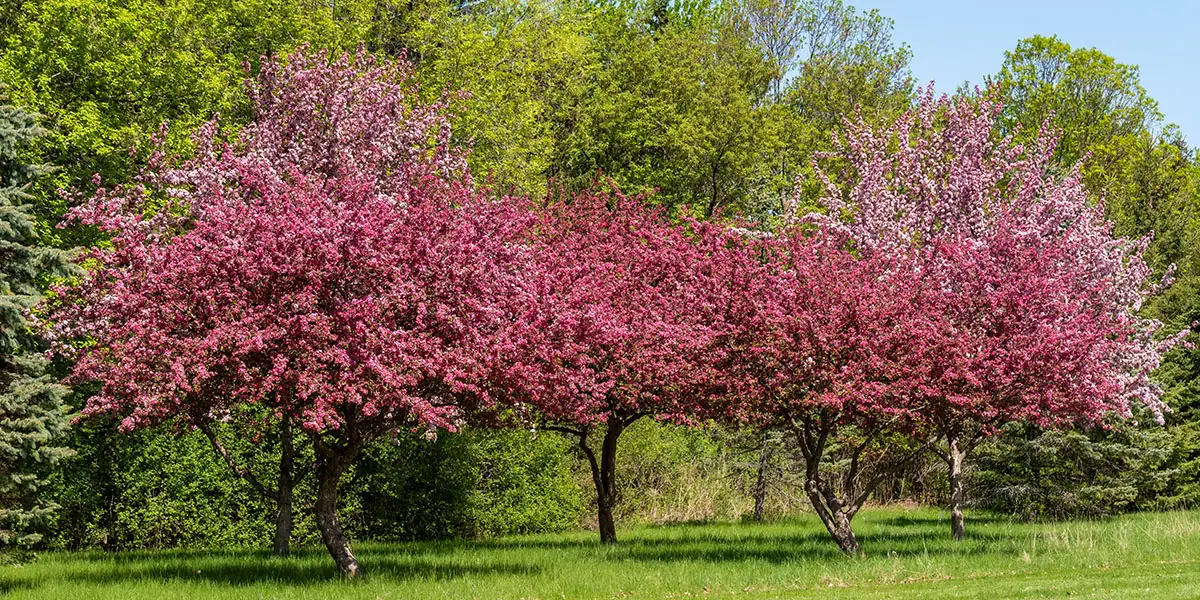 Crabapple, Malus spp.
A good crabapple is one of the hardest-working flowering trees in the landscape.
That’s not an exaggeration. Crabapples are beloved for their spring bloom, but they do much more than that. Depending on the selection, you can also enjoy handsome branching, colorful fruit, and strong fall interest. They come in a wide range of forms, too, from rounded to upright to more compact choices, which makes them easy to fit into many garden styles. Flowering crabapple is a popular small tree for residential landscapes, and current extension guidance consistently emphasizes how important disease-resistant selections are.
That last point is exactly why curated varieties matter. When a crabapple is chosen well, it can be one of the most satisfying flowering trees you can plant. It gives you the classic spring display people love, but it also continues contributing after the petals fall. Some selections carry showy fruit into fall or even winter, and many are excellent accent trees near patios, front walks, or garden beds where their branching and bloom can really be appreciated.
If your space needs a smaller ornamental tree with a big visual payoff, crabapple deserves strong consideration. One well-placed crabapple can anchor a front yard. A pair can frame an entrance beautifully. And if you’re the type who wants spring flowers without giving up structure and seasonal interest the rest of the year, crabapple makes a lot of sense.
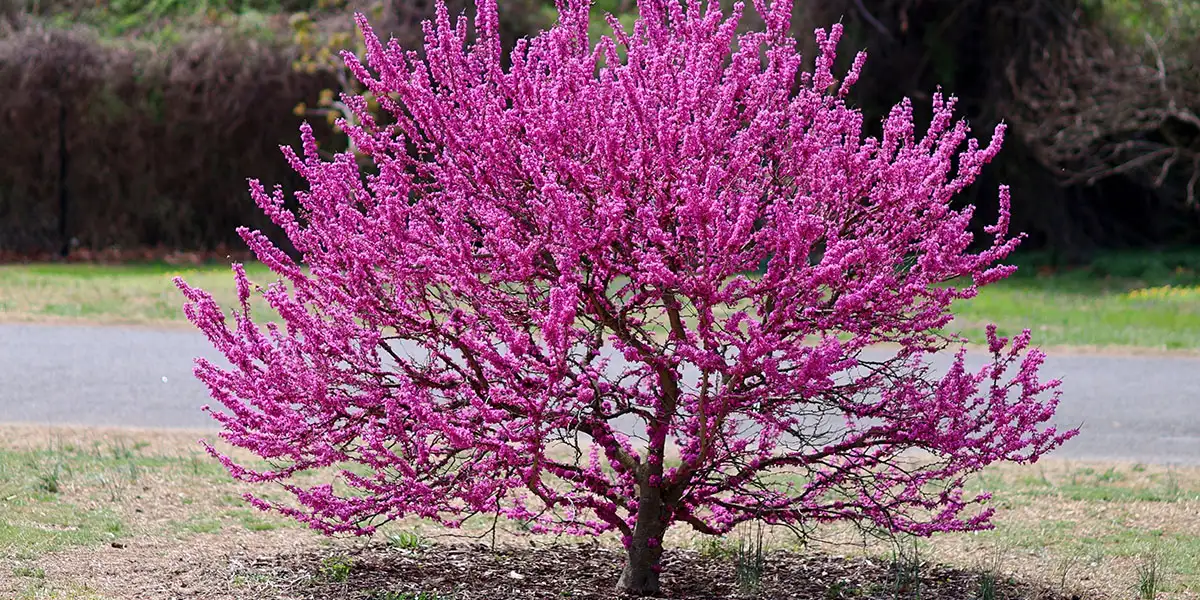 Eastern Redbud, Cercis canadensis
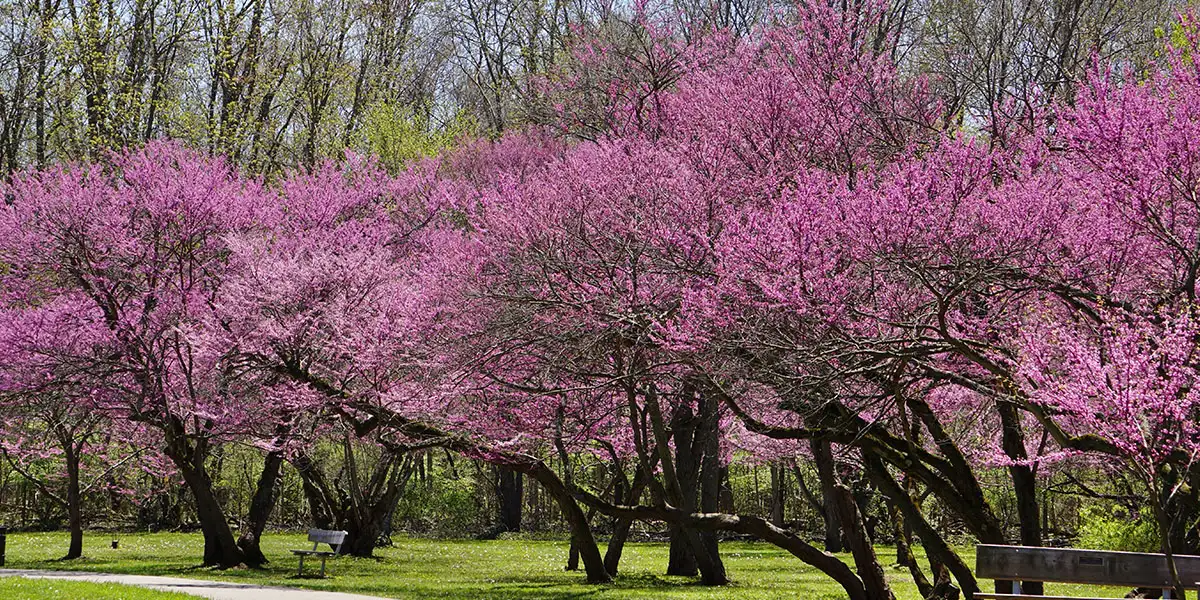
Few trees create more excitement in early spring than Eastern redbud.
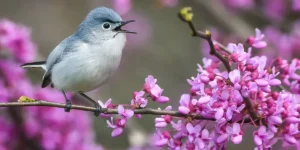
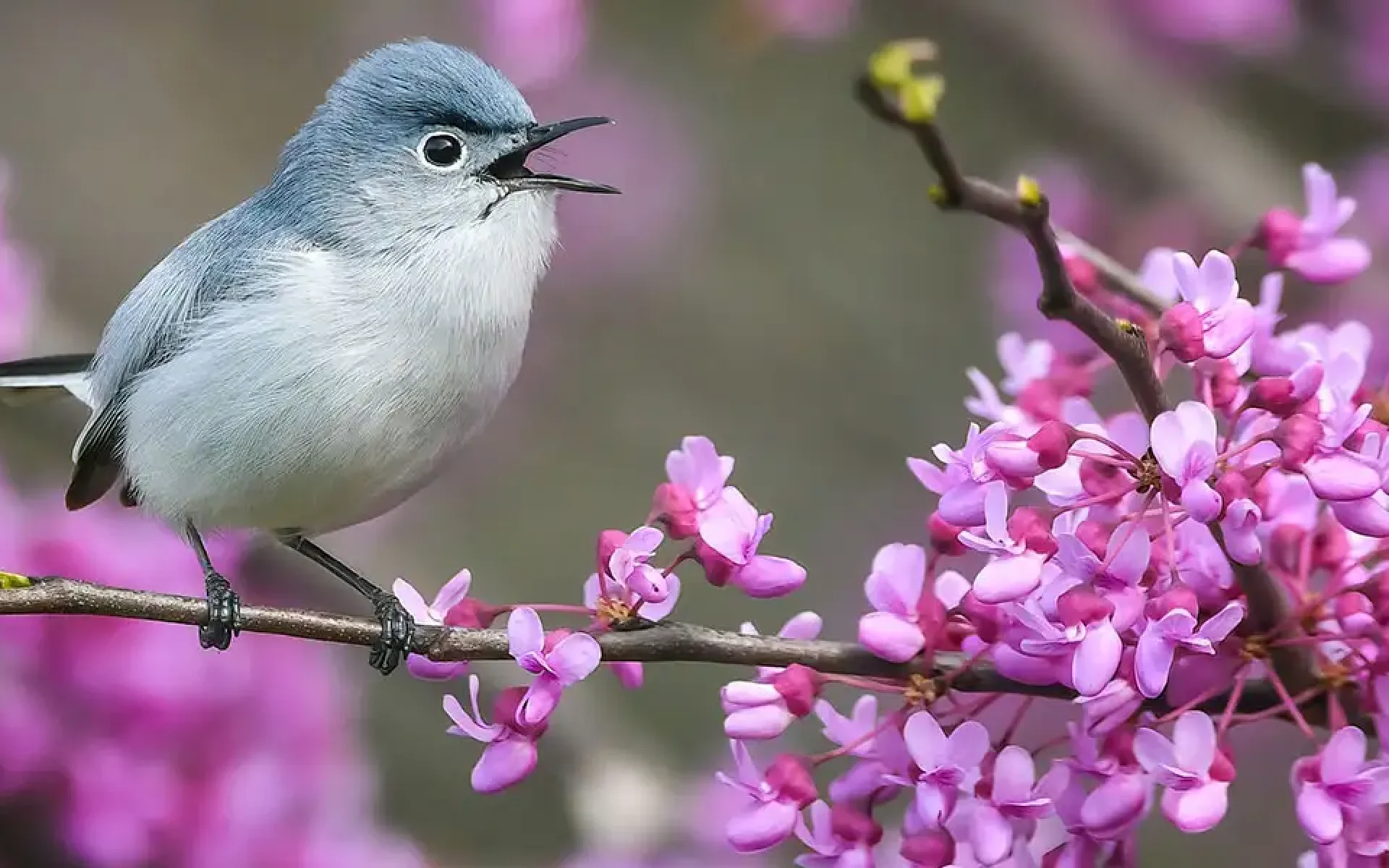
Before the leaves even appear, the branches are lined with rose-pink to light purple flowers. That bare-branch bloom is part of what makes redbud so memorable. It feels cheerful, fresh, and unmistakably spring. After flowering, the familiar heart-shaped leaves take over, giving the tree a soft, welcoming texture through the growing season. Eastern redbud is native to eastern North America, usually grows about 20 to 30 feet tall, and is well suited to use as a specimen, understory tree, or grouped planting. Its flowers also attract pollinators.
And because there are so many beautiful forms and foliage variations among today’s redbud selections, it is easy to see why gardeners rarely stop at just one. A redbud near a patio, another at the edge of a lawn, and a third tucked into a mixed bed is not overdoing it. It is often exactly what gives a landscape depth and personality.
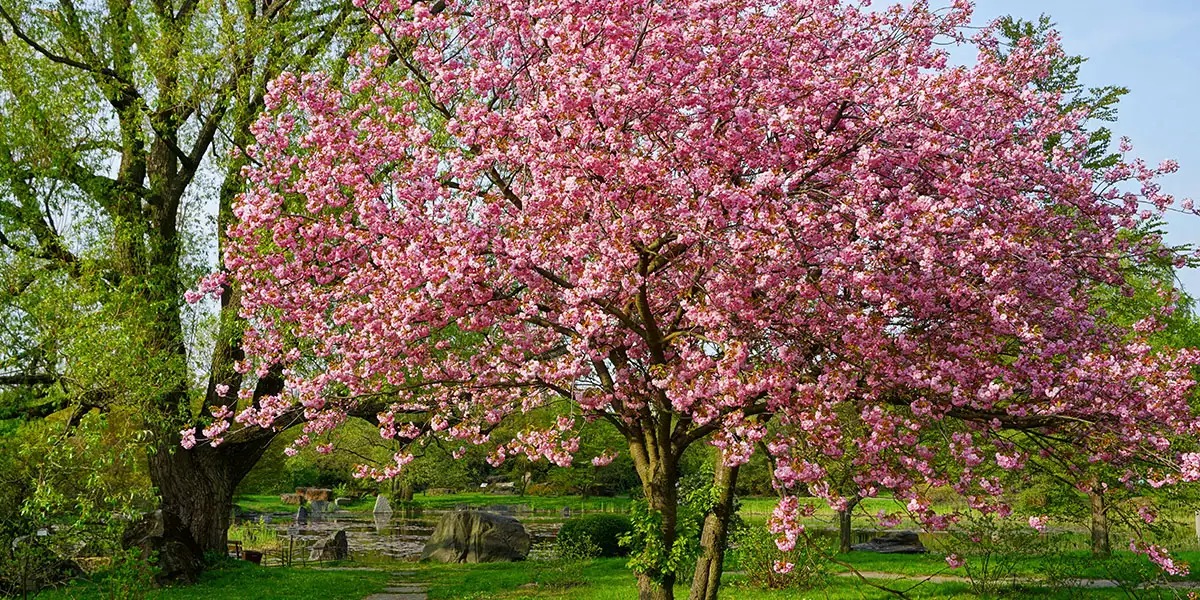 Flowering Cherries, Prunus spp.
Flowering cherries are pure spring drama, in the best possible way.
When they bloom, they do not whisper. They announce themselves with clouds of white or pink flowers that can completely transform a scene. They are widely admired for this reason, and many cultivars offer different habits, flower forms, and sizes. Some are upright and vase-shaped, some more spreading, and some beautifully weeping. In general, flowering cherries perform best in full sun with moist, well-drained soil and good air circulation.
Why add one to your landscape? Because sometimes a space needs an exclamation point.
Even when not in bloom, many selections offer attractive bark, elegant branching, and a refined habit that suits both traditional and more contemporary landscapes.
The key is choosing the right variety for the space, which is where selection matters so much. When that choice is made well, a flowering cherry becomes more than a one-season novelty. It becomes a signature tree.
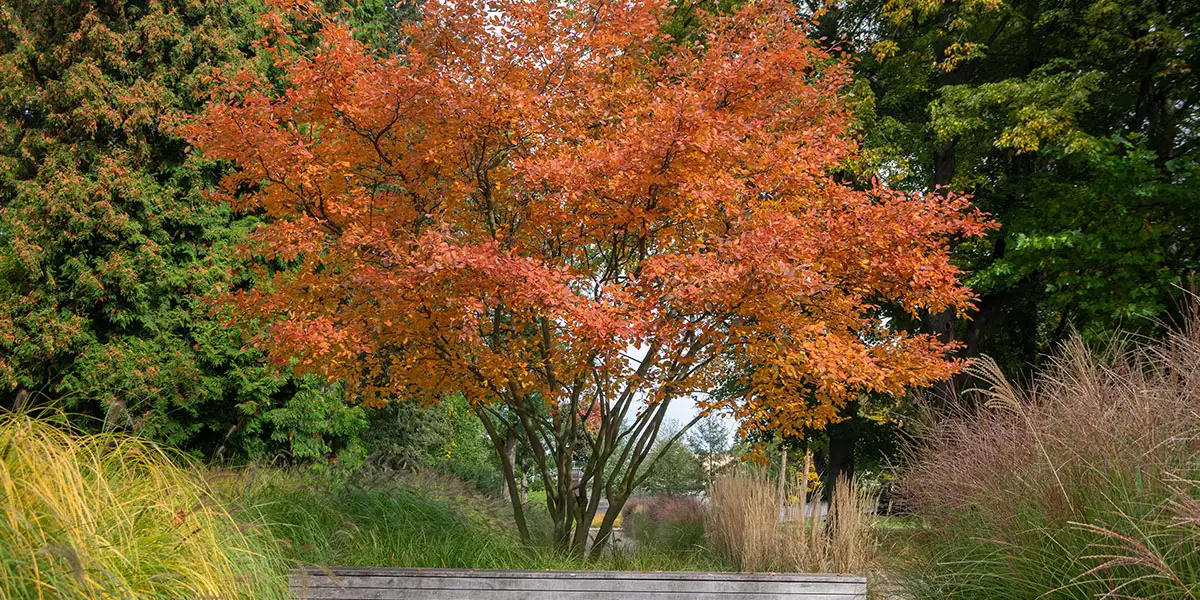 Serviceberry, Amelanchier spp.
Serviceberry may be one of the most useful flowering trees we grow.
It’s easy to love. Serviceberries bloom early, often before the garden has fully woken up, with airy white flowers that brighten the landscape in April. Then come edible fruits in June, followed by excellent fall color in shades of orange-red to red. Depending on the species or cultivar, serviceberry may grow as a multi-stemmed small tree or large shrub, which gives it a lot of design flexibility. It is also a favorite for birds, and many selections fit beautifully into smaller residential landscapes.
This is the tree to choose when you want beauty that feels easy and natural. Serviceberry works near foundations, along woodland margins, in island beds, or as a small specimen near outdoor living spaces. It can read as native and relaxed, or polished and architectural, depending on how it is pruned and where it is planted.
It also earns its keep across multiple seasons. A serviceberry does not peak for one week and disappear into the background. It offers spring flowers, summer fruit, graceful form, and fall color, which is a strong return from one planting. If you are trying to make a landscape feel richer without overwhelming the space, serviceberry is one of the best ways to do it.
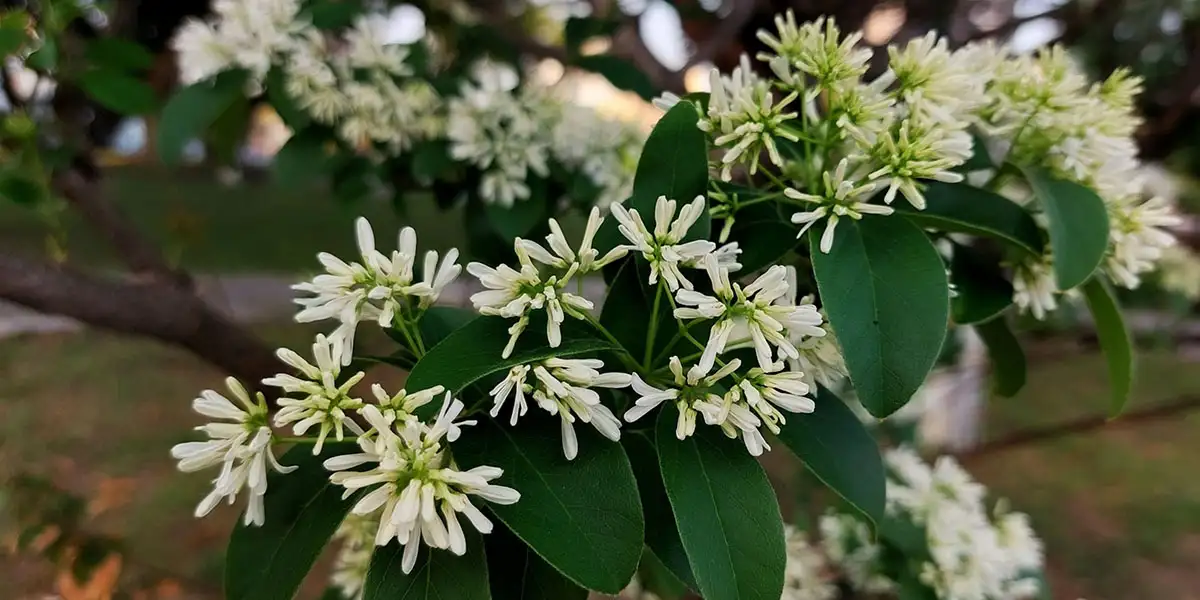 Seven-son Flower, Heptacodium miconioides
Seven-son flower is still a bit of a hidden gem, and that makes it even more fun to talk about.
This large shrub or small tree has a fountain-like habit and can be grown as a multi-stemmed specimen or trained into tree form. Its fragrant white flowers appear in late summer to early fall, which immediately sets it apart from most flowering trees. Just when many spring-flowering trees are long finished and the garden is shifting toward autumn, seven-son flower steps forward. After bloom, rosy pink calyces develop and often become even showier than the flowers themselves. Add exfoliating bark and winter interest, and you have a tree with an unusually long ornamental season.
That bloom timing is a big deal. It means seven-son flower can extend the flowering tree season on your property well beyond spring. It also offers nectar for butterflies and other pollinators later in the year, when floral resources are more limited.
In the landscape, seven-son flower is ideal for anyone who wants something distinctive. It works beautifully as a specimen near patios, in mixed borders, or anywhere a property needs height, movement, and late-season excitement. If you already love spring bloomers, adding seven-son flower is a great way to keep the show going.
 Why One Flowering Tree Is Wonderful, and More Than One Is Even Better
The real magic happens when flowering trees are used together.
Imagine the sequence. Eastern redbud starts the celebration in early spring. Serviceberry joins in with its airy white bloom. Crabapple and flowering cherries bring richness and color. American yellowwood adds grace and fragrance later in spring. Then, when summer begins to fade, seven-son flower carries beauty into late season. Instead of a single moment of bloom, your property has a progression.
That’s how a landscape starts to feel layered, memorable, and truly personal.
A single flowering tree can absolutely transform a space. More than one can create rhythm, contrast, and months of interest. You might pair a redbud with a serviceberry for a soft native look. You might combine a crabapple and a flowering cherry for a classic ornamental spring display. You might add seven-son flower to make sure the garden still has a flowering tree moment as summer turns to fall. There are so many beautiful combinations, and the right mix depends on your space, style, and goals.
At Bountiful Acres, we love helping people find those right combinations. Because the best flowering trees don’t just bloom. They welcome people home, frame favorite views, support seasonal beauty, and make everyday spaces feel more special. And when they are thoughtfully grown, carefully selected, and properly placed, they become some of the most rewarding trees you can plant.