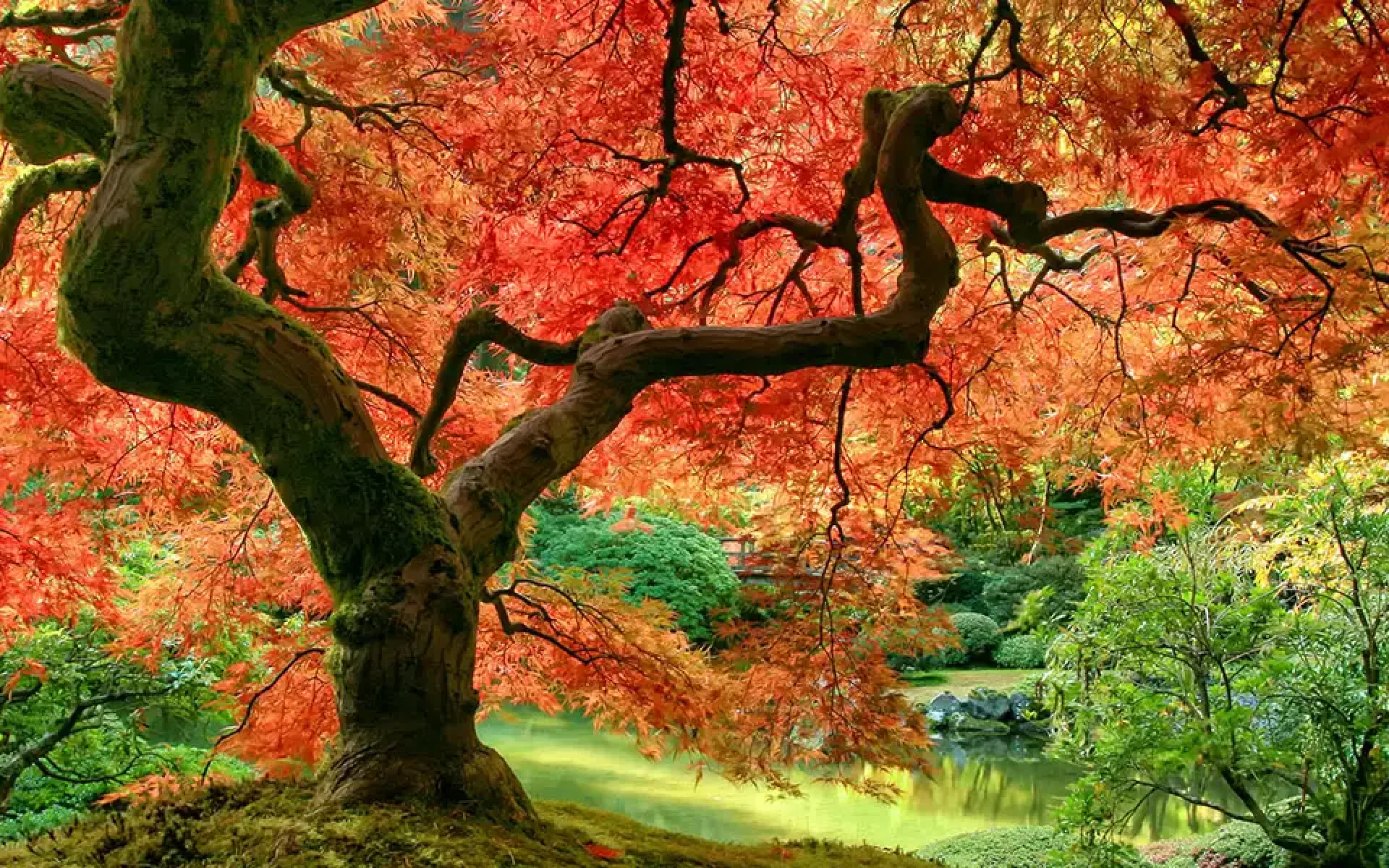
The right tree does more than fill a space.
It changes how a property feels.
A well-placed shade tree can make a patio more comfortable in July. A tree with strong branching and good canopy can make a front yard feel grounded instead of exposed. A tree with beautiful bark, fiery fall color, or an unforgettable silhouette can turn an ordinary view from the window into something people actually pause to enjoy. That’s the role of seasonal-interest and statement trees. They bring comfort, structure, and long-term beauty to the landscape in a way few other plants can.
At Bountiful Acres, we grow these and all of our ball-and-burlap trees and shrubs on our 100-acre Bucks County farm. Our selection includes dependable classics and distinctive specimens suited for properties throughout Bucks County, and these curated varieties are chosen for beauty, performance, and lasting value in the landscape. That curation matters, because statement trees are long-term decisions, not impulse buys. They are the trees that set the tone for a property for years, and often for generations.
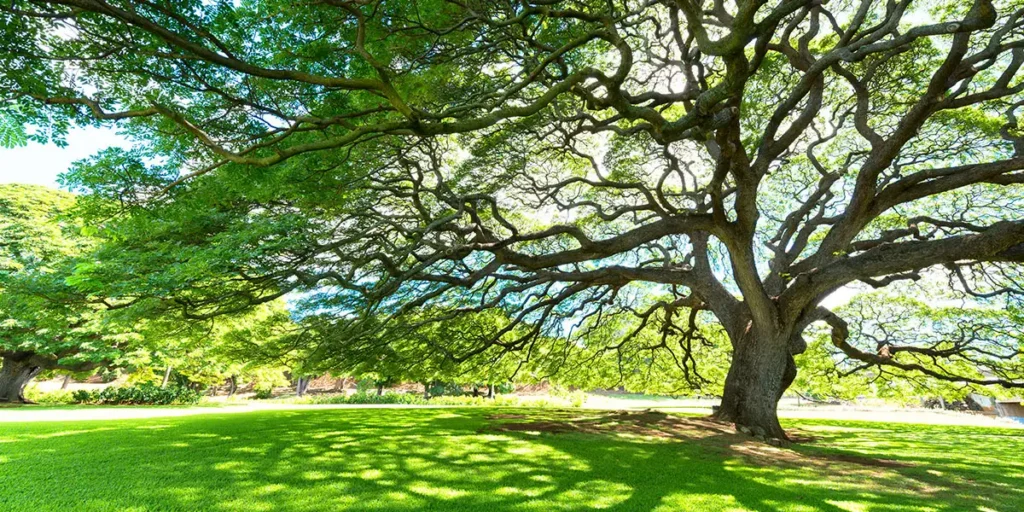
Trees That Shape the Experience of a Property
One of the best things about this group of trees is that they solve more than one problem at a time.
A tree can provide shade and still be beautiful in winter. It can create privacy from an upper-story window without feeling heavy at ground level. It can add spectacular fall color, but also have strong architecture after the leaves drop. It can be large and generous, or narrow and upright, depending on the space. That flexibility is what makes this category so useful. American beech, European beech, European hornbeam, Japanese zelkova, and Princeton Sentry® ginkgo all show how much form and habit matter in addition to foliage.
Some of these trees are chosen because they’re dependable landscape anchors, or because they’re unmistakable. The best landscapes usually need both. They need the trees that make a yard feel settled, and they need the one or two that make it memorable.
Smaller-Scale Standouts With a Lot to Say
Let’s start with two trees that don’t need a huge footprint to have a big effect.
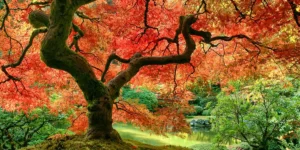
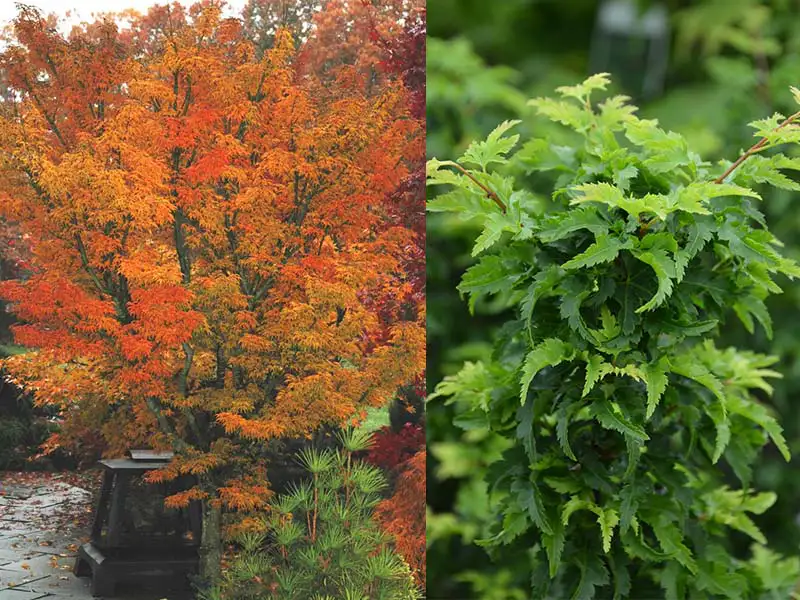
Lion’s head Japanese maple, Acer palmatum ‘Shishigashira’
This tree has a personality all its own. It’s upright, compact, slow-growing form offers crinkled bright green leaves held in dense tufts along the stems, followed by showy gold and crimson fall color. It’s the kind of tree that looks sculptural even when it’s relatively young. In the landscape, that makes it ideal for courtyards, entry gardens, foundation beds with room to breathe, or any space where close-up beauty matters most.
What to Know
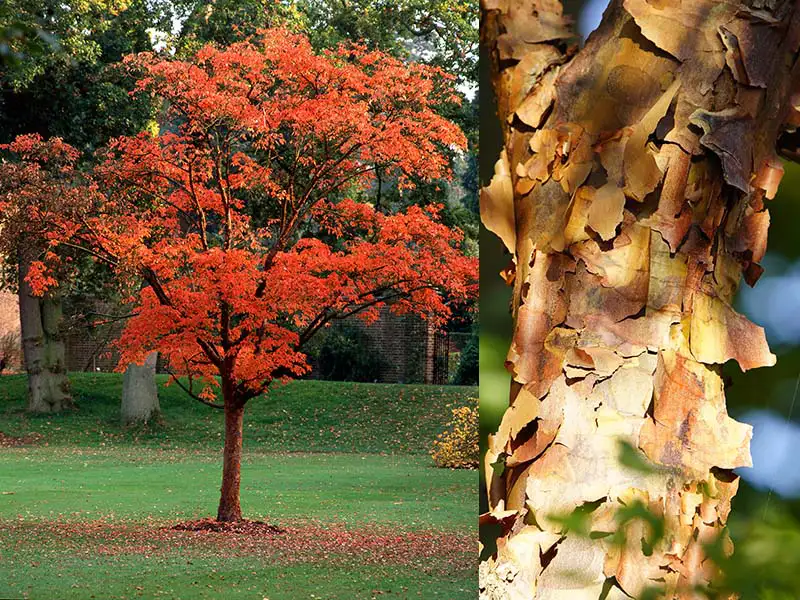
Paperbark maple, Acer griseum
Then there’s paperbark maple, one of the great four-season trees. It has an upright oval habit and modest mature size, but the real magic is the bark. Paperbark maple is famous for that rich cinnamon-to-copper exfoliating bark that glows in winter light. It is one of those trees that earns attention even in January, which is not something many deciduous trees can claim. If you want a specimen tree that feels refined, intimate, and quietly special, paperbark maple is hard to beat.
These are the trees that work beautifully where a property needs punctuation rather than mass. They are not trying to become the whole story. They are the well-placed detail that makes the whole composition feel better.
What to Know
The Fall-Color Trees People Remember
Some trees are calm for most of the year, and then absolutely take over in autumn.
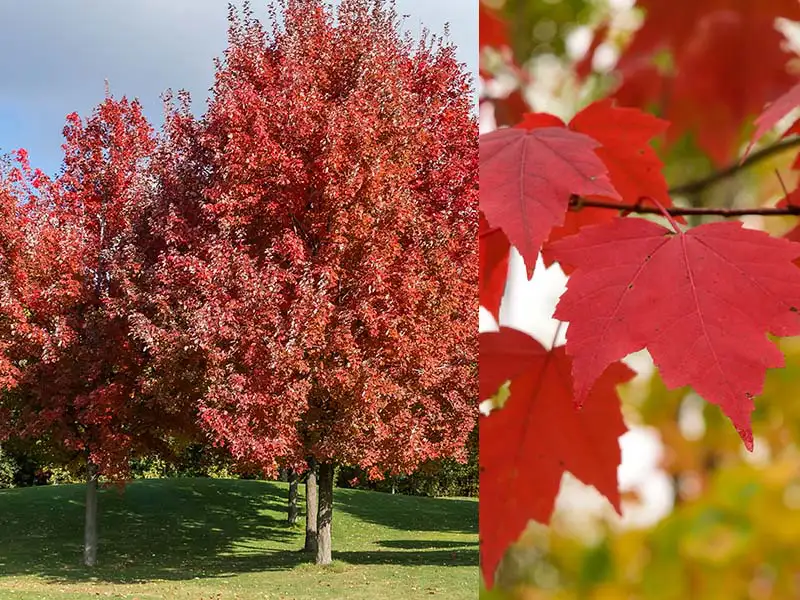
Red maple, Acer rebrum
These maples are classic for good reason. They’re native, adaptable, relatively fast growing, and known for attractive red fall color, with variation from tree to tree and cultivar to cultivar. They also bring rounded shade-tree form, which makes them useful in lawns, park-like settings, and larger residential landscapes. A red maple can be the tree that cools the yard in summer and still gives you that unmistakable autumn glow.
What to Know
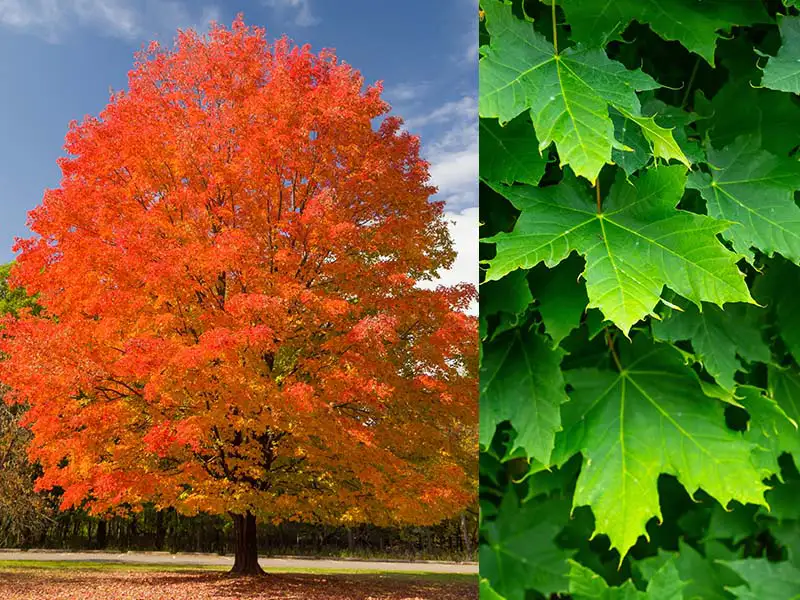
Sugar maple, Acer saccharum
These maples have a different presence. They are denser, more substantial shade trees, and their fall color can run through brilliant shades of red, orange, and yellow. They are a large tree with a dense spreading crown that provides heavy shade. That canopy is part of the appeal. A sugar maple doesn’t just decorate a property, it changes the comfort level of it. Large lawns feel more inviting under one. Outdoor sitting areas feel less exposed. A house with a good shade tree nearby simply feels more established.
What to Know
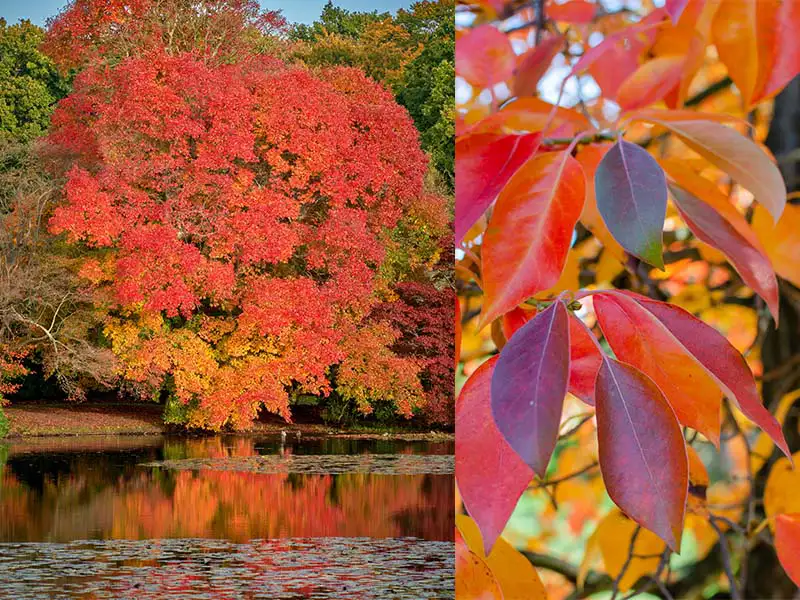
Black gum, Nyssa sylvatica
Black gum (or black tupelo) is one of the finest native trees for fall color. It has a strong, clean habit and a reputation for outstanding autumn display. It also grows naturally in a range of conditions, from upland sites to swamp margins, which hints at the adaptability people value in the landscape. Black gum has a crisp, elegant look that works in traditional settings, naturalistic plantings, and modern landscapes alike. When it colors well in fall, it’s unforgettable.
What to Know
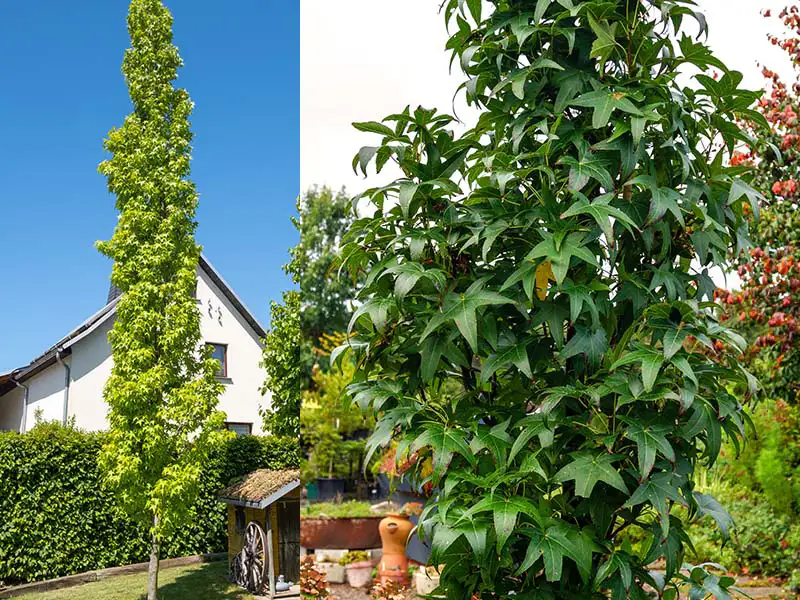
Sweetgum, Liquidambar styraciflua ‘Slender Silhouette’
And then there’s Liquidambar styraciflua ‘Slender Silhouette’, a tree that brings a very different kind of excitement. This sweetgum tree is a tall, columnar sweetgum that matures in a remarkably narrow footprint, often just five to six feet wide, with star-shaped leaves and fall color that may range through yellow, orange, red, or burgundy. That makes it especially interesting for tighter spaces where a homeowner wants vertical drama and seasonal color without sacrificing too much width. It’s a statement tree, but a very practical one.
What to Know
Trees With Form Strong Enough to Carry a Landscape
Some trees earn their place primarily through silhouette.
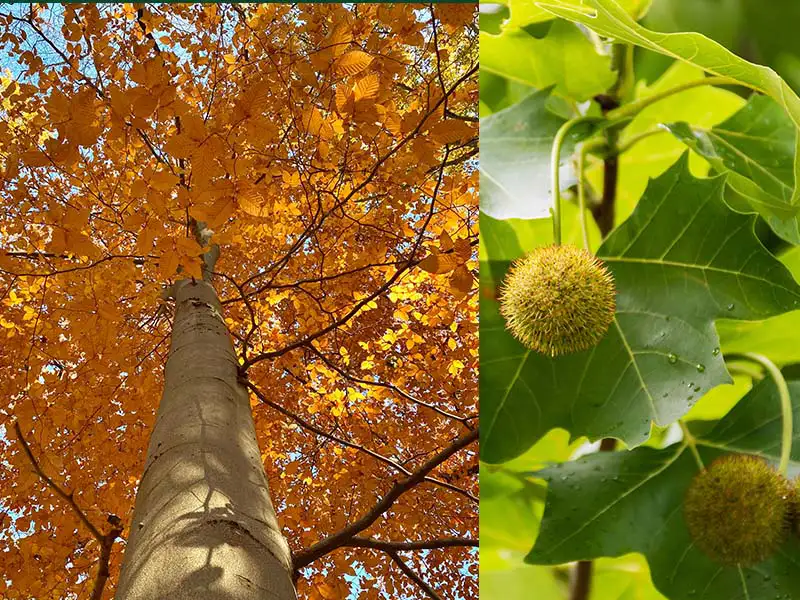
American beech, Fagus grandifolia
The American beech has a calm, stately character that feels especially at home on larger Bucks County properties. As a North American native, it brings broad shade, smooth light gray bark, and handsome golden-bronze fall color, with leaves that often linger into winter. It is a wonderful choice where the landscape needs a tree with woodland grace, long-term presence, and the kind of quiet beauty that only seems to improve with age.
What to Know
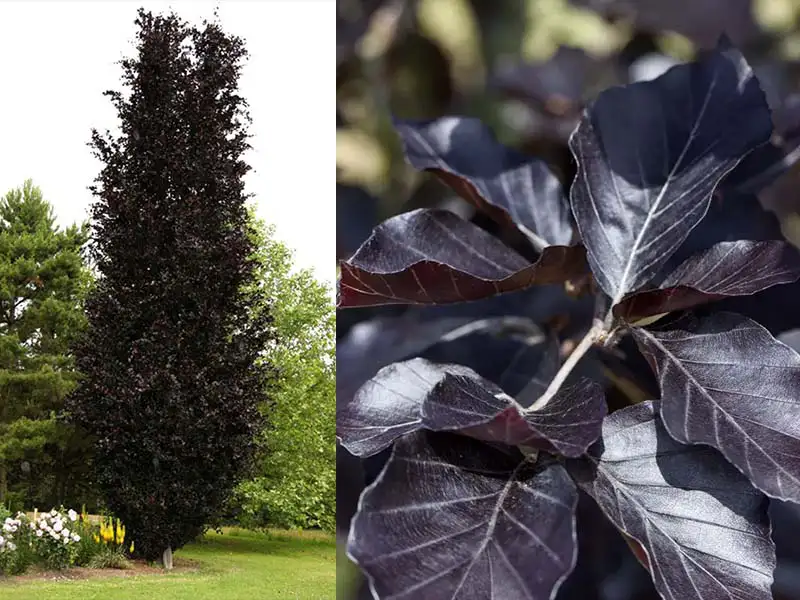
European beech, Fagus sylvatica ‘Dawyck Purple’
European beech, Fagus sylvatica ‘Dawyck Purple,’ offers a very different look, with a strong narrow columnar form that adds height and architectural definition without the broad spread of a traditional shade tree. Its deep purple foliage gives the tree real drama through the growing season, and the smooth gray bark adds beauty after the leaves have fallen. This is the kind of specimen that brings elegance, structure, and a distinctive focal point to the landscape.
What to Know
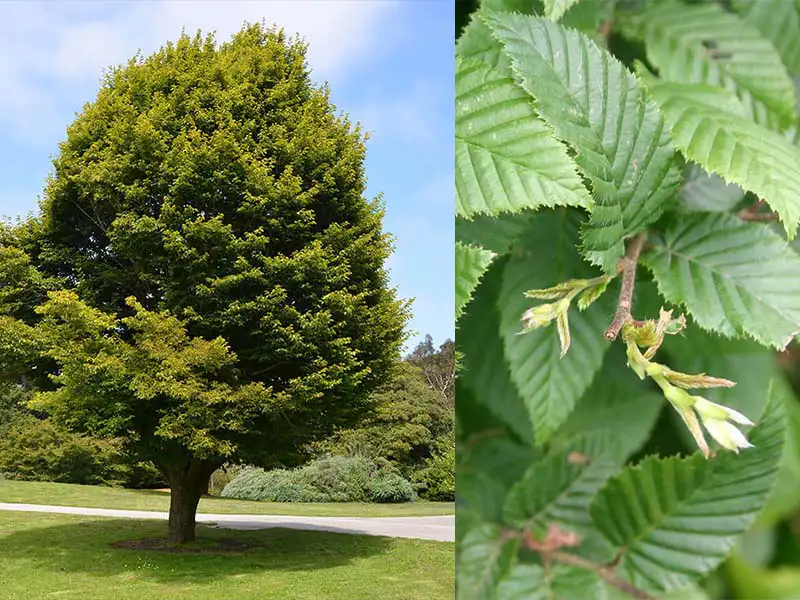
European hornbeam, Carpinus betulus
European hornbeam is another tree that earns attention through structure. It has dense dark-green summer foliage, yellow fall color, and smooth gray bark, with forms that may be rounded, vase-shaped, or pyramidal. In design terms, that means it is incredibly useful. It can read formal, architectural, and composed, or softer and more park-like depending on the selection and the setting.
What to Know
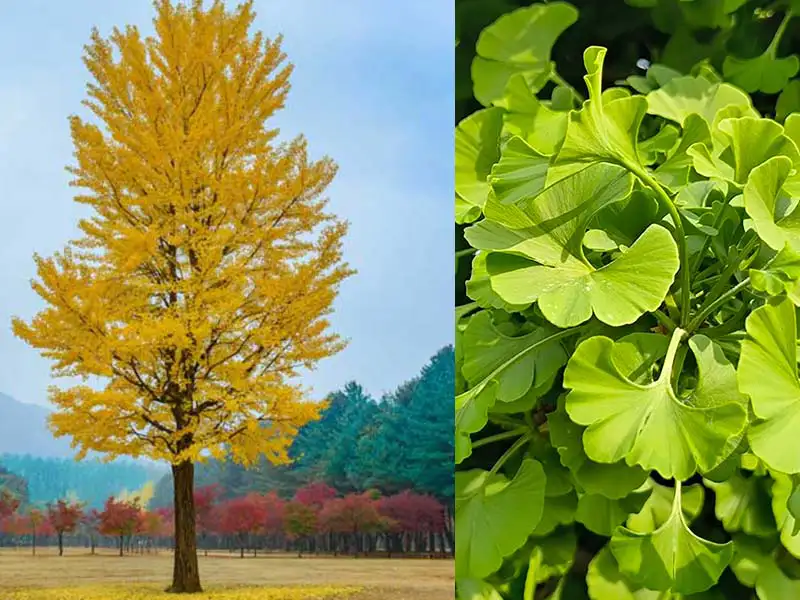
Ginkgo biloba ‘Princeton Sentry’
This ginkgo tree gives you that same sense of order in a narrower footprint. It’s an all-male cultivar with an upright, narrowly conical habit and uniform golden yellow fall color. That narrow shape makes it especially valuable where space is tighter, but a strong vertical tree is still needed. Near a drive, along a property edge, or in a front yard that needs height more than spread, ‘Princeton Sentry’ can do a lot with very little fuss.
What to Know
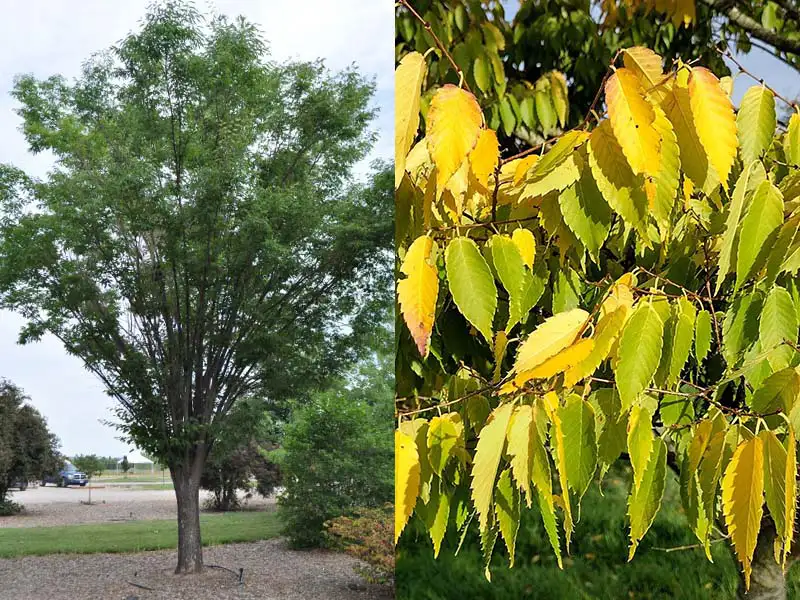
Japanese zelcova, Zelkova serrata ‘Green Vase’
This Japanese zelcova is another excellent form tree. The species is known for graceful vase shape and attractive bark, and, in fact, ‘Green Vase’ has a narrower vase shape than the species, dark green summer foliage, and a mix of orange, bronze, and red in fall, along with good winter hardiness. This is the kind of tree that gives a property a clean, strong framework without feeling rigid.
What to Know
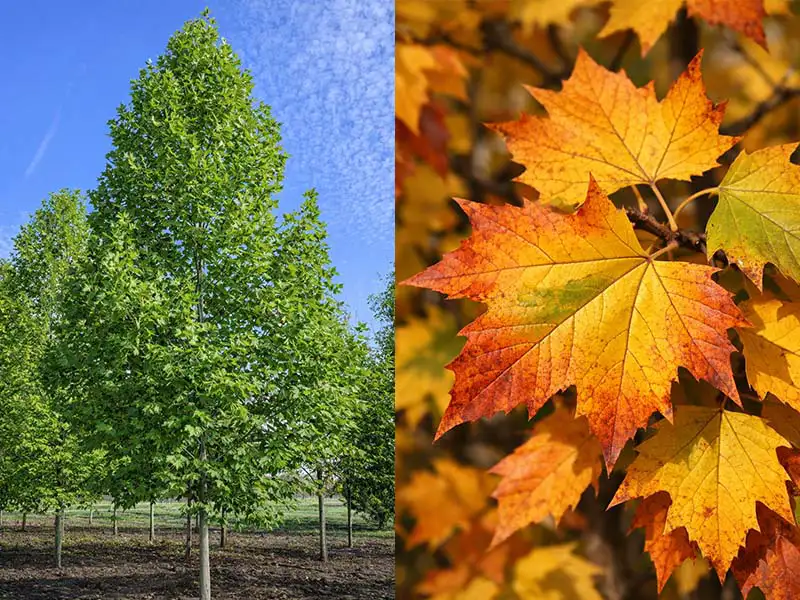
London planetree, Platanus × acerifolia ‘Exclamation’
This London planetree brings a bigger, bolder energy. It’s a large tree with beautiful peeling bark and resistance to anthracnose and frost cracking. This is the tree for properties that need generous canopy and a commanding presence. It has the kind of scale that can tie together a large front yard or create real shade over time, while still offering winter character through its bark.
What to Know
Big Canopy Workhorses That Still Have Character
There are also trees in this collection that might be called practical, except that sounds far less flattering than they deserve.
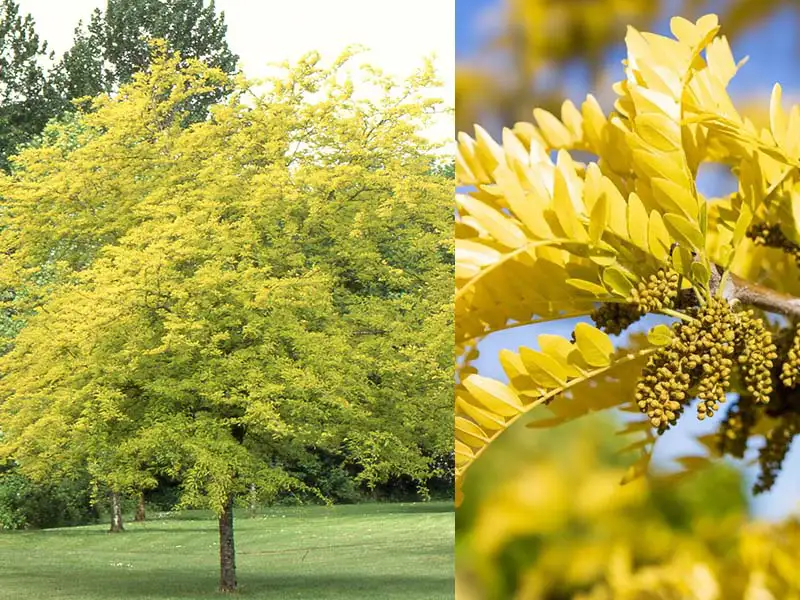
Honey locust, Gleditsia triacanthos
Honey locust is prized for its broad crown and filtered shade. It casts light shade, which is one reason it has long been appreciated in the landscape. It gives relief from heat, but doesn’t create the kind of dense darkness that makes the whole area underneath feel closed off. That quality makes honey locust especially appealing near lawns and outdoor living spaces.
What to Know
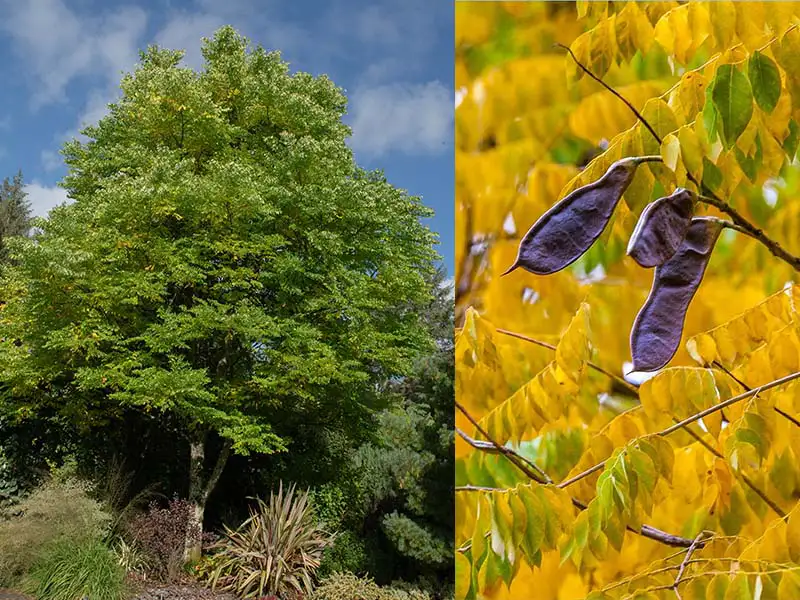
Kentucky coffeetree, Gymnocladus dioicus
Kentucky coffeetree is one of the more distinctive large trees you can plant. It has unusually late leaf-out and early leaf drop, along with the origin of the name from the seeds once being used as a coffee-like beverage. In the landscape, coffeetree brings bold texture and a branch structure that is easy to appreciate in winter. It feels strong, a little unexpected, and very individual.
What to Know
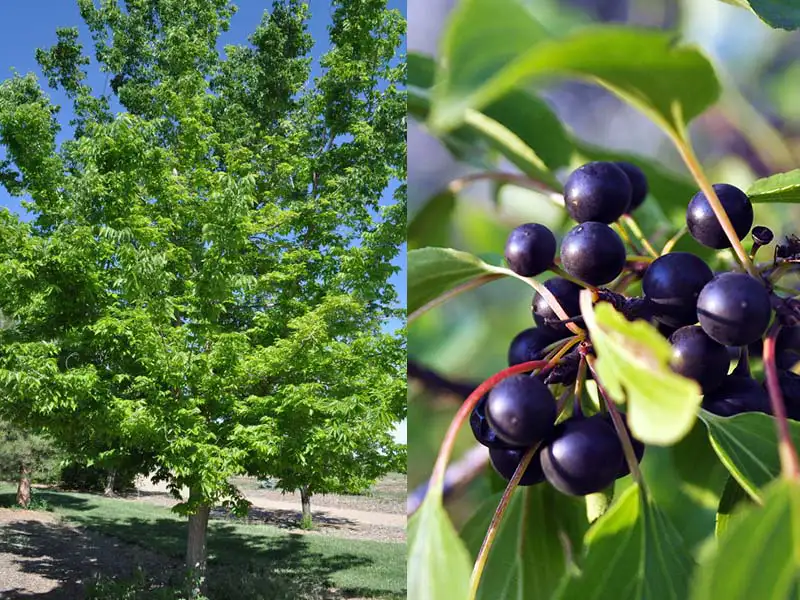
Common hackberry, Celtis occidentalis
Common hackberry is another tree that deserves more appreciation than it sometimes gets. It is native, adaptable, and useful as a shade tree, and it has a straightforward, durable presence that helps landscapes feel established. It may not be flashy in the way a Japanese maple is flashy, but it contributes exactly the kind of lasting framework that good properties need.
What to Know
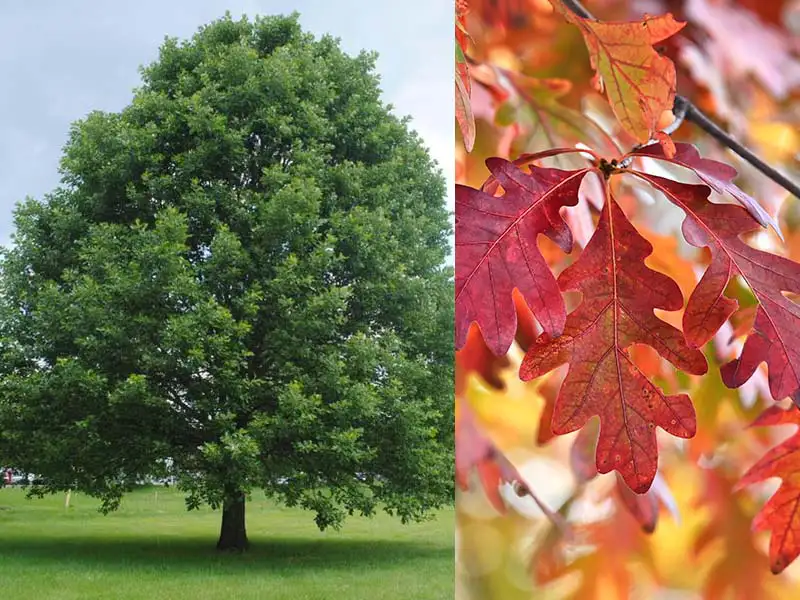
Oaks, Quercus spp.
And then there are the oaks, which are almost impossible to overvalue. Oaks as a group offer shade, longevity, wildlife value, and serious landscape gravitas. The genus includes everything from broad, strong shade trees to finer-textured selections like willow oak, and species such as northern red oak and willow oak are widely used for ornamental value, form, and canopy. When a property needs a tree that will matter not just in five years, but in fifty, oaks belong in the conversation.
What to Know - Quercus alba
Bark, Texture, and Winter Presence Matter, Too
One of the easiest mistakes in landscape planning is focusing only on what a tree looks like in leaf.
But winter is a real season in Bucks County, and trees that still bring interest after leaf drop are worth special attention.
Paperbark maple does that with its peeling cinnamon bark. American and European beech do it with smooth gray trunks and strong branching. Japanese zelkova adds bark character of its own. And then there’s…
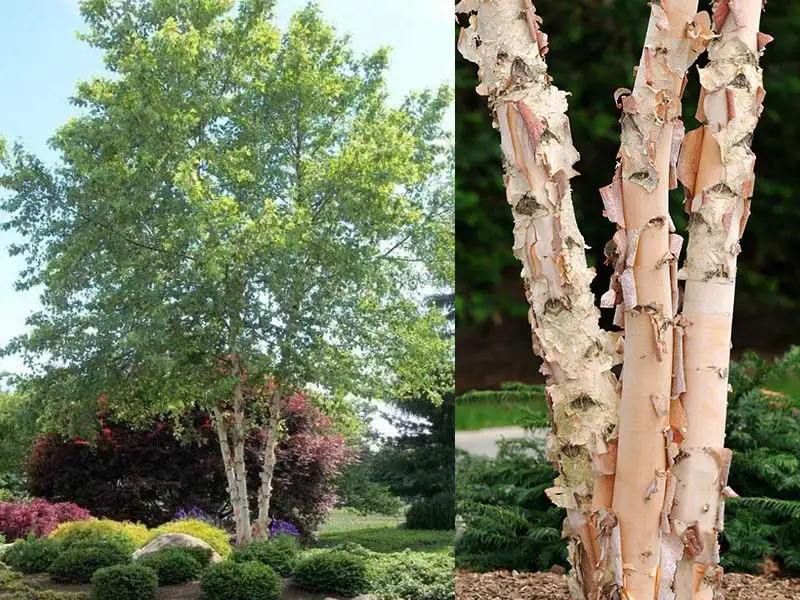
River birch, Betula nigra ‘Cully’ HERITAGE
This river birch brings some of the most beautiful exfoliating bark in the whole category. The Heritage variety is a vigorous, fast-growing river birch with salmon-cream to brownish bark that peels back to reveal creamy white inner bark. That kind of bark gives the landscape movement and brightness in the colder months, when foliage is no longer doing the work.
What to Know
Why One Great Tree is Rarely Enough
A balanced landscape usually needs more than one kind of tree.
It might need a smaller specimen near the front walk, like lion’s head Japanese maple or paperbark maple. It might need a generous lawn tree such as red maple, sugar maple, honey locust, zelkova, or oak. It might need a narrow vertical accent like ginko ‘Princeton Sentry’ or sweetgum ‘Slender Silhouette’. It might need a bold, anchoring presence like European beech, American beech, or London planetree ‘Exclamation’. When those roles are filled thoughtfully, the whole property feels more comfortable, more shaded, more coherent, and more beautiful in every season.
That is what we love about this collection. It’s not just a list of trees; it’s a toolkit for making properties feel better to live in. More shade over time. More seasonal character. Better bones. Better views. Better comfort.
At Bountiful Acres, we grow these and all of our ball-and-burlap trees and shrubs on our 100-acre Bucks County farm, and we choose these curated varieties because they offer strong form, seasonal interest, dependable performance, and real long-term value. A beautiful landscape doesn’t come from choosing flashy plants at random. It comes from planting the trees that will still be doing important work, and still looking good doing it, year after year.