Not every important plant in a landscape is a show-off.
Some plants are there to hold things together. They soften the view of a neighbor’s fence. They give a patio a sense of enclosure. They make a front foundation look grounded instead of bare. They keep the garden from looking thin in January, when everything else has stepped back. That is the quiet power of evergreen and screening shrubs. They are the plants that create privacy, define spaces, and keep the landscape looking full throughout the year.
At Bountiful Acres, these are some of the shrubs we especially value because they do real work in the landscape without feeling stiff or boring. We grow these and all of our ball-and-burlap trees and shrubs on our 100-acre Bucks County farm, and our selection is curated with a clear purpose in mind. These are varieties appreciated for beauty, performance, and lasting value, whether they are anchoring a foundation planting, building a green backdrop along a property line, or giving a garden room a little more shelter and polish.
And that is what makes this category so interesting. Evergreen and screening shrubs are practical, yes, but they are also deeply design-oriented. They shape the experience of a property. A lawn feels more intentional when it has a planted edge. A sitting area feels more comfortable when it is framed with green. A house looks better when it has a few substantial shrubs around it instead of open mulch and wishful thinking.
In other words, these are not filler plants. These are defining plants.
The Shrubs That Create the "Rooms" in a Landscape
When people think about privacy plants, they often picture one long hedge and stop there. That’s useful, of course, but screening shrubs can do much more than block a view.
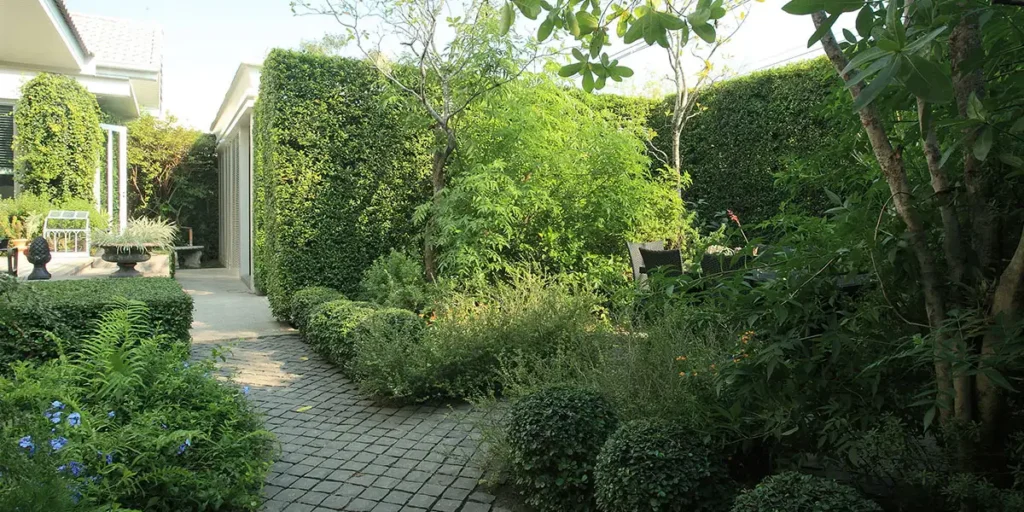
They can mark the edge of a front garden without making it feel closed off. They can create a softer transition between lawn and woodland. They can give an outdoor dining area some welcome separation from the rest of the yard. They can also serve as the visual backdrop that makes flowering shrubs, ornamental grasses, hydrangeas, and perennials stand out more clearly. A border backed by evergreen foliage almost always looks richer and more finished than a border floating in open space.
That’s one reason these plants matter in every season. In spring and summer, they help organize all the activity. In fall, they steady the shifting color palette. In winter, they keep the garden present. That fullness is not accidental. It comes from structure, and structure often starts with broadleaf evergreens and dependable screening shrubs placed in the right spots.
Some properties need that structure in a big way. Others just need a little more definition. Either way, a few well-chosen shrubs can completely change how a landscape feels.
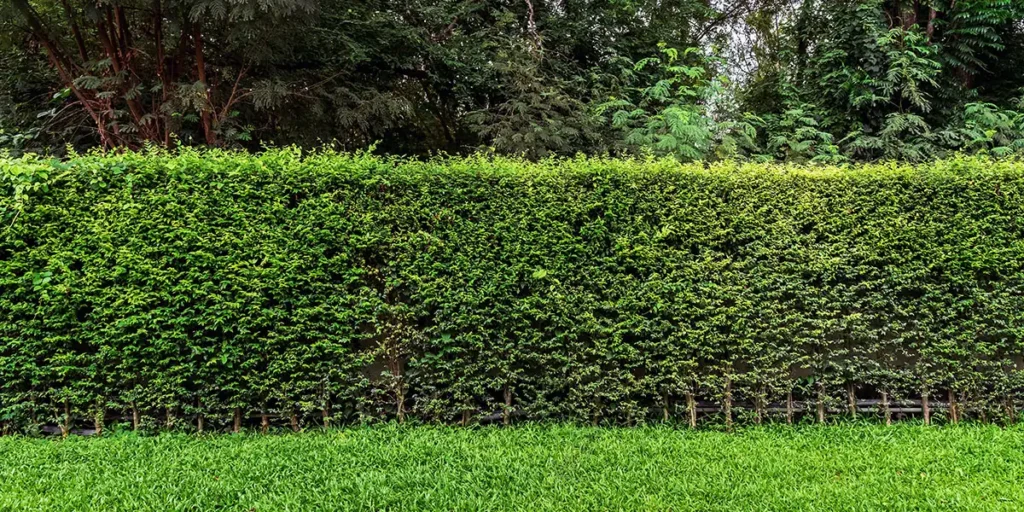
California privet, Ligustrum ovalifolium
California privet is one of those plants people sometimes underestimate until they see how well it solves a problem.
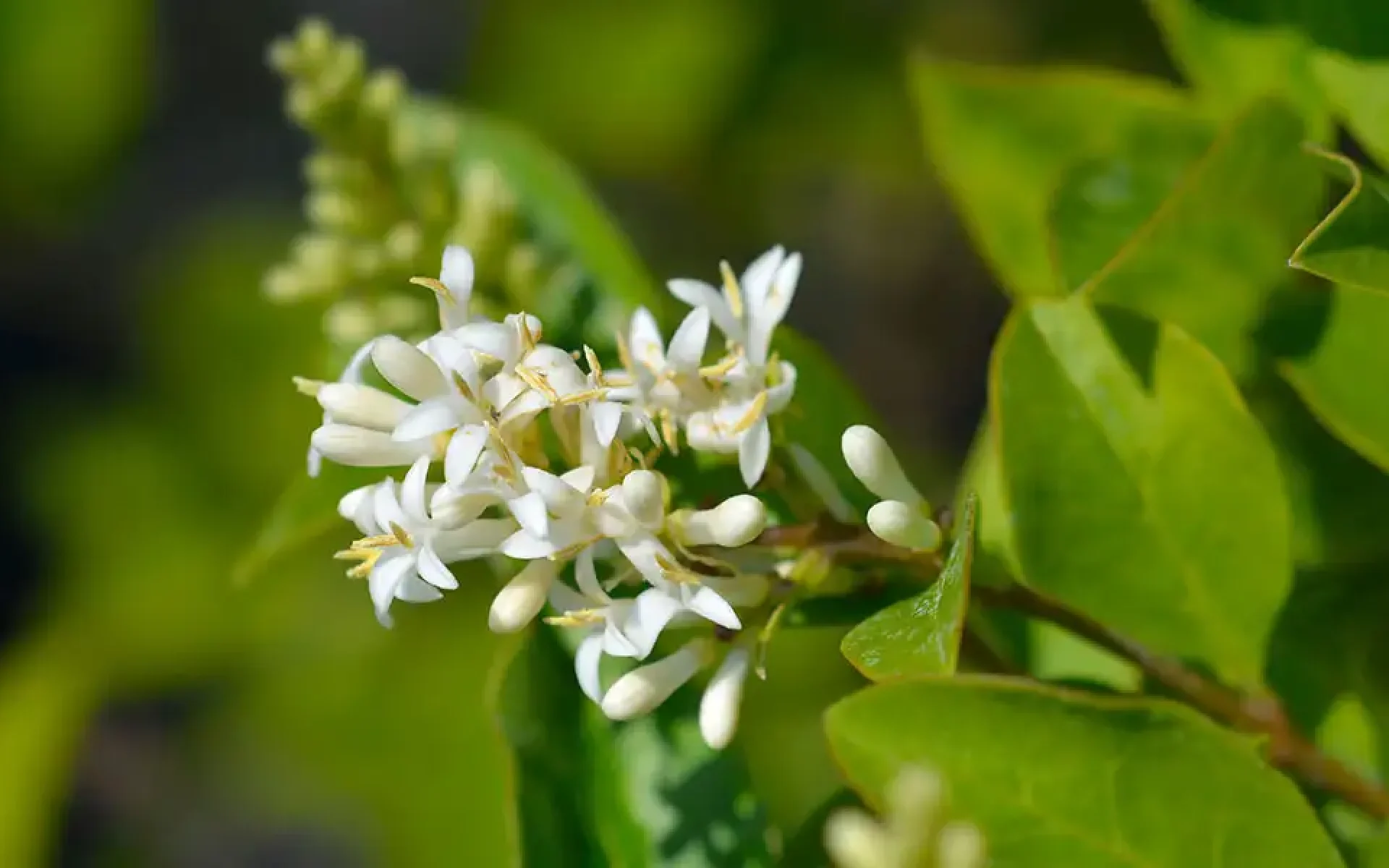
Botanically, Ligustrum ovalifolium is a dense, fast-growing shrub that is often used for hedges and screens. It typically reaches about 10 to 15 feet tall, tolerates a range of soils except wet ones, and is commonly grown as either a formal or informal hedge. It’s deciduous, though it may behave as evergreen or semi-evergreen in milder winter climates.
That growth habit is exactly why it can be so effective in the landscape. California privet is a terrific choice when a space needs definition fairly quickly. It can be clipped into a crisp line, or allowed to relax into a softer screen. It can run along a side yard, back a mixed border, or create the green wall that gives a patio a bit more privacy. Even where it is not fully evergreen through winter, it still brings density, order, and a strong sense of boundary.
What to Know
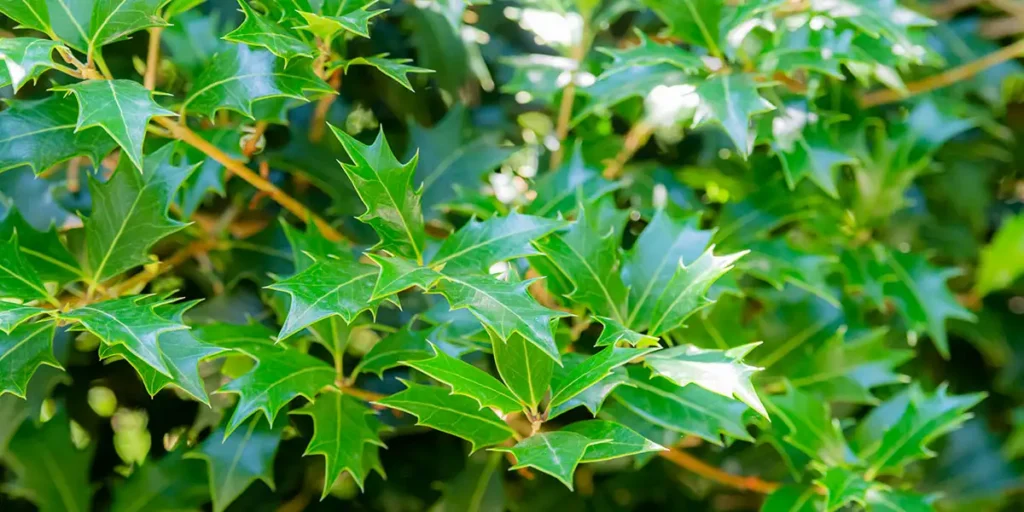
False holly, Osmanthus heterophyllus
If California privet is the efficient worker in this group, false holly ‘Gulftide’ is the stylish one.
False holly, Osmanthus heterophyllus, is a broadleaf evergreen shrub with a dense habit, glossy dark green foliage, and very fragrant white flowers that appear in late fall into winter. It grows well in full sun to partial shade in moist, well-drained soil, tolerates drought, heat, pollution, and pruning once established, and is useful for hedges, screens, barriers, or specimen planting. It’s also resistant to deer damage.
That combination is hard to beat. You get evergreen substance, but you also get detail. The foliage has a holly-like look, which gives it a crisp, refined character, and the fragrance is a lovely surprise for anyone who knows the plant well. ‘Gulftide’ works beautifully where a landscape needs a little formality without feeling rigid. It can frame an entrance, define a garden edge, or stand as a handsome backdrop for looser plantings in front of it.
It also has that rare ability to look equally at home in different settings. Near a brick foundation, it feels classic. Near a mixed border, it feels richly textured. Along a property line, it creates a handsome evergreen boundary that does not read as harsh or heavy. If you want a shrub that gives privacy and polish at the same time, false holly deserves serious attention.
What to Know
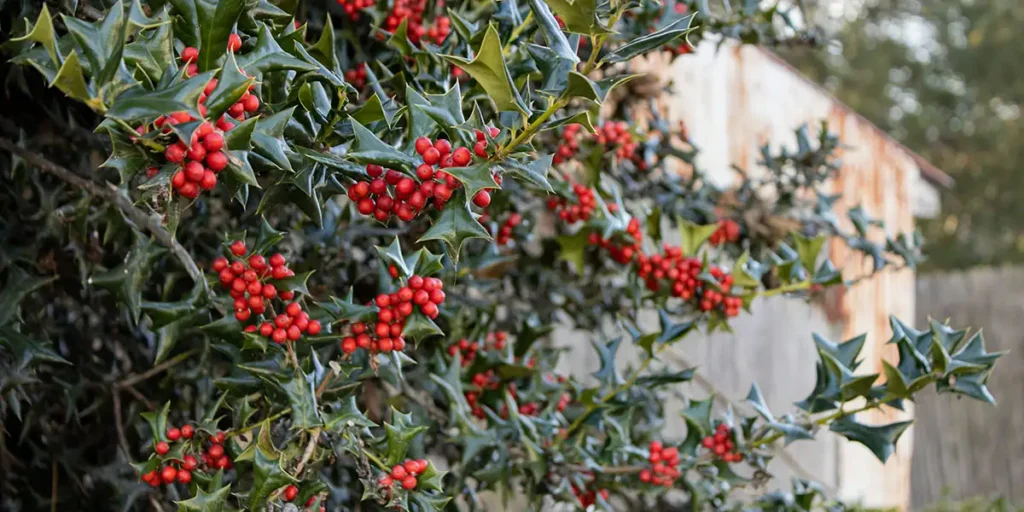
Hollies Do More Than One Job
Good hollies have a way of making a landscape feel finished.
They bring year-round foliage, strong form, and often bright winter fruit, which is a very useful combination. They can be elegant, protective, architectural, or quietly traditional depending on the selection. In our collection, two standout hollies are especially worth talking about: Ilex × aquipernyi ‘Dragon Lady’ and Ilex × meserveae ‘Blue Maid.’
What makes them so appealing is that they solve slightly different design problems.
One is narrow and vertical. The other is fuller and broader. Together, they show just how flexible hollies can be in the landscape…
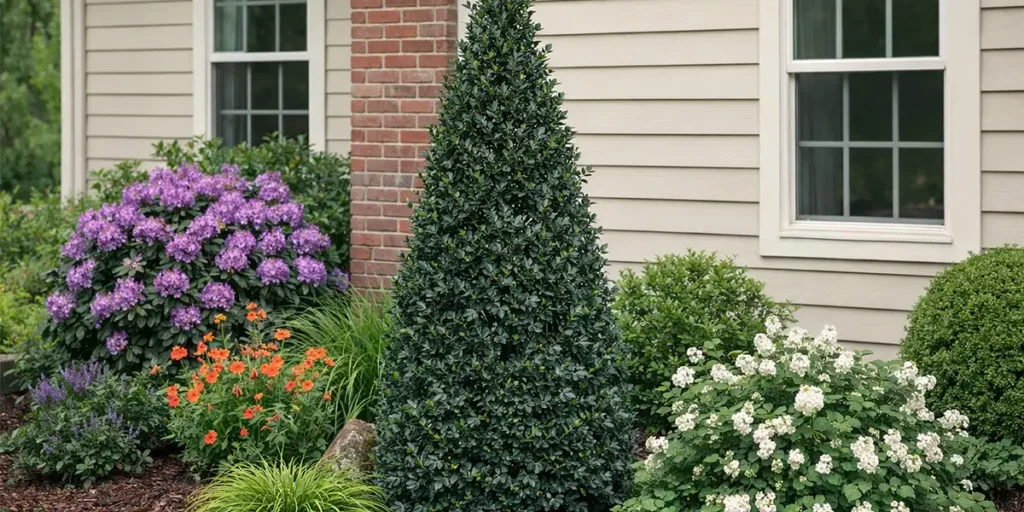
Holly, Ilex × aquipernyi ‘Dragon Lady’
‘Dragon Lady’ is the shrub you choose when you need height, structure, and a relatively narrow footprint.
This is a female cultivar with an upright, symmetrical, very narrow pyramidal form, typically maturing around 10 to 20 feet tall and 4 to 6 feet wide. It has dark green evergreen foliage and scarlet fruit that ripens in fall and persists through winter. The species itself is noted for screens, hedges, foundations, barriers, and vertical spaces, especially in full sun to partial shade with moist, well-drained soil.
In practical terms, that means ‘Dragon Lady’ can do something many shrubs cannot. It gives you a strong vertical statement without asking for too much ground space. That makes it extremely valuable near corners of the house, at the end of a foundation bed, beside an entry, or anywhere you want an upright evergreen accent that does not spread all over the place.
It’s also a wonderful screening plant when you want privacy with a more formal feel. A row of broader shrubs can sometimes look bulky. A rhythm of ‘Dragon Lady’ hollies feels tailored. And in winter, when those dark leaves and red berries stand out, the plant has real charisma. It’s not loud, but it is definitely memorable.
What to Know
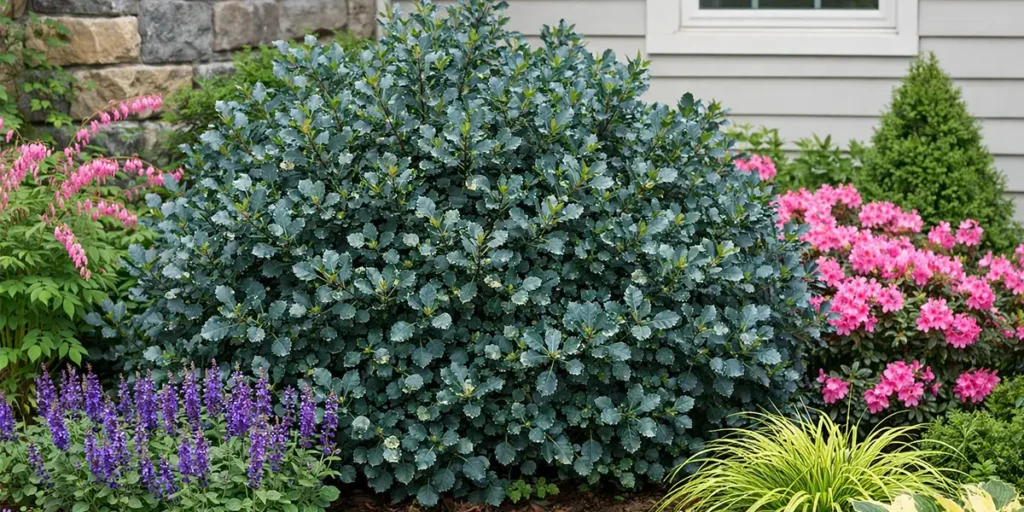
Holly, Ilex x meserveae ‘Blue Maid’
If ‘Dragon Lady’ is the exclamation point, ‘Blue Maid’ is the steady paragraph that makes the whole composition read well.
‘Blue Maid’ is a female Meserve holly, a group known for blue-green foliage and strong cold hardiness. It does best in slightly acidic, moist, well-drained soil in full sun to part shade, with glossy blue-green leaves and red berries on female plants when pollinated.
That makes ‘Blue Maid’ especially useful in landscapes that need an evergreen with a little more body. It can anchor a foundation planting, fill out a border, or create an attractive screen with a softer, fuller look than a narrow columnar holly. The blue cast to the foliage is part of the appeal, too. It gives the shrub a slightly cooler, richer tone than a standard dark green broadleaf evergreen, which can be very effective against brick, stone, or lighter green companion plants.
And then there are the berries. When a female holly is properly pollinated, the fruit becomes part of the winter display, which adds another layer of interest just when the landscape needs it most. That is one of the reasons hollies are so satisfying. They do not simply stay green. They contribute.
What to Know
A Landscape Feels Better When It Has Something to Lean On
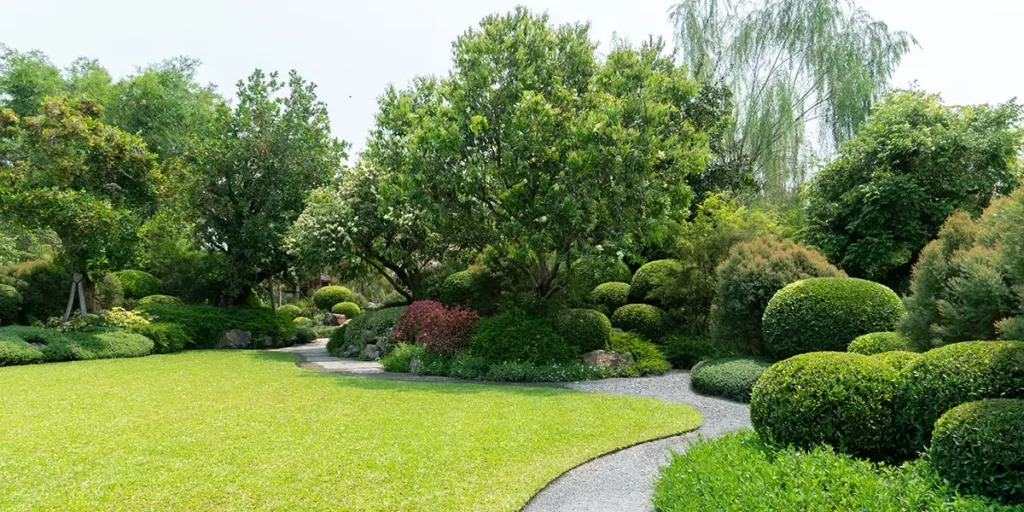
There’s a reason so many great landscapes feel comfortable even before anything is in bloom. They have a backbone.
They have shrubs that hold the edges, soften the architecture, frame the views, and keep the garden from disappearing in winter. They have plants that make the space feel protected, finished, and lived in. Evergreen and screening shrubs do that work beautifully, and they keep doing it year after year.
For example, you might use California privet to establish the outer screen, false holly to shape a nearer garden edge, and holly to punctuate key moments near the house or patio. Or you might build an entire evergreen framework from just one or two of these plants, repeating them in different areas so the property feels cohesive.
At Bountiful Acres, we are proud to grow these and all of our ball-and-burlap trees and shrubs on our 100-acre Bucks County farm. Our curated selections are chosen because they bring reliable beauty, strong performance, and long-term value to real landscapes. Whether you need privacy along a property line, structure around a foundation, or simply a better green backdrop for the rest of your garden, these shrubs can make an enormous difference.
And that is the real case for planting one, or more than one. They don’t just fill space. They improve it.