As the festive season approaches, homes and streets alike come alive with the vibrant colors and twinkling lights of Christmas decorations. In the tapestry of holiday traditions, the Christmas wreath stands as a beacon of timeless elegance. Its roots extend deep into history, connecting us to ancient customs and symbolisms. However, it’s in the meticulous crafting of these wreaths that the true artistry and significance unfold.
The Simplicity of the Early Christmas Wreath
The earliest renditions of Christmas wreaths were simple affairs. They were adorned with branches of evergreen plants like holly, ivy, and laurel. These evergreen plants, chosen for their ability to withstand harsh winters, carried profound symbolism. After all, it was the resilience of these plants that mirrored the enduring spirit of life, offering a glimmer of hope during the year’s darkest days.
A More Elaborate Approach
As centuries passed and cultures intertwined, the construction of Christmas wreaths became a sophisticated art form. In 16th-century Germany, the addition of candles transformed it into the Advent wreath, introducing a new dimension to its design. And families began incorporating not only evergreen branches, but also ribbons, berries, and nuts into their creations.
The crafting of the wreath became a cherished family tradition, with each member contributing to the assembly. The fragrant branches were carefully intertwined to create a lush, circular canvas. So it was not merely decorative, it was a collective expression of creativity and a symbol of unity.
Locally-Sourced Materials
In the United States, the 19th century saw the emergence of a new trend: the use of fresh, locally sourced materials in wreath-making. Pinecones, twigs, and berries indigenous to regions found their way into wreaths. This added a touch of regional charm to these festive creations. The craft became a celebration of nature’s diversity, with wreaths reflecting the unique flora of their surroundings.
The 20th century witnessed a surge in the commercialization of Christmas wreaths, with ready-made options becoming widely available. However, the allure of handcrafted wreaths persisted. Many individuals continued to gather in community centers, churches, and homes to construct wreaths from scratch. And they infused their wreaths with personal touches and a sense of connection to the past.
Modern Christmas Wreath-Making
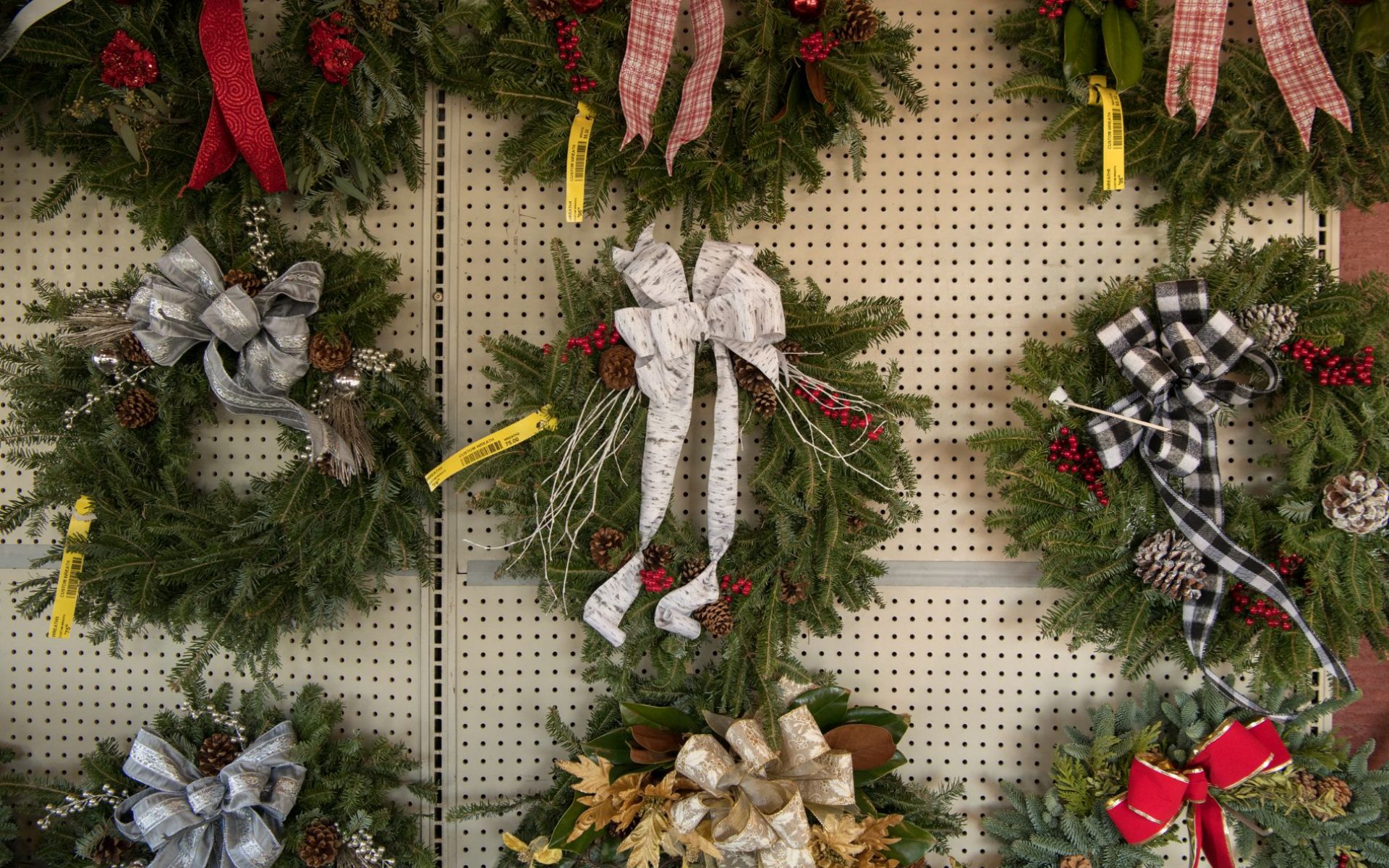
Modern wreath-making has embraced a wide array of materials and styles. Artificial evergreen branches, adorned with glittering ornaments and LED lights, share space with traditional, handcrafted wreaths made from fresh foliage. But the circular form remains a constant, symbolizing the unbroken cycle of life and the eternal hope encapsulated in the Christmas season.
Crafting a Christmas wreath today is an art accessible to all, with various workshops and tutorials. The beauty lies not just in the final product but in the journey of creation itself. As individuals select each element – be it pine needles, eucalyptus leaves, or decorative baubles – they are actively participating in a centuries-old tradition.
Our Bountiful Acres team is on hand to help you with custom wreaths and swags, and our shop is stocked with all of the materials needed to make your own.
Create Your Own Christmas Wreath Story
So, whether you opt for a classic, handcrafted wreath or a modern, glitzy version, remember that each carefully chosen element contributes to a story. That story unfolds in the hands of those who embrace the art of wreath-making with love, creativity, and a nod to the centuries that came before.
The Christmas wreath’s significance extends beyond its aesthetic appeal. It serves as a poignant reminder of the values associated with the holiday season. They include love, generosity, and hope. The evergreen branches, resilient in the face of winter’s chill, symbolize the enduring spirit of humanity and the capacity for renewal, even in challenging times.
Happy holidays to you and your family!