
Every yard has that one spot that’s a little frustrating.
Maybe it’s the steep hill that’s difficult to mow. Perhaps it’s the shady area beneath a mature maple where grass refuses to grow. Or maybe it’s an empty space in a garden bed that seems to become a weed patch every summer.
The good news is that there is probably a groundcover that’s perfect for the job.
Groundcovers are low-growing plants that spread over time to create a living carpet of foliage and flowers. They help reduce weeds, protect the soil from erosion, conserve moisture, and add color and texture throughout the landscape. Better yet, once they’re established, many require surprisingly little maintenance.
The secret is choosing the right plant for the right location. A groundcover that’s happy in full sun probably won’t thrive beneath a large oak tree, and a plant that loves moist soil may struggle in a dry rock garden.
So what’s right for your Bucks County landscape?
- A Few Things to Know Before You Plant
- Groundcovers That Love the Sun
- Great Choices for Part Sun
- Groundcovers for Shady Spots
- When the Soil Stays Damp
- One of the Toughest Places to Plant: Dry Shade
- Groundcovers That Help Hold Slopes Together
- Helping New Plants Get Established
- Easy Maintenance for Years of Beauty
- The Right Plant Makes All the Difference
A Few Things to Know Before You Plant
One of the biggest misconceptions about groundcovers is that they cover the ground overnight.
In reality, most spread gradually over a couple of growing seasons. While that requires a little patience, the payoff is a beautiful planting that becomes fuller and more attractive each year.
How quickly your planting fills in depends on how closely you space the plants.
- Space plants about six inches apart, and many will fill in during the first growing season.
- Space them 12 inches apart, and expect good coverage in about two years.
- At 18 to 24 inches apart, it may take three years or more to create a solid carpet.
Before planting, spend a little extra time preparing the area. Remove weeds, loosen compacted soil, and add compost if your soil could use a boost. A layer of mulch between young plants helps keep weeds under control until everything grows together.
It may seem like extra work at the beginning, but it makes a big difference later.
Groundcovers That Love the Sun
If you have an area that gets six or more hours of direct sunlight each day, you have plenty of great options.
Creeping Phlox (Phlox subulata)
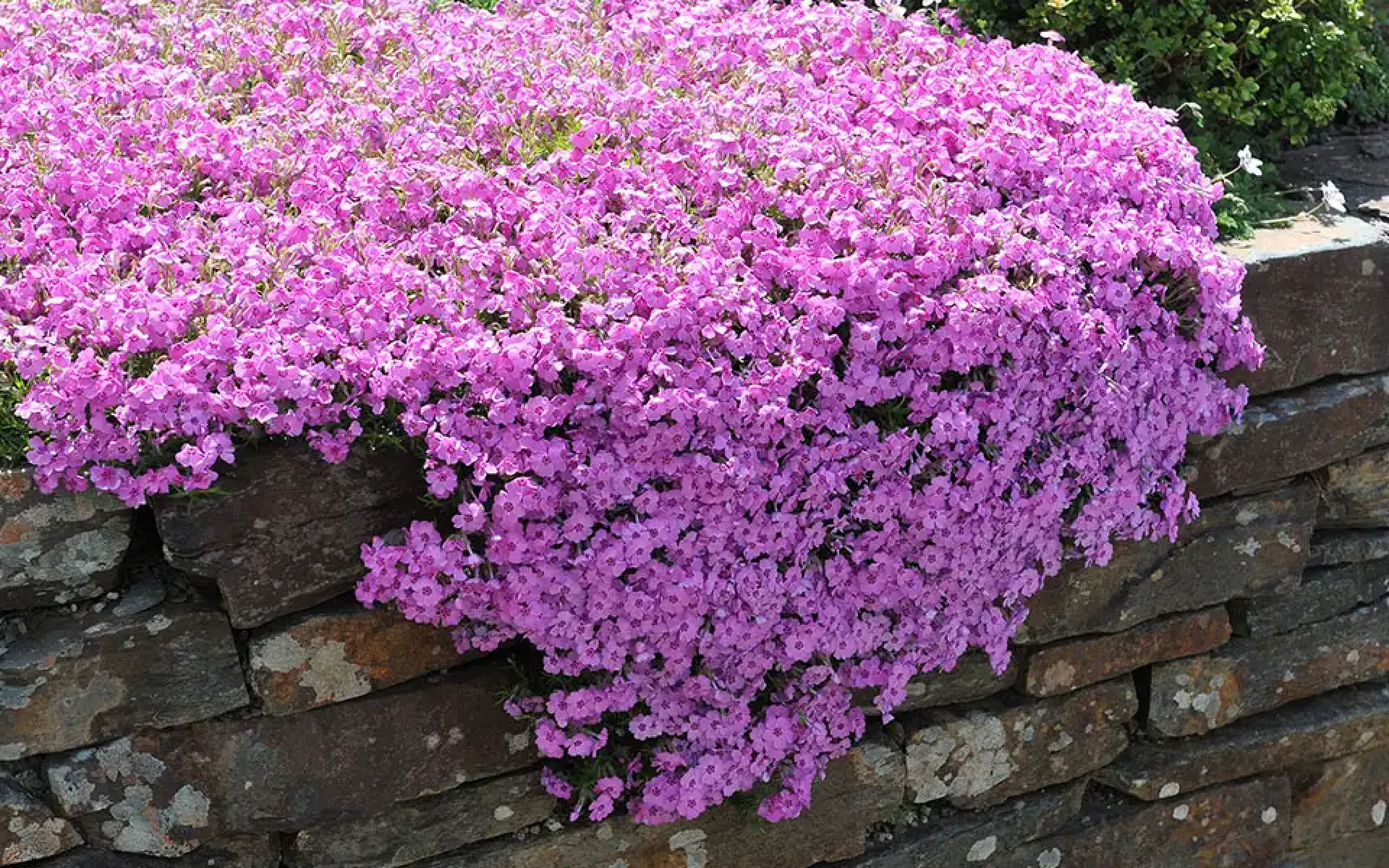
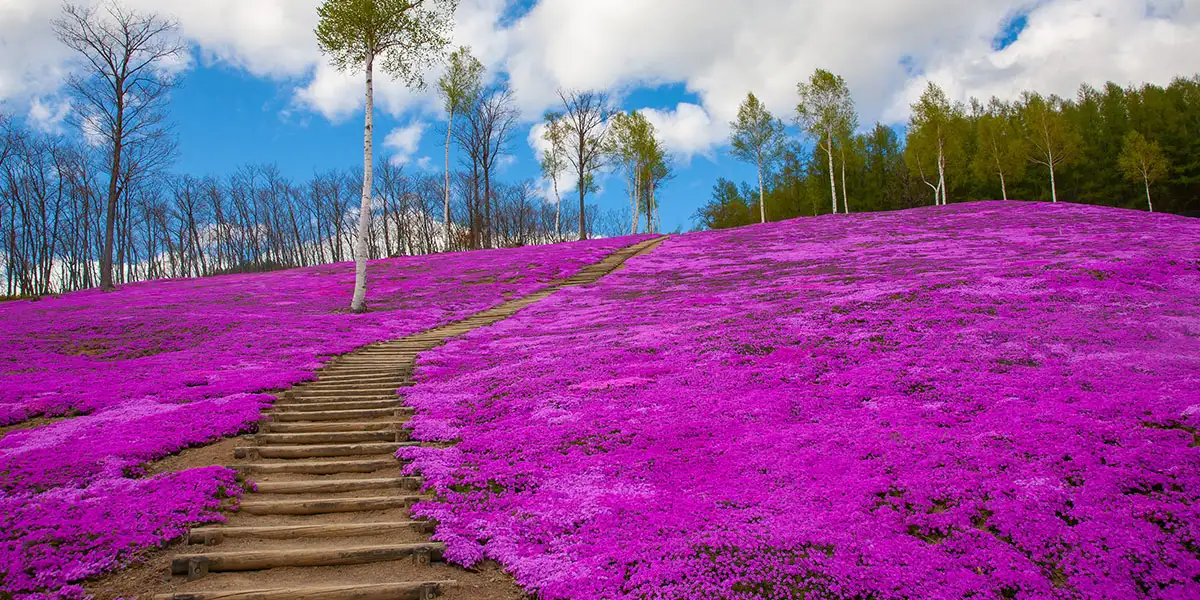
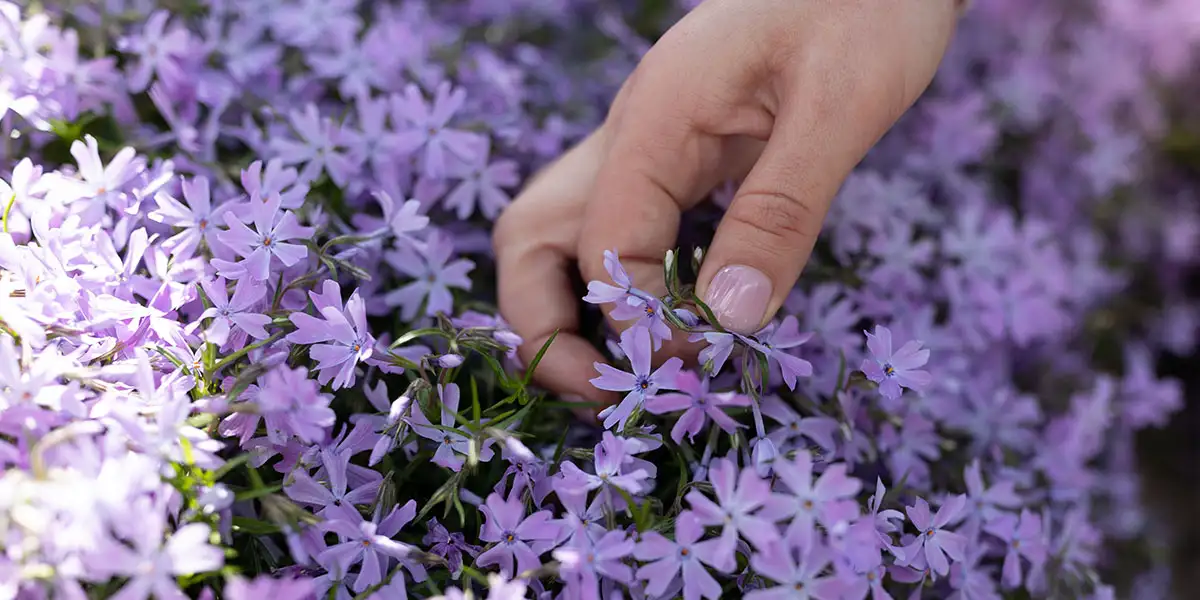
If you’ve ever admired a hillside covered in bright pink, purple, or white flowers during spring, there’s a good chance you were looking at creeping phlox.
This popular groundcover produces a blanket of blooms in early spring before settling into a dense mat of evergreen foliage for the rest of the year.
Best for:
- Slopes
- Retaining walls
- Rock gardens
- Garden borders
Light: Full sun
Water: Average. Water regularly during the first season, then only during extended dry spells.
Coverage: Spreads 18 to 24 inches wide, forming a dense mat over time.
Once flowering is finished, a quick trim keeps plants looking neat and encourages dense new growth.
Creeping Thyme (Thymus serpyllum)
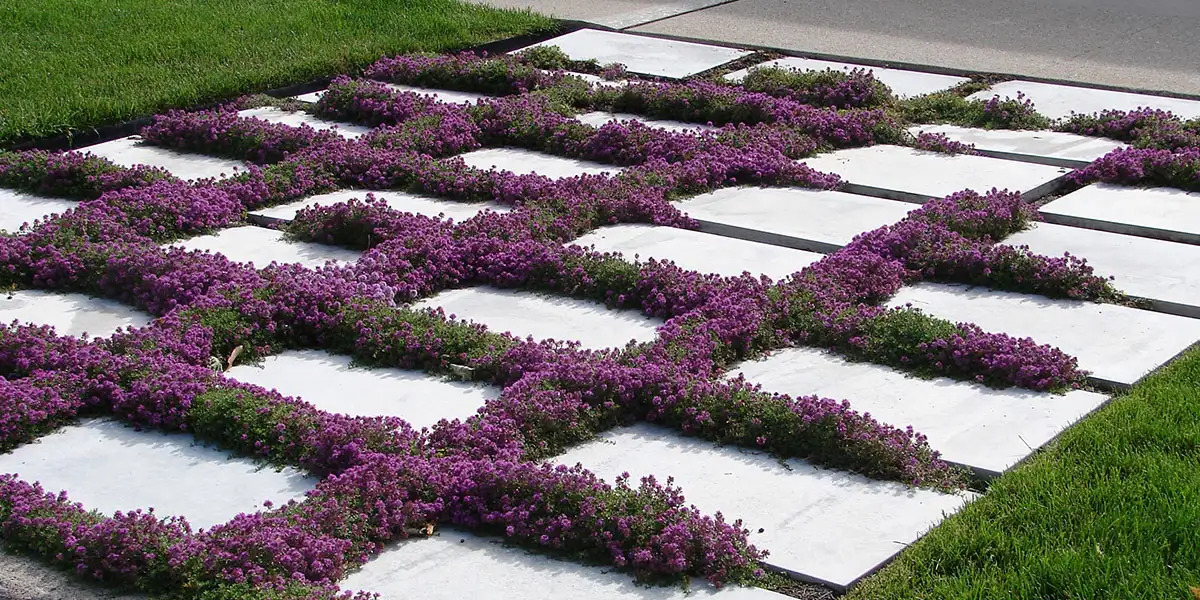
Looking for something between stepping stones or along a garden path?
Creeping thyme is one of the best choices. It stays low, tolerates light foot traffic, and produces tiny pink or lavender flowers that pollinators absolutely love.
One fun bonus is its fragrance. Brush against the foliage or step on it, and you’ll notice its pleasant herbal scent.
Light: Full sun
Water: Low once established
Coverage: About 12 to 18 inches per plant
Stonecrop (Sedum species)
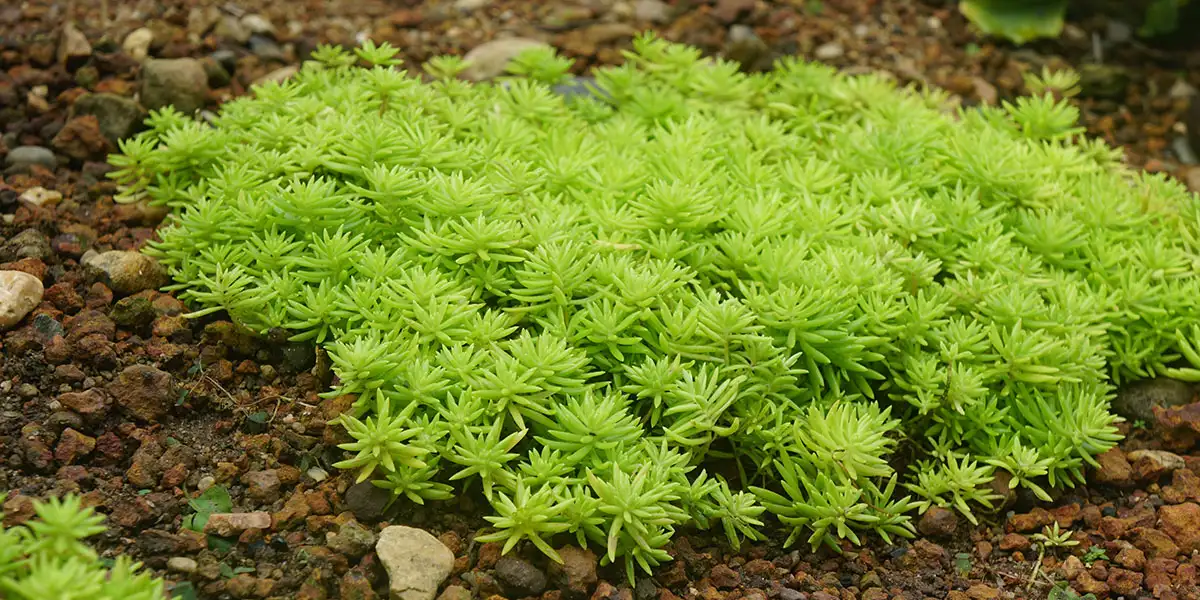
Hot, dry areas can be challenging for many plants, but stonecrop actually prefers those conditions.
Its colorful succulent leaves store water, making it an excellent choice for sunny locations where irrigation is limited.
Stonecrop is especially attractive in rock gardens, along walkways, or anywhere that needs a little texture without a lot of maintenance.
Light: Full sun
Water: Low once established. Avoid overly wet or poorly drained soils.
Coverage: Most low-growing varieties spread 12 to 24 inches wide, depending on the cultivar.
Great Choices for Part Sun
Many landscapes have areas that receive morning sun and afternoon shade, or filtered sunlight throughout the day. These conditions are ideal for several beautiful groundcovers.
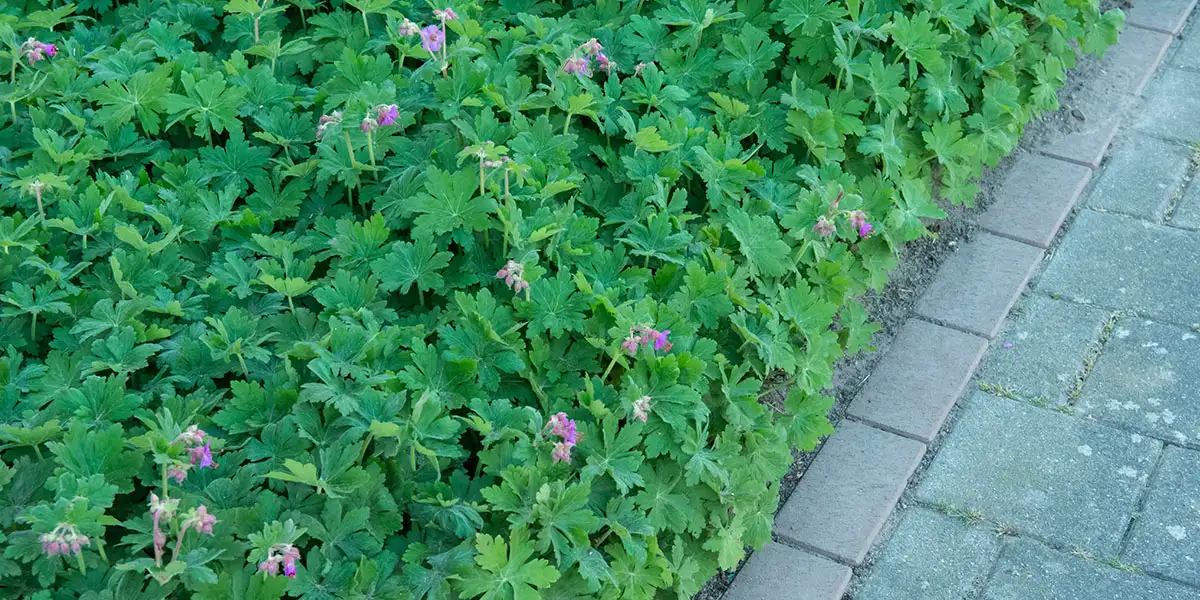
Bigroot Geranium (Geranium macrorrhizum)
Don’t let the name fool you. This isn’t the annual geranium found in patio containers.
Bigroot geranium is a tough, dependable perennial that gradually spreads into an attractive colony. It produces cheerful spring flowers, fragrant leaves, and beautiful fall color.
It also happens to be one of the best plants for suppressing weeds once it’s established.
Light: Full sun to part shade
Water: Average
Coverage: Individual plants spread 18 to 24 inches and slowly form larger colonies by underground rhizomes.
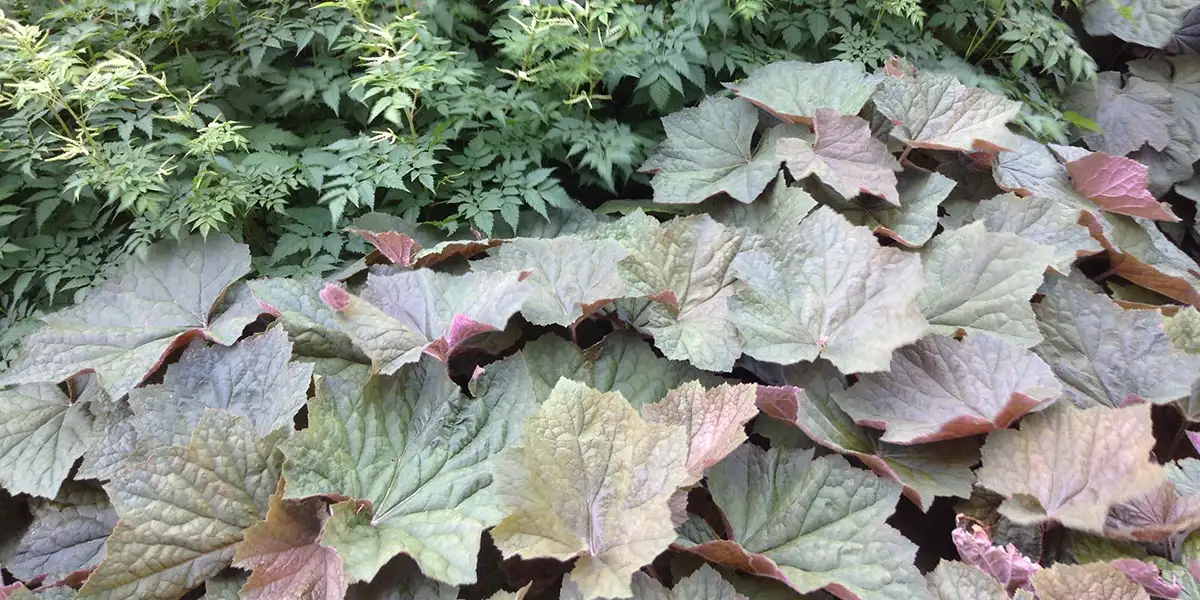
Coral Bells (Heuchera species and hybrids)
While coral bells don’t spread as aggressively as some groundcovers, planting them in groups creates an eye-catching mass of colorful foliage.
Their leaves come in shades of lime green, caramel, burgundy, deep purple, and nearly black, making them an easy way to add year-round color to garden beds.
In late spring, delicate flower stalks rise above the foliage and often attract hummingbirds.
Light: Part shade to part sun, although many varieties tolerate full sun with adequate moisture.
Water: Average. Keep evenly moist during establishment, then water during extended dry periods.
Coverage: Individual plants grow 12 to 18 inches wide. Plant in groups for a fuller groundcover effect.
Groundcovers for Shady Spots
Shady areas are where groundcovers really prove their value.
Instead of fighting to grow grass beneath mature trees, consider planting species that naturally thrive in woodland conditions.
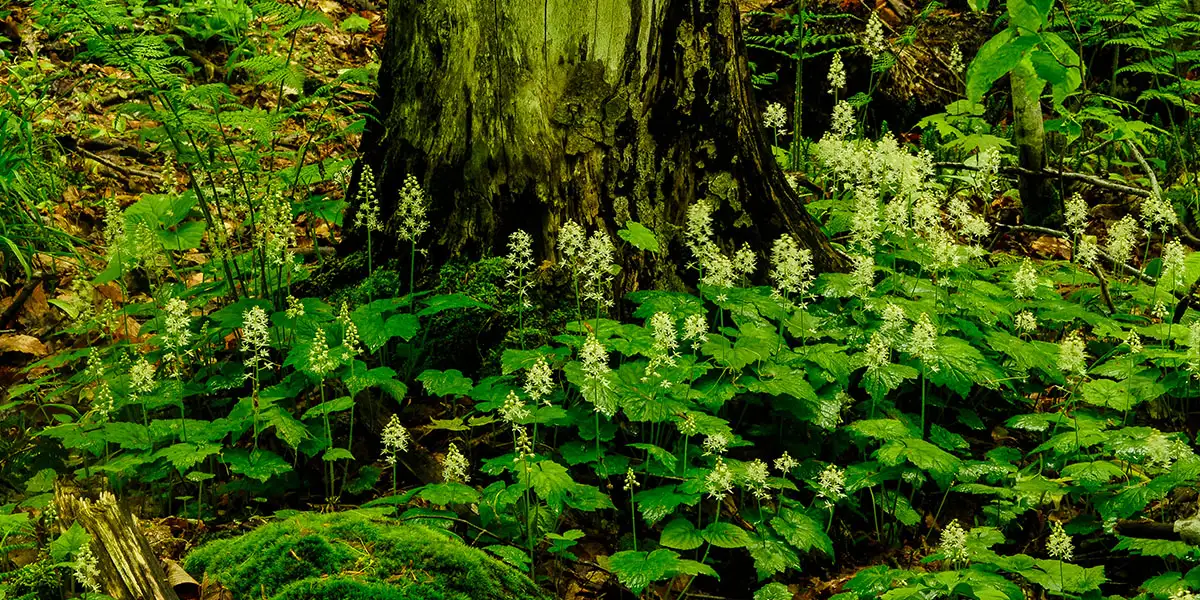
Foamflower (Tiarella cordifolia)
If you’re interested in incorporating more native plants into your landscape, foamflower deserves a spot on your list.
In spring, it produces airy spikes of white flowers that seem to float above the foliage. The attractive leaves remain appealing well after the blooms fade.
Foamflower combines beautifully with ferns, hostas, and other woodland perennials.
Light: Part shade to full shade
Water: Moderate
Coverage: Individual plants spread 12 to 18 inches and gradually form attractive colonies.
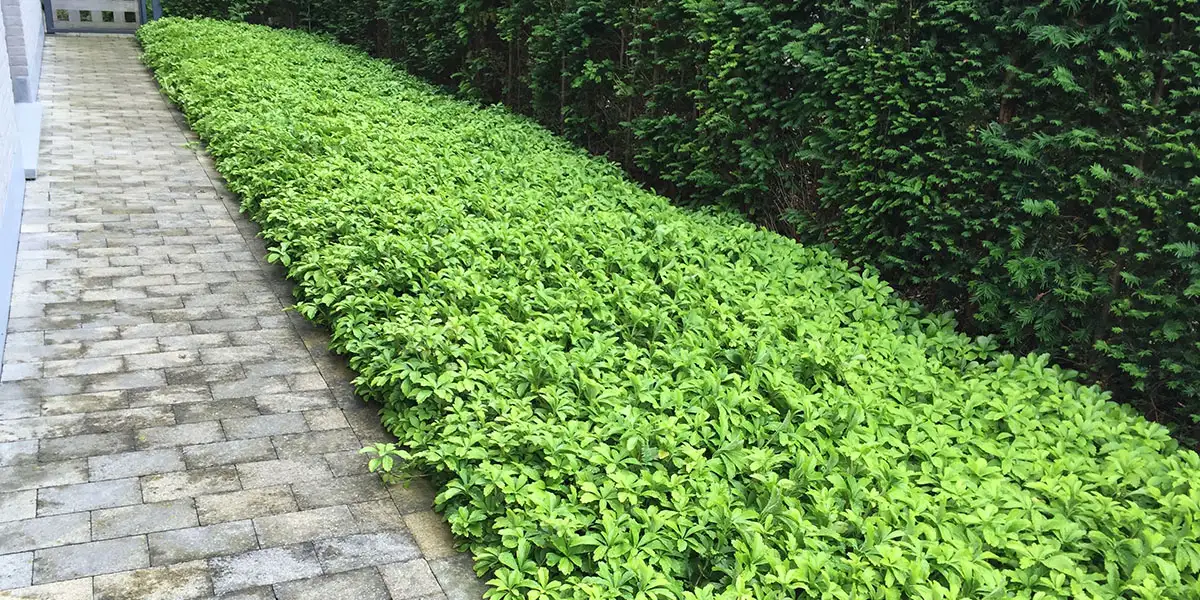
Allegheny Spurge (Pachysandra procumbens)
Many homeowners are familiar with Japanese pachysandra, but Allegheny spurge is a wonderful native alternative.
Its evergreen leaves are often mottled with silver, and small fragrant flowers appear in early spring. It’s well suited for natural-looking woodland gardens and shaded foundation plantings.
Light: Part shade to full shade
Water: Average. Prefers evenly moist, well-drained soil, especially during establishment.
Coverage: Individual plants spread 12 to 18 inches and slowly form colonies by rhizomes.
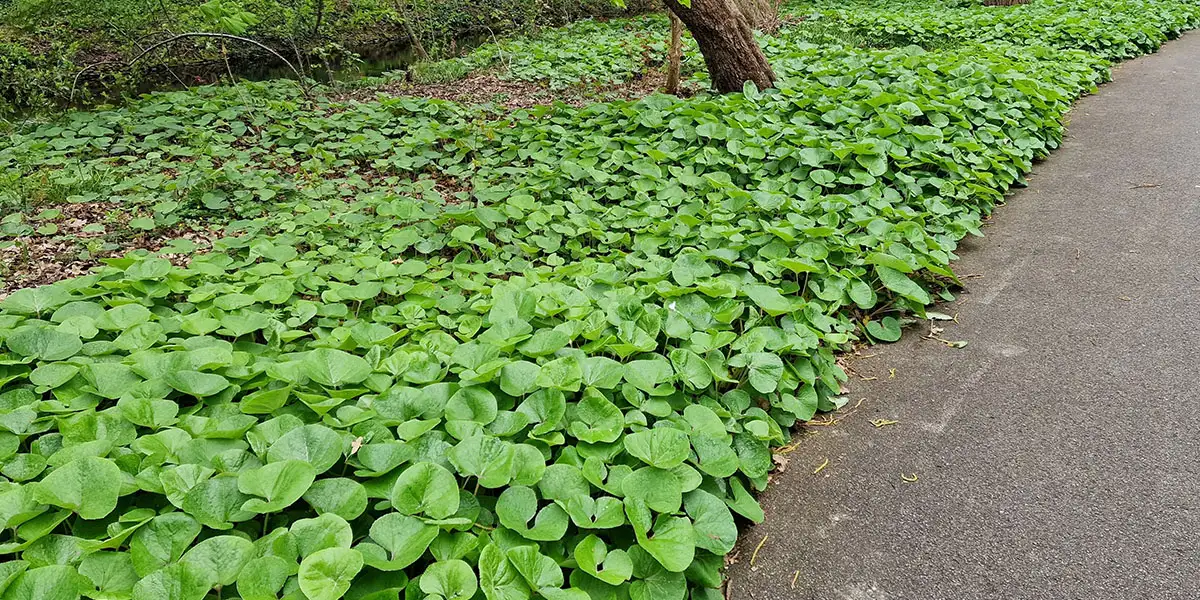
Wild Ginger (Asarum canadense)
Wild ginger won’t produce flashy flowers, but its lush, heart-shaped leaves create a rich carpet that looks right at home beneath trees.
It’s an excellent choice for naturalized landscapes where you want a peaceful woodland feel.
Because it prefers consistently moist soil, adding compost before planting helps it get off to a great start.
Light: Part shade to full shade
Water: Moderate. Prefers consistently moist soil, but does not like standing water.
Coverage: Individual plants spread 12 to 24 inches and gradually form dense colonies.
When the Soil Stays Damp
Not every landscape drains perfectly, and that’s okay.
Some groundcovers actually appreciate a little extra moisture.
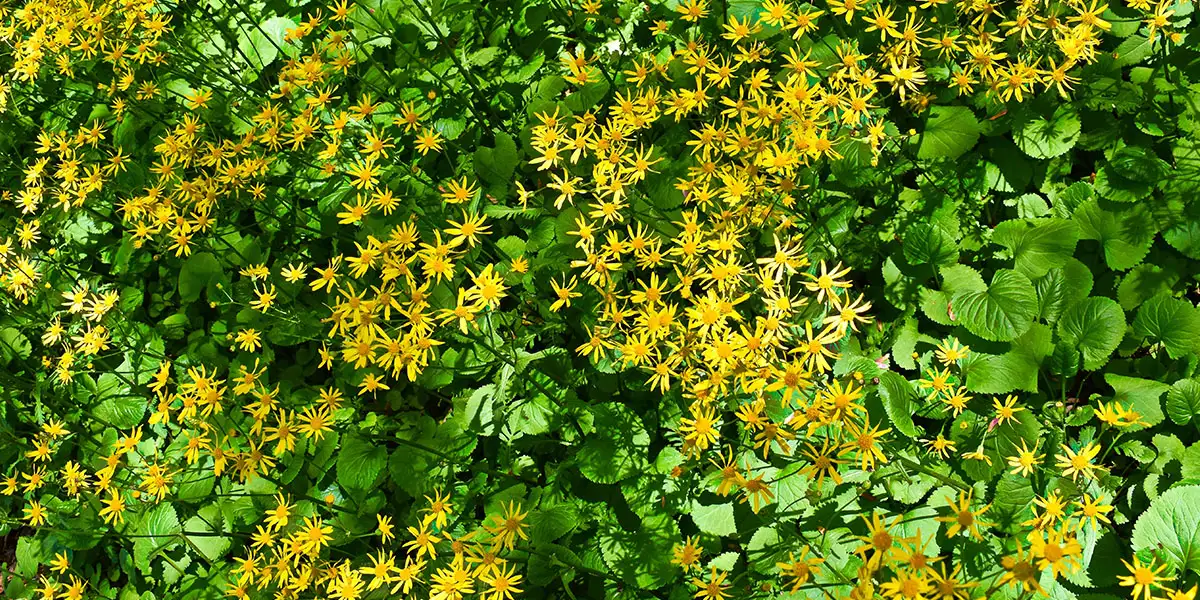
Golden Ragwort (Packera aurea)
This native perennial brightens the landscape with cheerful yellow flowers in spring before settling into attractive evergreen foliage.
It performs especially well near rain gardens, along woodland edges, or anywhere the soil tends to stay moist.
As an added bonus, its flowers provide an early-season food source for pollinators.
Light: Full sun to part shade
Water: Moderate to high. Prefers moist soil, but adapts to average garden conditions once established.
Coverage: Individual plants spread 18 to 24 inches and gradually form larger colonies by rhizomes.
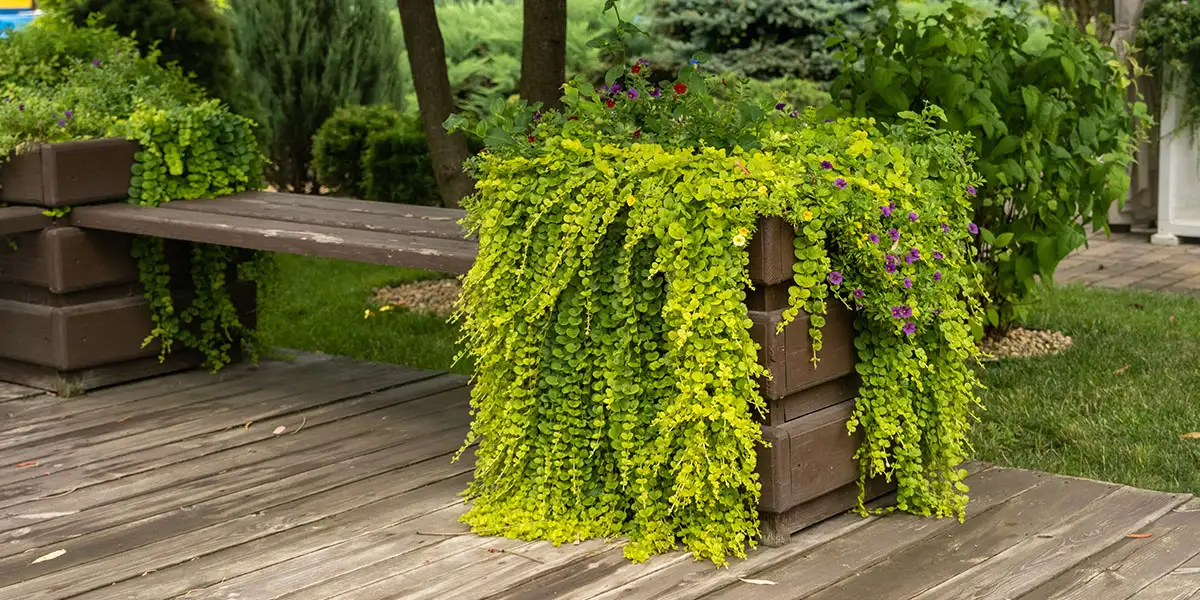
Creeping Jenny (Lysimachia nummularia)
If you want a splash of bright chartreuse foliage, creeping Jenny certainly gets attention.
Its trailing stems spill beautifully over walls and containers, and it spreads quickly through moist planting beds.
Just remember that “quickly” is the key word. It’s a vigorous grower, so you’ll want to keep an eye on where it’s headed.
Light: Full sun to part shade
Water: Moderate. Performs best in consistently moist soil.
Coverage: Trailing stems spread several feet over time, creating a dense mat.
One of the Toughest Places to Plant: Dry Shade
Dry shade beneath mature trees can leave even experienced gardeners scratching their heads.
Tree roots compete for water, sunlight is limited, and many plants simply give up.
Fortunately, epimedium rises to the challenge.
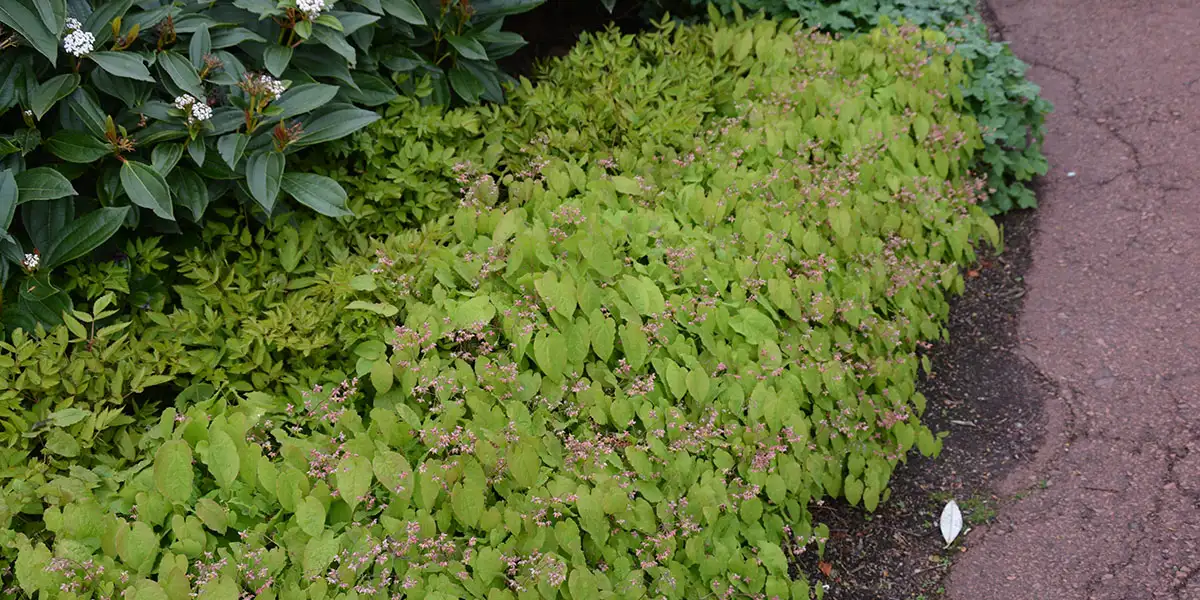
Barrenwort (Epimedium species and hybrids)
Epimedium or barrenwort isn’t always the first plant people notice at the garden center, but it often becomes one of their favorites.
Its delicate spring flowers almost seem to float above the foliage, and the heart-shaped leaves provide months of attractive coverage. Once established, it tolerates dry conditions better than many other shade-loving plants.
It’s also one of the more deer-resistant options, which we (and many other Bucks County gardeners) appreciate!
Light: Part shade to full shade
Water: Moderate during establishment. Once established, it is fairly drought tolerant.
Coverage: Individual plants spread 12 to 24 inches and gradually form expanding clumps by rhizomes.
Groundcovers That Help Hold Slopes Together
If mowing a hillside feels like a balancing act, replacing some of that lawn with groundcovers can make maintenance much easier.
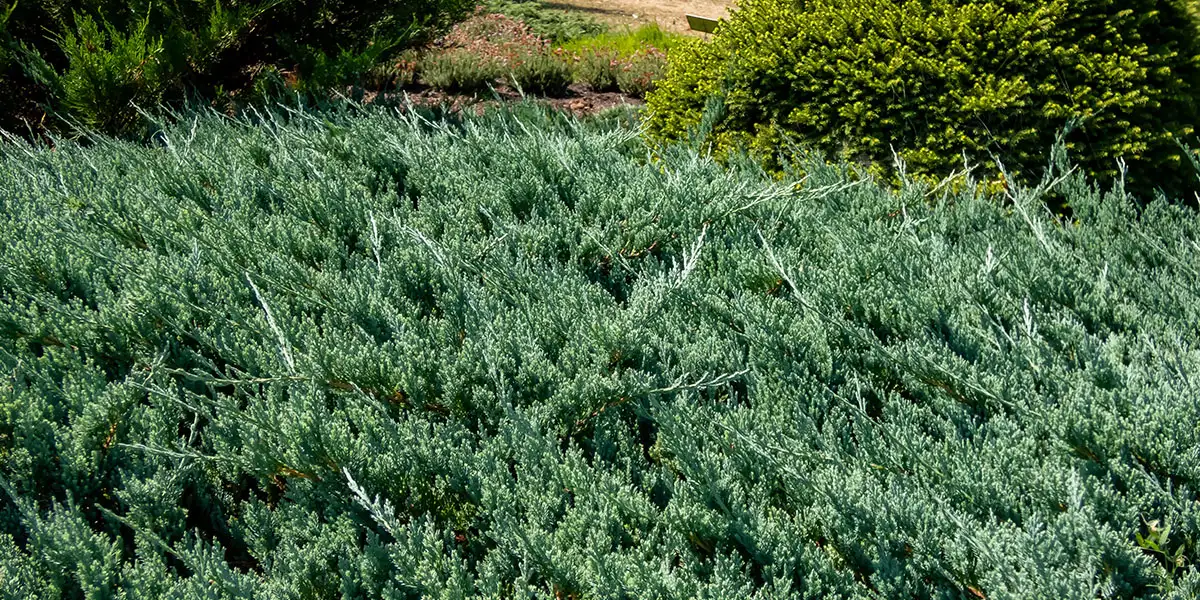
Plants such as creeping phlox, creeping thyme, bigroot geranium, and creeping juniper (Juniperus horizontalis) (pictured) all develop extensive root systems that help stabilize the soil while creating an attractive display.
Keep in mind that slopes dry out more quickly than level ground, so new plantings usually need a little extra watering during their first season.
Helping New Plants Get Established
Even drought-tolerant groundcovers appreciate regular watering when they’re first planted.
Give new plants a thorough soaking right after planting, then continue watering deeply whenever rainfall is scarce during the first month or so. Deep watering encourages roots to grow downward, creating stronger, healthier plants that can better withstand summer heat.
As the plants mature, many become remarkably self-sufficient.
Easy Maintenance for Years of Beauty
One of the biggest advantages of groundcovers is that they don’t ask for much.
Once they’re established, a little seasonal care is usually all they need.
Pull the occasional weed before it has a chance to spread. Trim away winter-damaged foliage in early spring. Divide clumps of spreading perennials every few years if they become crowded. If your groundcover hasn’t filled in yet, replenish the mulch as needed to keep weeds in check.
That’s about it.
Many homeowners discover that replacing difficult lawn areas with groundcovers actually reduces the amount of time they spend maintaining their landscape.
The Right Plant Makes All the Difference
Groundcovers do much more than fill empty spaces. They solve problems, soften hard edges, support pollinators, and make landscapes feel complete.
If you’re looking for colorful spring flowers, evergreen texture, drought tolerance, or a solution for a difficult shady corner, there’s a groundcover that’s up to the task.
Not sure which one is right for your yard? Stop by Bountiful Acres. We’d be happy to help you match the right plant to your growing conditions, answer your questions, and help you create a landscape that’s beautiful in every season.